
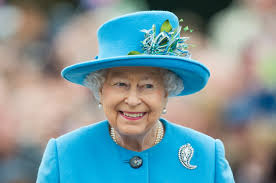
Queen Elizabeth II
Questionable Parts of her Life
Richard Hollerman
We have presented a general article on Queen Elizabeth and her life from a common perspective. We hope that you will find this on the website: www.Truediscipleship.com. Just type in the words: “Queen Elizabeth Has Died!” You should be able to easily find this.
Here we must evaluate many basics from the standpoint of a Christian, a person who sincerely wants to follow Jesus—in life, in perspective, in outlook, in speech, and in every other way. It is probably easier to deal with a life in a general way, as we have done, and omit the contents of this article, but if we are honest, truthful, and thorough, we must deal with all of it, by God’s grace.
In the previous message, we looked at the birth, early life, marriage, coronation, travels, and eventual death of this noteworthy and famous woman and head of state. Millions or perhaps hundreds of millions in the world followed her. We personally admired her demeanor and attitude but we must go on from here. As followers of Jesus, the Son of God and Lord of life, we are required to look at things as God our Father does. As Scripture says, “Examine everything carefully; hold fast to that which is good” (1 Thessalonians 5:21). Although this originally may have applied to inspired prophecy, it is applicable to this case as well.
One conservative Catholic wrote the following:
An era has ended. Queen Elizabeth II is now dead, and the world mourns. We can say that the twentieth century officially ended as the last pillar of the postwar order fell.
The Queen had her defects. In remembering her, some decry many of her political decisions. Others point to the deplorable things that happened under her reign or the scandalous behavior of royal family members. However, we must look beyond person and policy to understand her symbolic role in a chaotic world. Elizabeth II was not just a political figure. She represented the ideal United Kingdom to the world. When she appeared on the balcony of Buckingham Palace, vast crowds of all persuasions stretched as far as the eye could see and would wildly acclaim her. Indeed, what presidents could claim such devotion and popularity from the people? Somehow the Queen projected the image of a fairy-tale monarch that captured the imagination.
That was her most important role. In those sublime moments of public contact, we could glimpse a brilliance that transcended her person. The British saw in her the symbol of their glory. This shining, symbolic representation was one reason she was so beloved and esteemed. . . .
This splendor contrasts with the demagoguery of clownish modern leaders who present caricatures of real authority. Most politicians follow Rousseauean models that imagine power coming not from God but the fickle whims of the popular will. The Queen sacrificed herself by living up to the dignity and majesty of her office. It filled her reign with beauty and stability. Until the last days of her life, she carried out her duties with touching self-abnegation, solicitude and affection. Her beloved reign endured for over seventy years, during which she saw 15 prime ministers, 14 presidents and seven popes in office.
We live in a postmodern egalitarian world that detests everything the Queen represented. Political leaders today no longer want the arduous task of being a symbol. . . . The Queen stood out because few leaders today think beyond their self-interests. We are left as orphans inside a world political order that does not represent us or present us with sublime ideals. . . . In a world filled with vulgarity and narcissism, they could always look to her and ask that God Save the Queen—that ideal Queen representing a splendorous and dignified world. These orphans looked to her simply as the Queen.
Thus, it was not only the United Kingdom’s Queen who died on September 8 but also the Queen of all who saw her as a symbol of order, albeit imperfect, in a world in chaos and disarray. We mourn because a great pillar of devotion to duty grace and majesty has fallen. And there is no one to take her place.
We find in the foregoing words some helpful and splendid thoughts as well as sublime words. But so much is false which we will see in the following comments. We hope that you, our readers, will follow our train of thought and hopefully what we will say will resonate with your own heart and mind.
For a life like Queen Elizabeth II, who began as Elizabeth Alexandra Mary Windsor, and married Prince Philip, Duke of Edinburgh (otherwise known as Philip Mountbatten), we feel inadequate in our dealing with this stately woman’s life, even though as a follower of Christ, we must seek to do this.
(By the way, Philip was born on June 10, 1921 [in Greece] and died on April 9, 2021, at Windsor Castle, England [The United Kingdom]. We also know that Queen Elizabeth II was born at 1926 Bruton Street, London, England, on April 21, 1926 and died at Balmoral Castle, Scotland, on September 8. 2022.)
With this in mind, we offer the following critique. Notice that we want to be fair and even handed-in all of this and show the truth and graciousness of a Christian:
First, we do wonder how a follower of Christ could have said some of the things that she said and done many of the things that she did. Instead of giving a hundred examples of this, we just state this with the hope that you have enough knowledge of Scripture and history that you will be able to judge this yourself.
Second, although she came from a family filled with British royalty, we do wonder about her position. We know that it is a shame and is forbidden that a woman would have authority over the opposite sex but this surely would be required of one who would occupy the position as she did (see 1 Corinthians 11:3 as well as 1 Timothy 2:9-15 and others).
Third, we wonder about Elizabeth’s choice of a spouse (Philip) for he definitely was a military man, whereas the Christian is to be separated from all involvement in retaliation, violence, hostility, and the like (see Matthew 5:38-42; 1 Thessalonians 5:15; Philippians 4:5; etc.). How could she effectively rule over a nation of millions with this Biblical limitation?
Fourth, if we know that a woman is not to have authority or control over a man, we wonder how Elizabeth could have exercised her duties if she was not to have any domineering or authoritative role over males, including her poor husband (Ephesians 5:22-33; Colossians 3:18; 1 Corinthians 11:3-16; etc.).
Fifth, a woman is to be known as shy and out of the limelight but we wonder how a queen, the head of a nation of many millions of subjects, could ever do this. How could Elizabeth manifest this Biblical temperament and virtue and still lead a country like the United Kingdom?
Sixth, we also wonder how a woman could be the head of a nation known for its colonialism and domination of hundreds of millions of people. Even now, many people find this evil and wrong, but we think that she did wrong in endorsing this it.
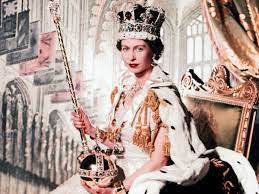
Seventh, we definitely know that Elizabeth didn’t dress modesty, quietly, and unobtrusively. (See 1 Timothy 2:9-10; 1 Peter 3:1-6; 1 Corinthians 11:3-16; etc.) I just saw photos of her, freely out there for all to see, and she (as the queen) was not only dressed in finery (which the follower of Christ is to avoid, but she was partially clothed in some of the photos. We know that in our day, people merely wink at this undress, but the Christian views things much differently.
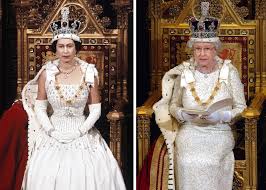
Eighth, we understand that this dear woman had at her disposal several residences, such as the palace in London known as Buckingham that the unsaved world seems to adore. Also, there is the place in North Scotland, Balmoral Castle (composed of 50,000 acres, filled with mountains, forests, and countryside), and all of the finery of royalty. There is also Clarence House, one of the last remaining townhouses, with a 1,000 year history. Then there is Windsor Castle. Further, there is Frogmore House, which is a guest retreat that has been used for more than 300 years. There is also the Palace of Holyrood House, the official residence in Edinburgh, Scotland, a home of Scottish royalty.
With Christ’s warning about materialism and riches, we wonder how anyone could ever have so many material goods and property and still maintain the quiet, simple, and unadorned life required of a follower of Christ. (Matthew 6:19ff; Mark 10:25-27; Luke 9:58).
Ninth, of course, we know that not only is a woman not to have authority over the man (1 Corinthians 11:3), not only are we to live a quiet life, not only are we to avoid luxury, we wonder how a woman is this position is to live and conduct herself. How could such a woman (submissive her husband and mother of four children) do this?
Tenth, when the colonialism ceased and the national activities ceased, we wonder what could have been done to help these dozens of struggling nations to survive and thrive. Today, we understand that China is now entering Africa, Central America, South America, and elsewhere. What could Queen Elizabeth have done differently to prevent this power-vacuum that has far-reaching and disastrous consequences to the civilized and free world?
Eleventh, we can appreciate the fact that Elizabeth gave a degree of morality to a nation and world that has been increasingly immoral and wrong-headed. While we can’t agree with all of her stand, we can applaud the fact that she wasn’t swayed by public opinion but stood her ground. This is something that the child of God must do. Regardless of public opinion, this is something that we must do.
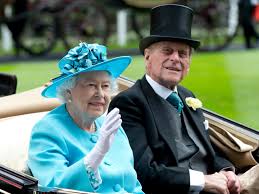
Twelfth, not only must we say the above, we are aware that three of her family members where quite immoral. We do wonder how she could endorse this behavior and these actions. The fact that the new king is King Charles and is married to Camilia, and that this is a relationship that she endorsed, shows that she didn’t really have “Christian” morals.
Thirteenth, there is a note of idolatry in this queenship (we refer to Kingship, but in this case it would be the opposite). The British national anthem has the first verse:
God save our gracious king!
Long live our noble king!
God save the king!
Send him victorious,
Happy and glorious,
Long to reign over us,
God save the king.
Some Brits felt compelled to sing this as “God save our gracious Queen!” But either way, we know that God does not honor songs sung such as this in honor of a person, however positive we may think the person is.
Fourteenth, when Great Britain was plunged into the Second World War, fought with the madman Adolph Hither and the Germans, Queen Elizabeth was there, urging her countrymen on as a young girl (along with her older sister, Margaret). In April 2020, when the Coronavirus was pummeling Britain, Elizabeth urged her subjects to commit themselves to a national cause similar to that of World War II. She likened the enforced separation of Britain’s lockdown to the sacrifices families made during the war, when parents sent away their children for their own safety.
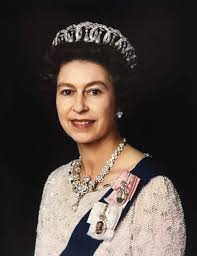
“We should take comfort that while we may have more still to endure, better days will return,” the queen said. “We will be with our friends again; we will be with our families again; we will meet again.”
That last line referred to “We’ll Meet Again,” a 1939 song that became a wartime favorite in Britain. It served as a poignant reminder that as a young princess, Elizabeth had served in that war, working in the auxiliary service as a driver and mechanic. Seven decades later, at her death, she was still serving.
From a Christian standpoint, we must object to this attitude that is idolatrous and leaves God out of the picture.
Fifteenth, we are reminded of the colonialism that the Queen represented. Although we don’t agree with Janelle Griffith, the writer, and apparently a feminist speaker, we do agree that colonialism and the massive number of evils that it perpetrated was wrong. We wonder why Queen Elizabeth was not an outspoken critic of this legacy. (We are not unmindful of the positive parts of this either for it did elevate certain nations even though the motive was greed and power.)
As the death Thursday of Queen Elizabeth II prompted an outpouring of grief from millions around the world, it also revived criticism of her legacy, highlighting the complicated feelings of those who saw her as a symbol of the British colonial empire — an institution that enriched itself through violence, theft and oppression.
“If anyone expects me to express anything but disdain for the monarch who supervised a government that sponsored the genocide that massacred and displaced half my family and the consequences of which those alive today are still trying to overcome, you can keep wishing upon a star,” Obianuju Anya, an associate professor of second language acquisition at Carnegie Mellon University, tweeted Thursday afternoon.
Her tweet had been retweeted more than 10,000 times and had garnered nearly 38,000 likes by Thursday evening. Anya did not immediately respond to requests for an interview made by phone and through Twitter.
Matthew Smith, a professor of history at University College London who directs the Center for the Study of the Legacies of British Slave-ownership, said: “The reactions indicate the complicated and mixed relationship that people have had with the British monarchy, people in the Commonwealth and particularly in the Caribbean.
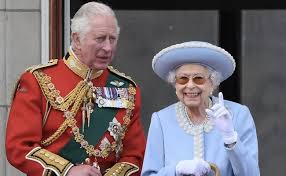
Sixteenth, we know that Charles, the new King, is not going to distance himself very far from the policies and views of his late mother. We find this:
Charles is also now head of the Commonwealth, a postcolonial group of 54 countries comprising 2.4 billion people. He is head of state in 15 of those nations — including Canada and Australia — although the queen’s death is likely to stoke an already simmering debate in the Caribbean and elsewhere about ditching their former colonial overseers for good.
https://www.nbcnews.com/news/world/live-blog/queen-elizabeth-live-updates-rcna34377
Seventeenth, although she did have these negative characteristics, we do know that in some respects her subjects idolized her for the most part. She was England to them. She represented stability, tradition, solidity, morality, and pride. As someone has said, “She was almost faultless,” (according to former British PM John Major). No, Elizabeth was not faultless but was very human. And all of the pride and boasting that was leveled on her was unjustified, from a Christian standpoint.
Eighteenth, sadly, we know that Queen Elizabeth was intimately involved in the Anglican Church, a prominent false denomination. One report puts it this way:
The Supreme Governor of the Church of England [Queen Elizabeth II is (was) the titular head of the Church of England, a position which is vested in the British monarch. Although the monarch’s authority over the Church of England is largely ceremonial and is mostly observed in a symbolic capacity, the position is still very relevant to the church. As the supreme governor, the monarch formally appoints high-ranking members of the church on the advice of the prime minister of the United Kingdom, who is in turn advised by church leaders, such as the Lords Spiritual.
And now a bit of history to show the background of the first King’s (and Queen’s) status in the Anglican (English) church:
By 1536, King Henry VIII of England had broken with the Holy See [the Catholic Church], seized assets of the Catholic Church in England and Wales and declared the Church of England as the established church with himself as its supreme head. The Act of Supremacy 1534 confirmed the king’s status as having supremacy over the church and required the peers to swear an oath recognising Henry’s supremacy. Henry’s daughter Mary I attempted to restore the English Church’s allegiance to the pope and repealed the Act of Supremacy in 1555. Elizabeth I ascended to the throne in 1558 and the Parliament passed the Act of Supremacy 1558 which restored the original act. To placate critics, the Oath of Supremacy which peers were required to swear, gave the monarch’s title as supreme governor rather than supreme head of the church. This wording avoided the charge that the monarchy was claiming divinity or usurping Christ, whom the Bible explicitly identifies as head of the Church. (Ibid)
Obviously, all of this shows how unbiblical both the church and the leadership is and was. And, of course, this would be true of the Roman Catholic Church, from which the Anglican Church derived.
As we go to the 39 Articles of the Church of England (the Anglican Church) we find this at the very beginning:
Thirty-Nine Articles:
The position of the monarch role is acknowledged in the preface to the Thirty-Nine Articles of 1562. It states that:
Being by God’s Ordinance, according to Our just Title, Defender of the Faith and Supreme Governor of the Church, within these Our Dominions, We hold it most agreeable to this Our Kingly Office, and Our own religious zeal, to conserve and maintain the Church committed to Our Charge, in Unity of true Religion, and in the Bond of Peace … We have therefore, upon mature Deliberation, and with the Advice of so many of Our Bishops as might conveniently be called together, thought fit to make this Declaration following … That We are Supreme Governor of the Church of England …
Article 37 makes this claim to royal supremacy more explicit:
The Queen’s Majesty hath the chief power in this Realm of England, and other her Dominions, unto whom the chief Government of all Estates of this Realm, whether they be Ecclesiastical or Civil, in all causes doth appertain, and is not, nor ought to be, subject to any foreign Jurisdiction. … [We] give not to our Princes the ministering either of God’s Word, or of the Sacraments … but only that prerogative, which we see to have been given always to all godly Princes in holy Scriptures by God himself; that is, that they should rule all estates and degrees committed to their charge by God, whether they be Ecclesiastical or Temporal, and restrain with the civil sword the stubborn and evildoers. The Bishop of Rome hath no jurisdiction in this Realm of England.
Church of Scotland
The British monarch vows to uphold the constitution of the Church of Scotland (a Presbyterian national church), but does not hold a leadership position in it. Nevertheless, the monarch appoints the Lord High Commissioner to the General Assembly of the Church of Scotland as their personal representative, with a ceremonial role. Queen Elizabeth II on occasion filled the role personally, as when she opened the General Assembly in 1977 and 2002 (her Silver and Golden Jubilee years). (Ibid)
We have included this long excerpt but it does show how evil this office is and what the church contends is their right. Queen Elizabeth filled this position and must receive at least part of the blame for her willing filling of it.
Nineteenth, sadly Elizabeth continued in the Anglican Church and promoted it. Yet about half of the denomination voted recently to accept sodomites (homosexuals) as active members. Instead, of course, these immoral prelates should have been excommunicated or fellowship withdrawn from them. This shows the compromise that exists in this denomination as well as Elizabeth’s participation in it.
(See https://en.wikipedia.org/wiki/Anglican_Consultative_Council).
Twentieth, we know that Elizabeth was head over the communion of the Anglicans, many or most of which, allows the ordination of women. We find this:
The ordination of women in the Anglican Communion has been increasingly common in certain provinces since the 1970s. Several provinces, however, and certain dioceses within otherwise ordaining provinces, continue to ordain only men. Disputes over the ordination of women have contributed to the establishment and growth of progressive tendencies, such as the Anglican realignment and Continuing Anglican movements.
Some provinces within the Anglican Communion ordain women to the three traditional holy orders of bishop, priest, and deacon. Other provinces ordain women as deacons and priests but not as bishops; others are still as deacons only.
Within provinces that permit the ordination of women, approval of enabling legislation is largely a diocesan responsibility. There may, however, be individual dioceses that do not endorse the legislation or do so only in a modified form, as in those dioceses which ordain women only to the diaconate (such as the Diocese of Sydney in the Anglican Church of Australia), regardless of whether or not the ordination of women to all three orders of ministry is canonically possible. (https://en.wikipedia.org/wiki/Ordination_of_women_in_the_Anglican_Communion)
We know that it may be strange, but we not only must point out that this Queen violates Scripture repeatedly by her position, but she is over a false denomination that radically differs from what God has said in Scripture regarding women’s roles. Reading the above article shows how rank and wicked this is.
Reading about how widespread this apostasy is in the Anglican Church is quite upsetting and sickening. We assume that Elizabeth went along with this. Further, we must point out that the proverbial “Archbishop of Canterbury” in England is a very unbiblical position, one that deserves the wrath of God. Sadly, Elizabeth endorsed this unscriptural position, unscriptural denomination, and many unscriptural aspects of this.
Twenty-first, although we were going to focus on Queen Elizabeth herself, we seem to have included the Anglican communion. This is a large denomination of Protestantism that spans the entire world. The number of members worldwide is about 80 to 85 million members (after the Roman Catholic and Orthodox Church members). It is ruled by the Lambeth conference in London but in a recent meeting many refused to come since it seemed to be ruled by liberals in regard to women’s role and sexuality. We might well point out that even these issues have been greatly compromised and all Anglicans oppose aspects of the Biblical stance. The Archbishop of Canterbury, in London, thinks that the denomination will collapse. Sadly, we know that Queen Elizabeth is part of this compromise.
We read this: “At the last Lambeth conference, in 2008, more than 250 bishops out of 800 stayed away in protest at the liberal sympathies of the then archbishop, Rowan Williams. Welby has indefinitely postponed the next conference, which would have taken place in 2018.”
Twenty-two, according to what we have learned, Elizabeth was born at 17 Bruton Street, London, England, on April 21, 1926. A month later she was “baptized” at Buckingham Palace by the Archbishop of York (Cosmo Gordon Lang). Lang was made Archbishop of Canterbury in 1928 (2 years later). Of course, he was a renowned false teacher.
Sadly, we know that baby baptism is not at all taught in Scripture. Further, we know that this was not a true “baptism” but evidently a pouring. Further, we know that deviating from Biblical precedents regarding overseers (or “bishops”) is unbiblical, especially the prideful position of “Archbishop”! We sadly recognize that this was in Elizabeth’s past and there is no evidence at all that she ever repented of this event. We encourage you to use the Search engine attached to this website (www.Truediscipleship.com) for many articles on “organization” and “overseers” and infant “baptism,” and the like.
You may want to check out this:
“Baby Baptism and Baptismal Regeneration”
“Did Jesus Command Baby Baptism?”
“Why Baptize a Baby or Young Child?”
“Did David Authorize Infant Baptism?”
“What is the History of Infant Sprinkling?”
Twenty-third, we remember that Elizabeth represented both good and bad, both something to be desired and something to be deplored. We have noticed that a Catholic writer extoled her virtues and reign:
This ability to be a representative figure allowed her to exercise another role that is proper to her office. The Queen was also beloved and esteemed because she knew how to represent Christian majesty well.
The end of the State is the ordering of the common good, and thus those entrusted with authority exercise a supreme mission with intrinsic dignity and majesty. Since all authority comes from God, it should be surrounded by ceremony and splendor to better mirror the Divine majesty.
The Queen exercised her authority with calm and benevolent majesty. Indeed, her reign represented the remnants of medieval pageantry that gave her office authenticity, brilliance, vigor and dignity. She reminded the world of a splendorous Christian civilization rejected by modern vulgarity and egalitarianism.
Whether this is right we leave this to you. But it does show the comments by a very pro-Catholic person in favor of this very pro-Anglican queen.
Twenty-fourth, sadly we understand that Queen Elizabeth was the leader or head of the Anglican church. She has been called “Defender of the Faith and Supreme Governor of the Church of England.” By “Church of England” is meant the Anglican Church, one that spread around the world. Yet we know that Jesus is the only “head” and “governor” of the body of Christ and He has not abdicated his position to anyone, including a woman in England.
Twenty-fifth, we realize that Queen Elizabeth could not have been truly baptized as a baby for we read in Scripture that this simple act has several characteristics. It is for the purpose of making a disciple, and Elizabeth and the billion of others who have been “baptized” as babies cannot be true disciples (Matthew 28:19). Further, this important act is to be done at the beginning of one’s life in Christ and Jesus states the fact that we are to be baptized into the name of the Father, the Son, and the Holy Spirit. Next, we are to realize that there is “teaching” to be done, including obeying all of Christ’s commands. (See Matthew 28:19-20). Of course, as friendly and kind and nice as Elizabeth may have been, she could not have obeyed Jesus’ command here and still retain her position as Queen.
We also know that Elizabeth and no other baby can obey Mark 16:15-16 for she could not have believed at that young age of one month. We also know that she did not obey God’s command (through Peter and the apostles) to repent of her sins for she had no sins to repent of (Acts 2:37-41). She could not have been saved from this “perverse generation” of godly people (v. 40). And, of course, she could not have received the apostolic word when she was baptized (v. 41). Obviously, she could not have obeyed Romans 6:3-6 nor Colossians 2:12 nor Galatians 3:26-28 either. And as a tiny baby, she could not have gotten up, been baptized, and washed away her sins (Acts 22:16).

As much as we may admire Queen Elizabeth, her husband, and even her children, we must totally reject the fact that she was right with God. We must not think of her as a saved woman. Besides her total involvement with a multi-million member apostate denomination, it was wrong and false, and worthy of condemnation. Besides all of this, poor Elizabeth wasn’t even baptized as a baby, surely. Baptism is an immersion or dipping in water for the forgiveness of sins (see Acts 2:38-39) and she never claimed that this was her case. Thus, we must regretfully say that our friend, Queen Elizabeth, was a lost woman, separated from God. Regardless of the royal acclamations and churchly pomp, regardless of the ecclesiastical and churchly pronouncements, sadly this does not change reality.
All of this causes us to ask the question: If the “head” of the Anglican Church, a very apostate church, with elaborate cathedrals, with an unbiblical and prideful leadership, with false doctrines, with a totally false view of reality, and with false names and organization, and with many defects, plus a Queen that is unsaved and never was saved, is in view, what are we to think? Although she has recently died and many flowery things have been written about her and her reign, we wonder how we are to look on all of this? How would God want us to speak and write about this aberrant religion, regardless of the virtues of the head of this denomination? How shall we speak and write about Queen Elizabeth?

Lastly, we realize that the beloved sovereign (Elizabeth II) did not do various things that Scripture clearly spells out:
- She could not become a disciple of Christ as a baby (Matthew 28:18-20).
- She was not baptized (immersed in water) rather than simply poured (Romans 6:3-5; Colossians 2:11-13).
- She could not turn away from (repent of) her sins when she had no sin—conscious departing from the ways of God (Acts 2:36-41; 3:19).
- She did not confess Jesus as Lord as a baby (Romans 10:9-10).
- She did not believe in Jesus as God’s son, as Savior, and as Lord when she was an infant (Mark 16:16; Acts 8:12; John 3:14-18, 36).
- She did not trust in Jesus and His blood as a baby (Cf. Ephesians 1:7; Colossians 1:14; Romans 3:23ff).
- She did not call on Jesus as Lord as a baby (Acts 22:16).
- She was not able to do the full will of God (Matthew 28:20).
What should we think of Queen Elizabeth II? We’ll let you answer this important question.

“Anglicans” World Book Encyclopedia
(https://www.theguardian.com/world/2015/).
https://en.wikipedia.org/wiki/Supreme_Governor_of_the_Church_of_England


 You can reach us via e-mail
at the following address:
You can reach us via e-mail
at the following address: