
Where Did North American Peoples Come From?
Richard Hollerman
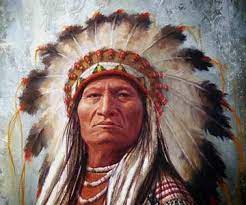
There are many misconceptions and misunderstandings regarding the background and origin of people in the United States. At one time, this country of America was pristine with no inhabitants at all. At the time of the Noaic flood (ca. 2350 B.C.), there came a great influx of animals, and birds, and eventually people.
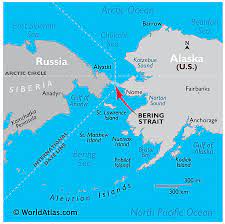
At first there were only dozens, and then hundreds, and finally thousands, who arrived, probably by means of the Alaskan Bering Strait (at the final stages of the ice age). Of course, some have theorized that some people arrived across the Pacific Ocean or even from Europe, across the Atlantic Ocean from Norway.
I recall reading a book, years ago, entitled Kon-Tiki (1947), by Thor Heyerdalh. He built a seaworthy vessel to sail to French Polynesia, across the Pacific to the West. I also recall reading about Leif Erikson who sailed as a Viking to eastern Canada some 500 years before Columbus arrived in the West Indies.
But, realistically, most secular and biblical scholars think that the North, South, and Central American Indians arrived from China, Mongolia, and other Asian countries, and environs years ago, and then spread South and further into North, Central, and South America. This occurred at the end of the last Ice Age, by the early years, about 2,000 years ago or earlier.
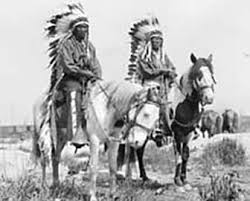
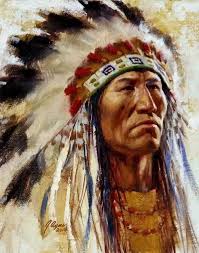
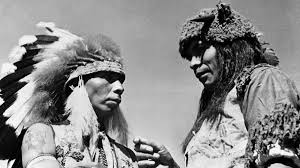
From these diverse backgrounds, we find numerous Indian tribes (from the Apache of the West, the Navajo to the Southwest, the Sioux to the North, to the Great Eastern tribes that met Columbus centuries later). These included the tribes of the Caribbean Islands (such as Puerto Rico, Cuba, Haiti, Dominican Republican), and the Mayans of Mexico. The Aztecs of Mexico, and finally also the Incas of Peru, Ecuador, Bolivia, and many tribes of the remainder of South America. In all, it has been estimated that there were many millions living in the Americas before the “white man” arrived in the 15th and 16th centuries.
We know something of the Spanish and Italian inquisition that came in the fifteen hundreds and onwards. (When I visited Lima, years ago, I took a tour of the Peruvian Inquisition museum, perpetrated by the Catholic Church, but since then ceased.) We know that there were some tens of millions of people living in the Americas during the 15th century and before.
After the English and eventually the Scottish arrived in the early seventeen century, the Germans arrived in the 16 and 17 hundreds. We know that the background of these significant immigration events makes interesting reading. Then we find a few Jews, some Irish, and also Italians, further Germans, and others who arrived in the 17th century. In more recent times, we also find that Chinese and others came to the American shore to build railroads, roads, did farming, and other work.
When did the blacks arrive (the earlier designations were “Colored” and today “African-Americans” are in vogue—by the way, these terms were or are used by Black ethnicities themselves). (More of this will come later.) They were found as early as the 16th century. These people were captured from such countries in Africa as Ghana and elsewhere. These unfortunate “slaves” were from Africa, captured from the Arabian or Muslim traders, and of these, thousands were sold to the Portuguese, French, Dutch, Spanish, and British on their slave ships. About five percent came to North America to work as indentured servants, household slaves, and also farm laborers.
By the year 1800, thousands of blacks had arrived from Africa to North America. Obviously, the 95 percent who did not come to North America came especially to South America (such as Brazil) and Central America and the Caribbean Islands. Some came to the Northern colonies but many to the Southern colonies, where the climate was warmer and more conducive to laboring. By the beginning of the Civil War of the 19th century (1861-1865) there were about five million “blacks” in the North and South.
We have already mentioned that many of these people came from Muslim and Arabian slave traders and were captured by them. They came from African wars and conquests, but what countries were the origins of these peoples? Africa was a continent with a large number of blacks in the population, but many of the slaves came from the middle African countries such as Ghana. The terms used regarding these enslaved people were five in number: “Negro” (the more sophisticated term meaning “black” in Spanish and Portuguese), “colored” (commonly used until the 1960s) and since the 1960s, “blacks” has been the major term used. Today, “African-Americans” is used by some. We know that some modern people may be incensed by some of these terms, but I am simply reporting from the past and we know that truth is vital!
Back in the former centuries, since the time of Christ, especially since the 300s to the 1500s (page 133b) we discover that the African countries of Ghana, Mali, and Songhai were prominent. From the 1500s for some years, the European settlements were dominant in the Americas. But other ethnicities have also come and spread. About half a million came to the United States.
We discovered that most American blacks came from Western Sudan (page 136c). Most came from Muslim Arabia who were farming and mining gold in North Africa. Portugal and Spain begun to reach out to the black slaves in the 1500s. As we have learned, most of the Portuguese slaves were sent to Brazil. Spain sent their slaves to the West Indies. By the 1600s, Netherlands, France, and England also sent slaves to the American colonies. Between the 1500s and the middle 1800s, in total some ten million Africans were sent to America (page 136d). Of this number, about five million came eventually to North America. They came from the French, Portuguese, and Spanish in the 1500s. As we mentioned, both the “colored” people (blacks) and poor whites came as “indentured servants” who (supposedly) would eventually gain their freedom.
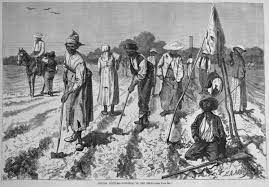
By 1750, some 200,000 slaves lived in colonial America (page 136d). Most lived in the South, where there is warmer climate, They grew rice, tobacco, sugar cane, and eventually cotton. Mostly, they worked in the fields, but some were also draftspersons, messengers, or servants. Only 12 percent lived on plantations in the South that had twenty or more employees. Other whites had only a few slaves. Fewer went North because of the cooler climate there and the rocky soil. By 1770, some 40,000 “free blacks” were in the American Colonies (page 136e). By the early 1800s, some 700,000 slaves were in the South. This comprise about one third of the people. More were found in South Carolina as well as some also in Maryland and Virginia. By the time of the Civil War, at the beginning of the 1860, about four million slaves were in the South (page 136 e).

In 1860, the American Colonization Society was established. This included such supporters as John C. Calhoun of South Carolina and Henry Clay of Kentucky, for they helped to establish this “liberation society”. It was their intention to transfer or to transport (voluntarily) free blacks to Africa, where they would begin a new life. In 1822, Liberia, (named from “Liberty”) began as a small African nation in Western Africa. In 1847, Liberia became “the first self-governing black republic in Africa” (page 136f). However, most blacks thought America was their home and refused to go. Only about 12,000 of them went by 1850.
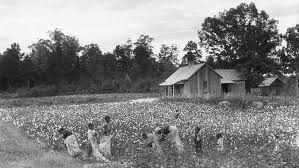
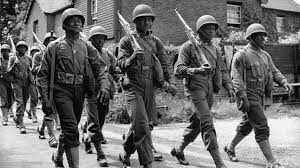
By 1860, only about five percent of the white Southerners owned slaves (page 136 g). In 1862, President Abraham Lincoln planned to give payment to slave owners. In April of that year he ended slavery in the District of Colombia and provided funds to allow slaves to move to Haiti or Liberia. Again, most blacks refused to move. On January 1, 1863 Lincoln signed the “Emancipation Proclamation” and since that day, black Americans have referred to that day as the “Day of Jubilee.” Bells rang in black churches in the North. We also learn that 200 thousand blacks fought for the Union Army. In December 1865, the 13th Amendment ended slavery as part of the US Constitution.
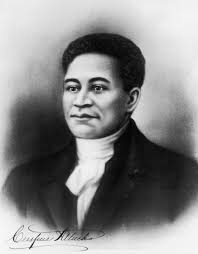
About four million freed men (freed slaves) were to be found in the United States (as it came to be called). The Civil Rights Act of 1866 gave American blacks full citizenship. However, between 1865 and 1866 about five thousand Southern blacks were murdered in America. During the First World War (of 1914 to1918), hundreds of thousands of Southern blacks moved North. By 1925 (page 136k), Marcus Garvey began the United Negro Improvement Association with the purpose of creating a homeland in Africa.
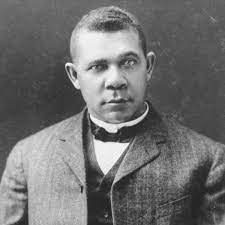
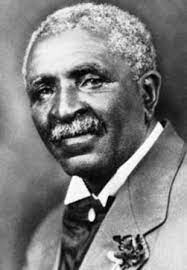
In the early 1924 period, Booker T. Washington, at Tuskegee Institute, was the most influential black leader, especially by 1900. George Washington Carver, who created many uses for the peanut (whom we all know worked for Booker T. Washington) was well known and a professing Christian.
Obviously, we know that this survey of the origins of the American Indians and others, could be increased a hundred-fold. But this will give some idea of this important era of American history.
See also The World Book and like sources.


 You can reach us via e-mail
at the following address:
You can reach us via e-mail
at the following address: