
What about the Methodist Church?
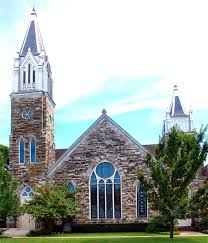
(Part 1)
With special emphasis
on the United Methodist Church
Scriptural Evaluation of the United Methodist Church, with Historical Background and Doctrinal Discussion
Questions to ask yourself
What do you know about the United Methodist Church?
Who was John Wesley and what did he believe?
What do we know about the early days of the Methodist Church in America?
What were some of the early factions from the parent body and why did they leave?
What positive points do we know about the early Methodists?
How is the United Methodist denomination unfaithful to the Scriptures in many fundamental truths?
What elements of United Methodism depart from the sound teaching of the Bible?
Should you join the United Methodist Church or should you leave this denomination?
What does God want you to do?
What about the Methodist Church?
If anyone has lived in the United States for a length of time, he has heard of the United Methodist Church. In many parts of the country, Methodism is a prominent part of Christendom and a local Methodist congregation is probably within driving distance of where most people live. From the east coast through the midwest and south, United Methodism is prominent.
We hope that you will find the following pages to be enlightening, interesting, and even revealing. But the full benefit of our study will only come to you in a certain context and if you have a special frame of mind. We will assume that you want to know the will of God, for it is only “the one who does the will of God” who “lives forever” (1 John 2:17; cf. Matthew 7:21-23; Hebrews 10:36). Further, we assume that you do believe that the Bible is the inspired and authoritative Word of God, our only source of knowledge of God’s ultimate will (2 Timothy 3:16-17). Beyond this, we assume that you are desirous and willing to place God’s will before any human tradition that is found on earth, even those traditions found in ancient and respected churches that profess to be Christian (cf. Mark 7:5-13; Colossians 2:8). Only having this kind of approach to our study will reap the benefits that can be gleaned from its pages.
We hope that you will find our arrangement helpful as well as interesting. We’ll be examining the life and labors of John Wesley, the acknowledged founder of the Methodist Church. We’ll notice the early years of the Methodist movement, the origin of some of the branches of the Methodist family, and the actual formation of the United Methodist Church in 1968. After this, we’ll proceed to notice some of the positives of early Methodism and then proceed to examine certain negative positions and doctrines found in the UMC (United Methodist Church). What we cover in this booklet will be applicable, in part, to other mainline Protestant denominations in the United States, such as the Evangelical Lutheran Church in America, The Episcopal Church, The Presbyterian Church (U.S.A.), and the United Church of Christ.
Revealing Background
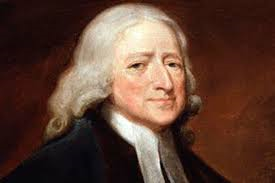
The Methodist Church had its origins in the life and preaching of a zealous and capable Englishman by the name of John Wesley (1703-1791). Wesley grew up in an Anglican pastor’s family and was one of fifteen children. Zealous from the very beginning, John and his brother Charles along with John Whitfield formed the “Holy Club” in Oxford University. This fellowship emphasized good deeds and outward acts of charity, fasting and prayer, and Bible reading. “Because they were so methodical—meeting precisely on time and systematically engaging in a strict regimen of prayer, fasting, Bible reading, and ministry—they soon acquired the name ‘Methodists.’ In jest, some referred to them as ‘Bible bigots,’ ‘Bible moths,’ and the ‘Holy Club.’”[1] The name “Methodists” continued to be used and, of course, it is used to this day.
From the beginning, John Wesley intended to devote his life to the Anglican priesthood. He was ordained to this priesthood at Oxford in 1735.[2] As part of the Anglican Church (the Church of England), John and his brother Charles sailed to Georgia to nurture the Anglican members in that southernmost colony and to preach to the Indians. Sadly, before very long, Wesley returned to England with a feeling of depression and a sense of defeat. Soon he was invited to the Moravian Church on Aldersgate Street where he heard the preface to Luther’s commentary on Romans being read. At 8:45 of May 24 in 1738 Wesley was deeply touched by the message of the reading. He later recounted his momentous experience:
About a quarter before nine, while he was describing the change which God works in the heart through faith in Christ, I felt my heart strangely warmed. I felt I did trust in Christ; Christ alone, for salvation; and an assurance was given me, that he had taken away my sins, even mine, and saved me from the law of sin and death.[3]
This was an important event in Wesley’s life. Although he continued to maintain that infants are regenerated and saved at the point of baptism, this event in his early manhood gave Wesley assurance of his own salvation. The experience instilled a burning desire to communicate the gospel to others. After a visit to the Moravians in Germany, Wesley was more settled with his new-found faith (although he parted from the Moravians because of their tendencies toward Quietism).[4]
Immediately, Wesley began to preach in the open fields and on the streets since the pulpits of the Anglican churches were closed to his unorthodox ways and unconventional message. He had special interest and success with the poor and rejected of society. John formed his converts into small house groups that he called “societies” or “classes” and these were fellowships of people who became accountable to each other in living a disciplined life.[5]
In a sense, we might admire Wesley for his earnest zeal throughout his life until his death in 1791 at the age of 88. During this time, this firebrand preacher rode about 250,000 miles on horseback and wrote 440 books, tracts, and pamphlets.[6] He sold these very cheaply so that the poor could buy them. He could preach 800 sermons a year![7] John preached at least 500 sermons each year and this totaled some 42,000 in his lifetime.[8] One source says: “For the next 50 years, Wesley continued the practice of itinerant evangelism, normally preaching three times a day beginning at 5 A.M., and traveled an estimated 250,000 miles mostly by horseback (in old age by carriage) throughout England.”[9]
John was of small stature, a mere five feet, six inches in height, weighing 122 pounds. He had hazel eyes, “bright and penetrating,” and his hair was silvery white as he aged. “In his habits of order, account-keeping, and punctuality he was literally a ‘methodist,’”[10] One account has Wesley saying, “Be punctual. Whenever I am to go to a place the first thing I do is to get ready; then what time remains is all my own.” Once he was waiting for a ride, then remarked, “I have lost ten minutes, and they are lost forever.”[11] “Every minute had its value to him for work or rest.”[12] This is in keeping with Christ’s own perspective, “We must work the works of Him who sent Me as long as it is day; night is coming when no one can work” (John 9:4).
Wesley had many admirable qualities: “Wesley was a delightful companion, and his comrades on the road and friends in the home witness to his cheerfulness, courtesy, kindness, and wit. ‘Sour godliness is the devil’s religion,’ was one of his sayings.”[13]
Probably the most regrettable relationship of his life occurred when John married. He had been attracted to all that is graceful, vigorous, and moral in women through his life. “His somewhat ascetic and intensely busy public life and his ecclesiastical statesmanship did not crush his tender human feeling.”[14] Wesley lost what might have been “the love of his life” in England. “The loss of Grace Murray was the greatest personal sorrow of John Wesley in life. Very pathetic are the letters and verses in which he refers to the event.”[15]
In 1751, John did marry a Mrs. Vazeille, a widow of a London businessman. For four years, his wife accompanied John on his many travels and endured “the discomforts of this unsettled life” but came to have great jealousy of John. She seemed to have an “angry and bitter spirit.” One description says this: “She [John’s wife] seized her husband’s papers, interpolated his letters, and then gave them into the hands of his enemies or published them in the newspapers. She shut up Charles Wesley with her husband in a room, and told them of their faults with much detail and violence.”[16] Note further this pathetic description:
John Hampson, one of Wesley’s preachers, witnessed her in one of her fits of fury, and said, ‘More than once she laid violent hands upon him, and tore those venerable locks which had suffered sufficiently from the ravages of time.’ She often left him, but returned again in answer to his entreaties. In 1771 he writes: ‘For what cause I know not, my wife set out for Newcastle, purposing “never to return.” Non cam reliqui; non dimisi; non revocabo.” (I did not forsake her; I did not dismiss her; I shall not recall her.)[17]
Wesley believed that as sorrowful and disastrous his marriage was, there was a purpose in it. He believed that “God overruled this prolonged sorrow for his good,” and that if his wife had been a better one, “he might have been unfaithful to his great work, and might have sought too much to please her according to her own desires.”[18] [19] However we evaluate John Wesley, we can learn to not be overcome with personal marriage or family disaster but seek to maintain a good attitude and trust in God through it all.
We can’t help admiring certain traits that Wesley demonstrated: “The salient traits of Wesley’s character included strong-mindedness, something of a family trait; the absence of caution and faintheartedness; and a constitutional incapacity to do anything halfheartedly.”[20] Wesley’s character may further be described in the words of Albert C. Outler: “hard-driving, yet also sensitive; intense, yet also patient; detached, yet also charming; self-disciplined, yet also intensely emotional; opinionated, yet also curious; open to counsel, yet impervious to pressure; brusque with bad faith, yet also tolerant of contrary opinions.”[21] Wesley had a practice of “recording his activities in minute detail” and wrote a careful journal which makes a historical grasp of his travels available today.[22]
Wesley was known for his indefatigable zeal and utter devotion to the Methodist cause. He also believed that both clergymen and laymen should live in frugality with the kingdom of God in view. One writer had this to say about him:
Wesley was so dedicated to his stewardship convictions that he could write: “If I leave behind me ten pounds . . . you and all mankind bear witness against me that I lived and died a thief and a robber.” He practiced his philosophy and died practically in poverty. He believed that the poor had certain rights and that, when half the people were burdened by wealth and half by poverty, human rights had been robbed.[23]
Wesley was very opposed to war and based this on what the Bible says along with simple common sense. Some Methodists through the years have also opposed war. Charles L. Allen wrote:
Wesley was passionate in the denunciation of war. His conviction was that if people cannot settle their differences by reason and calm judgment, then certainly nothing would be settled by war. . . . In Wesley’s mind, war was totally against all reason and common sense. One can only wonder what he would say in reference to the destructive power of war today.[24]
In 1784, Wesley appointed two associates to be superintendents in the United States, Thomas Coke (1747-1814) and Francis Asbury (1745-1816). At this time, Asbury and Coke were given the title of “bishop” which broke with Wesley’s favor of the term “superintendent.”[25] The Methodist Episcopal Church was organized at this time—on December 24, 1784—during the “Christmas Conference” in Baltimore. This established the denomination as a distinct church from the Methodists in England, officially labeled “The Methodist Episcopal Church.”[26] After the American Revolution, Methodism continued its independent status and rapidly a distinguishing character of its own. Traveling preachers were ordained and sent through this new land. These were the classic itinerant preachers who traveled from community to community on the frontier.[27]
By the middle of the nineteenth century, the Methodist Church as a whole was the largest religious body in America with 1.3 million members.[28] They were willing to evangelize the slaves to the point that they numbered about 20% of the membership. “By 1840 the Methodists had become the largest denomination in America, outstripping the reigning colonial denominations—the Presbyterians, Congregationalists and Anglicans.”[29]
A number of defections and divisions occurred during this time. Some were caused by the slavery issue while others had to do with the issue of leadership: Republican Methodist Church (1794), African Union Church (1813), African Methodist Episcopal Church (1816), African Methodist Episcopal Zion Church (1820), Methodist Protestant Church (1830), Wesleyan Methodist Church (1843), Methodist Episcopal Church, South (1845), Free Methodist Church (1860), Colored Methodist Episcopal Church (1870) (now: Christian Methodist Episcopal Church, 1954).[30]
Growth at the first was phenomenal. In 1820 there were 2,700 churches and by 1860 there were 19,000 to 20,000 churches! By 1900 this number had increased to 53,908 churches! Growth then slowed so that by 1950 there were 54,000 churches. As for membership, Methodists numbered 65,000 in 1800. The Methodist Church had 5,700,000 members in 1906 and Methodism as a whole reached some 8 million members by 1920. The largest denomination at the time, the Methodist Church, counted 8 million members by 1939.[31] There continued to be more than 8 million adherents in about 40,000 churches in 1946.[32]
The United Methodist Church (the largest of the Methodist denominations) was formed in 1968 as a merger of the Methodist Church and the Evangelical United Brethren Church. Membership in this large denomination (which combined these two previous denominations) numbered nearly 11 million. A slow decline began at this time. A few years later, in about 1978, there were 10 million members.[33] By 1991 the denomination had nine million members. The 2005 Yearbook of American and Canadian Churches reported that the United Methodist Church had 8.2 million members. Today, there are only about 7.6 million members.[34] Another way of looking at this pertains to the number of members per 1,000 people in the United States population. In 1960 there were 58.9 Methodists but in 2000 this had decreased to 29.8 Methodists, a -49% change in only 40 years![35]
Recent Membership Trends
The Methodist Church was largely a denomination found in rural areas of the country. In the mid-nineteenth century, many Methodist congregations were found in towns of fewer than 1,500 population. Sixty percent of Methodists “lived in ‘town and country’ or rural areas of less than 10,000 population, a much higher percentage than the national average. Twenty-five percent of the Methodists belonged to churches with less than 250 members, and nearly 50 percent with less than 500 members. . . . Only 5 percent of The Methodist Church was nonwhite, while nearly 25 percent of all Methodist members were black.”[36] Obviously, this included black Methodist denominations.

The composition of Methodist churches today (of all kinds) is interesting:
Methodists represent the second largest Protestant family, accounting for more than one-in-ten of all Protestants (12.1%) and 6.2% of the overall adult population. Methodists are particularly well represented within mainline Protestantism, accounting for nearly one-third (30%) of all members of mainline churches, as well as within the historically black church tradition, where they account for nearly one-in-ten (9%) of all members. Most Methodists within mainline Protestantism are members of the United Methodist Church, while most Methodists in the historically black church tradition are affiliated with the African Methodist Episcopal denomination. Methodists represent a very small share (1%) of the evangelical Protestant tradition.[37]
Putting all of this together, we see that Methodists (especially United Methodists) are very seldom seen as Evangelical. “Evangelical” is a term indicating a high view of Scripture and an acceptance of the basics of Christianity. This fact is in keeping with the liberal and unbelieving composition of the denomination.
Interestingly, George Barna, the religious pollster, reported that Methodists have reported an 11% increase in those who claim to be “born again.”[38] However, along with this, Barna evaluated the various American denominations in accordance with “seven theological perspectives” that would “determine the overall purity of people’s biblical perspective.” He discovered that Methodists were near the bottom of the list, with only 38% affirming the seven points.[39] This in no way indicates the issue of salvation for many more points would need to be considered! However, we can see why one researcher stated: “The United Methodist Church is extremely modernistic and ecumenical.”[40]
The rise and fall of the Methodist Church in membership is quite interesting. Notice this report of the decline in the last few decades:
The Methodist Church’s rise and recent decline is perhaps the most statistically striking story in American religious history. At the time of the American Revolution, the denomination was tiny. English Methodist founder John Wesley was hostile toward American independence, which badly hampered the church’s growth in America. After the Revolution, the American church began to operate independently from English Methodists. The legendary Methodist “circuit riders” began reaching the American backcountry, riding on horseback to reach every nook and cranny of the Appalachian frontier and Mississippi River Valley. In 1770, there were about 20 Methodist churches in America. By 1860 that number had grown to more than 19,000.
Methodist growth in America continued into the post-World War II era, reaching a high point of 11 million members in the 1960s. But in the past forty years, as with all of America’s “mainline” denominations, Methodist membership numbers went into free-fall, to a current membership total of 7.6 million. Even as the total number of Americans skyrocketed, the number of Methodists plummeted.[41]
One researcher suggests that the Methodist tendency to become politically active in liberal causes may have had some bearing on the shrinking membership:
An overemphasis on politics is certainly not the exclusive cause of shrinking numbers in Methodist churches: other contributing factors might include theological (not just political) liberalism, the marginalization of intentional Christian commitment at flagship Methodist universities, and various other struggles common to churches across the theological spectrum, such as aging membership and competition from non-denominational mega-churches.[42]
Another article comments on the United Methodist loss of members:
The United Methodist Church has continued to decline in the United States of America, according to reports released by all but four of the denomination’s 59 conferences. According to the reports, in 2011 the UMC suffered a decline of nearly 72,000 members, with 18 conferences reporting membership losses of 2 percent or more.
Mark Tooley, president of the Institute on Religion & Democracy and a practicing Methodist, told The Christian Post that he did not feel confident in the survival of the UMC in America. “Methodism in the U.S. has lost membership every year since 1964. It has lost over 4.5 million members. There is nothing in its U.S. policies that can or will reverse the decline in the near future,” said Tooley.
“My own local church is a very typical U.S. United Methodist congregation. It is selling its Sunday school building for lack of people and finances.”[43]
Another way to look at this would be the annual loss of members in the UMC:
2007 loss of 63,723 members
2008 loss of 77,746 members
2009 loss of 79,056 members
2010 loss of 95,081 members[44]
What we find in the United Methodist denomination is also found in other mainline Protestant churches in America.[45]
Although Methodism in Africa continues to climb, there appears to be few signs that the trend in the United States will cease. One of the main indications of this decline would be the age of the average United Methodist member. The median age is becoming older and older, thus the membership is literally dying out. “The median age of the population in the U.S. is 35; the median age of attendees in The United Methodist Church is 57.”[46] A visit to a United Methodist Church will demonstrate this unrelenting trend. Older members far outnumber children and young people. Additionally, the theologically and socially liberal emphasis of the UMC (The United Methodist Church) that has continued for the past century and a half continues to decimate the membership.
A large survey of its 33,000 churches was done about three years ago and, once again, there was a decline. “The U.S. membership of the United Methodist Church, which has most of its offices and operations in Nashville, dropped by nearly 1 percent last year, to 7.9 million members, according to Yearbook of American & Canadian Churches, released by the National Council of Churches.”[47] One of the larger and “successful” congregations is located in Indianapolis. The minister gives clues to his success:
The church’s senior pastor, the Rev. Kent Millard, said it has offered both traditional and contemporary worship services for years. At a contemporary service, congregants kick back with doughnuts and coffee, a live band plays music and clips from Hollywood movies are shown to illustrate Gospel messages. “Worship is like going to a mall,” Millard said. “There are all kinds of stores. Some people like specialty shops. Some like department stores. When you have variety, people can go where they like.”[48]
Apparently this “seeker friendly” approach is supposed to attract younger and more active adults and families. Further, United Methodists that offered “contemporary” music and media were more likely to attract members. “Worship experiences in vital congregations also shared common characteristics. Churches that use only traditional music were the least effective, while those that used at least some contemporary music and multimedia in worship services scored higher in growth and attendance.”[49] This suggests that people are drawn to more exciting and modern means of communication. If they listen to “contemporary” music during the week, they want this on Sunday mornings as well!
Smaller Methodist Denominations and the United Methodist Decline
Almost from the very beginning, a number of groups departed from the original Methodist Church as formed by Wesley, and then continued in America by Coke and Asbury. Some of these denominations are small and others are somewhat larger but none of them approach the size of the United Methodist Church. In the nineteenth century (the 1800s), the Holiness doctrine arose, based on John Wesley’s own teaching on “Christian Perfection” or “Perfect Love.” This doctrine is found in some of the smaller denominations with a Methodist background: The Free Methodist Church and The Wesleyan Church. Other smaller denominations also have a Methodist origin but are more separated from Methodism, such as The Salvation Army, The Church of the Nazarene, and The Pilgrim Holiness Church[50]
As early as the 1830s, two sisters (Sarah A. Langford and Phoebe Palmer) began to stress the Wesleyan doctrine of holiness. The midcentury revivals in the United States emphasized perfectionism and in the 1860s the National Camp Meeting Association for the Promotion of Holiness was begun. The Free Methodist Church was formed not only to combat slavery but also to promote holiness (in 1860). At first, Methodism’s stress on perfection or holiness included a change in society as well as personal, individual holiness.
As the movement gained impetus and influence in the 1880s, serious and persistent criticism arose more frequently. While earlier the movement aimed at strengthening faith within the denomination, the trend toward what was called “come-outism” increased; it was countered by a fiery brand of intolerance. As the battle focused on the meaning of entire sanctification, “entire” and “instantaneous” became the battle cry on one side, with “progressive” and “gradual” holiness on the other.
The result was the separation of a great number of small groups of people. Among them were the Church of God (Anderson, Indiana), the Church of God (Holiness), the Holiness Church, and groups that eventually clustered in the Church of the Nazarene and the Pilgrim Holiness Church. In the last six years of the century at least ten bodies of predominantly Methodist background were established with entire sanctification as the cardinal doctrine. The movement seemed to find the South and the Midwest as the most fertile for growth. The climax of the long quarrel with the Holiness movement coincided with Methodism’s belabored conversion to theological liberalism.[51]
It would seem that the instantaneous “second work of grace” or “entire sanctification” views were championed by the more theologically conservative people who withdrew from the main Methodist body and formed their own smaller denominations. As the above quotation states, this left the main body of American Methodism in the liberal camp, with all that is suggested in the term liberal.
Therefore, Methodism suffered a change during the period from 1840 to 1890. Part of this came from the Holiness doctrine and part arose from the anti-Biblical theory of evolution as well as compromising philosophy.[52] By the end of the nineteenth century, fewer references to Wesley were made in theological writings. There were “theological responses to cultural forces such as ‘science and its evolutionary world view, the critical study of the Bible, and philosophy.”[53] In 1916 the General Conference of the northern states dropped the requirement that the members had to subscribe to Wesley’s “Articles of Religion.” There was a “radical departure from previous study lists, and the liberal reconstruction of Methodist theology continued to pursue its course.”[54] This is background to understanding why the contemporary United Methodist Church is become so liberal in thinking and why it disbelieves large portions of the Bible.
As the Methodist Church succumbed to theological liberalism in the 1800s, more and more Methodist educational institutions (universities, seminaries, etc.) began to accept the faulty theory of evolution. More rejected the full inspiration, authority, and inerrancy of Scripture. More rejected basic truths of Scripture, going so far as to reject the virgin birth of Christ, the sinlessness of the Savior, the historicity of Adam and Eve, the creation account, and even the resurrection. This led to splinter groups, such as the Evangelical Methodist Church, the Evangelical Congregational Church, and other Evangelical denominations.
Other defections were caused by the issue of slavery, with southern Methodists promoting the slavery option and northern Methodists opposing it.[55] There also arose the desire of blacks to have their own denominations. Today there are black denominations in the United States, such as the African Methodist Episcopal Church, the Christian Methodist Episcopal Church, and the African Methodist Episcopal Zion Church.[56] Some of the other contemporary Methodist denominations include the Congregational Methodist Church, the Evangelical Church of North America, Pillar of Fire, Primitive Methodist Church, USA, the Evangelical Methodist Church, and the Southern Methodist Church.[57]
There are even more Methodist denominations, such as the Reformed Methodist Union Episcopal Church; the African Union First Colored Methodist Protestant Church of the United States of America or Elsewhere, Incorporated; Union American Methodist Episcopal Church; Christian Methodist Episcopal Church; Reformed Zion Union Apostolic Church; New Congregational Methodist Church, Bible Protestant Church; The Evangelical Methodist Church; The Evangelical Methodist Church of America; The United Wesleyan Methodist Church of America; Free Christian Zion Church of Christ; and Cumberland Methodist Church.[58]
Two Departures from Liberal Methodism
Let’s notice two of the smaller defections from the original Methodist Church. First, the Free Methodist Church, formed in 1860 in Pekin, New York.[59] This was a strong anti-slavery denomination that also opposed secret societies. In 1990 this denomination moved its headquarters from Winona Lake, Indiana to Indianapolis, Indiana. Presently, the denomination has about 77,000 members in the United States and 850,000 worldwide.[60]
The Free Methodist Church is generally theologically conservative, whereas the United Methodist Church obviously is liberal in theology. Further, the Free Methodist Church is less ceremonial or liturgical in worship and the clergy generally do not wear clerical vestments.[61] The Free Methodists have been more loyal to Wesley’s emphasis on perfection and the church takes a strong stand on “entire sanctification.”
One point that does indicate a departure from the Free Methodist conservative posture is the denominational acceptance of a feminist perspective. The first general superintendent was B. T. Roberts who favored the ordination of women. By 1911 the denomination accepted this ordination stance and today about 216 of their clergy are women (26% of candidates for the ministry are women)![62] A further point of interest is that early Free Methodists enjoyed a cappella hymn-singing, whereas after 1943, instruments of music made their appearance with many churches today accepting a full range of instruments (though dancing is still not permitted).[63] Like Methodism in general, the Free Methodists have an unscriptural organizational structure, with “the highest governing earthly body” being “the World Conference.” Presently there are 13 General Conferences on the earth.[64] What we will be noticing later about the United Methodist Church will apply in some measure to the aberrations within this small denomination.
In contrast to the United Methodist Church that has compromised the inspiration and authority of Scripture, the Free Methodist Church seeks to base its doctrine on the Bible:
The Bible is God’s written Word, uniquely inspired by the Holy Spirit. It bears unerring witness to Jesus Christ, the living Word. As attested by the early church and subsequent councils, it is the trustworthy record of God’s revelation, completely truthful in all it affirms. It has been faithfully preserved and proves itself true in human experience. . . . The Bible has authority over all human life. It teaches the truth about God, His creation, His people, His one and only Son, and the destiny of humankind. It also teaches the way of salvation and the life of faith. Whatever is not found in the Bible nor can be proved by it is not to be required as an article of belief or as necessary to salvation.[65]
This well-expressed statement should be one all Bible-lovers affirm. This denomination seeks to build the church on the basis of Scripture: “The Free Methodist Church purposes to be representative of what the church of Jesus Christ should be on earth. It therefore requires specific commitment regarding the faith and life of its members. In its requirements it seeks to honor Christ and obey the written Word of God.”[66]
Following the lead of the early Methodist presence in the United States, the Free Methodist Church also incorporates the unscriptural bishop system into its organization.[67] This shows that affirming the authority and trustworthiness of Scripture does not preserve a denomination from accepting unscriptural organizations and practices. As we shall see under the United Methodist discussion later, the body of Christ in the first century had overseers (a better translation than the KJV “bishops”) or elders/shepherds in each congregation who were qualified men in contrast to the Free Methodist (and United Methodist) practice of having bishops over multiple congregations (cf. Acts 14:23; 20:17, 28; 1 Timothy 3:1-7; Titus 1:5-9; 1 Peter 5:1-3).
The Free Methodist statement on baptism is interesting:
Water baptism is a sacrament of the church, commanded by our Lord, signifying acceptance of the benefits of the atonement of Jesus Christ to be administered to believers, as declaration of their faith in Jesus Christ as Savior. Baptism is a symbol of the new covenant of grace as circumcision was the symbol of the old covenant; and, since infants are recognized as being included in the atonement, they may be baptized upon the request of parents or guardians who shall give assurance for them of necessary Christian training. They shall be required to affirm the vow for themselves before being accepted into church membership.[68]
It is perplexing that the denomination says that baptism is a “declaration of their faith in Jesus Christ as Savior” but, at the same time, the doctrinal statement says that infants “may be baptized upon the request of parents or guardians.” This seems like a clear contradiction. Baptism cannot be a statement of faith on the part of the baptized when a baby is utterly unable to have such faith. Further, one would not be able to affirm infant baptism if he uses the Bible as his only rule of faith and doctrine since infant baptism is not found in the teaching or practice in the Bible.[69] Of course, this inconsistency also is found in the United Methodist Church that we are discussing in this study.
Another small splinter group from the main Methodist Church body occurred in 1946 when the Evangelical Methodist Church was formed, with J. H. Hamblen elected as the first General Superintendent. In a description on the denominational website that laments the changes that occurred in the Methodist Church in the nineteenth century, we read:
In the 20th century, things began to change. Slowly the revival fire that had driven the robust expansion of U. S. Methodism began to die out. Methodist leadership, literature and educational institutions became increasingly liberal and humanistic. The message being declared was no longer a consistent church-wide declaration of the infallible authority of the Bible nor of the deity of Christ, His virgin birth, sinless life, bodily resurrection and second coming. The imperative of a personal religious experience, including the “new birth” and “sanctification” [the spirit filled life], was quietly dropped as a requisite for church membership or even leadership. Methodism in the USA stagnated and no longer grew as a church.[70]
This small American denomination describes itself as “a culturally conservative, evangelical church that is ‘fundamental in belief, missionary in outlook, evangelistic in endeavor, cooperative in spirit, and Wesleyan in doctrine.’”[71] The church’s conservative stance is reflected in its “moderate Holiness message, emphasizing the inerrancy of the Holy Bible and the power of the Holy Spirit to cleanse a Christian from sin and to keep him or her from falling back into a sinful lifestyle.”[72] The church does have a Wesleyan view of perfection—“the experience of an entire sanctification—a ‘second. Crisis experience’ in which a believer’s heart is cleansed of self-centered ambition replaced by a perfect love for God and other people.”[73]
As the Methodist Church was becoming “a more liberal and humanistic organization, specifically with its denial of the accuracy, authority and all-sufficiency of the Bible,” the Evangelical Methodist Church was formed “in order to revive what it considered the original principles of the founders of Methodism.”[74] Indeed, it is true that John and Charles Wesley would not recognize the United Methodist Church of our day! When the Evangelical Methodist Church was formed, it “ordained no bishops and gave local congregations the power to hold property and call its own ministers.”[75] In these matters, such as rejecting the bishop system, the EMC sought to return to a more Biblical organization.
In turning away from the main Methodist Church, this small denomination rightly insists on the authority of the Word of God. The Evangelical Methodist Church’s Discipline states:
The Holy Scriptures contain all things necessary to salvation; so that whatsoever is not read therein, nor may be proved thereby, is not to be required of any man, that it should be believed as an article of faith, or be thought requisite or necessary to salvation. In the name of the Holy Scriptures, we do understand those canonical books of the Old and New Testaments, of whose authority was never any doubt in the church.[76]
Unfortunately in 2008, the EMC did set up a General Conference consisting of delegates in the country. “The Evangelical Methodist Church’s distinctive includes a congregational and connectional system of church government, although hierarchical, affords a great degree of freedom for the local church.”[77] The denomination does have General Conferences and a Conference Superintendent (who is not called a Bishop). It must be pointed out that even though the EMC does seek to base its doctrine and life on the Bible, it has a massive number of additional rules, instructions, and regulations that are found in the Discipline![78]
The view of baptism held by the Evangelical Methodist Church is mentioned in the Discipline, Section XVII: “Baptism is not only a sign of profession, and mark of difference, whereby Christians are distinguished from others that are not baptized, but it is also a sign of regeneration, or the new birth. The baptism of young children is to be retained in the church.”[79] We will see that the EMC statement is similar to the UMC statement in calling baptism “a sign of regeneration” which is very ambiguous. Regardless of these words, the church doesn’t really believe that baptism brings regeneration but it is merely a “sign” of regeneration that comes through faith. Notice also that the EMC retains child baptism, a doctrine that Wesley and the following Methodists embraced. As we will see later, this conflicts with the Biblical mandate that baptism must be an expression of faith (Mark 16:16; Acts 8:12, 35-39; 19:8; Galatians 3:26-27; Colossians 2:12) and embodiment of repentance (Acts 2:38-41; cf. Romans 6:1-5; Mark 1:4).[80]
The Evangelical Methodist rationale for its existence is laudatory to some extent, one that is in general harmony with Scripture:
People who consider themselves true to historic Methodism and who find the gospel message central to life and eternity, who are tired of the Bible being relegated to second place in church life, who weary of a singular diet of social action issues, who believe in Jesus, His sinless birth and life, atoning death, literal resurrection and return, and who have a passion and heart for world evangelization and participation in the harvest will find a welcome home in their local Evangelical Methodist Church.[81]
These affirmations are welcome to those enmeshed in theological unbelief and liberal social causes. As we continue to explore the United Methodist Church, we will see that this assessment is justified. American membership of the Evangelical Methodist Church numbers about 8,600 persons.
As the mainline United Methodist Church has moved increasingly to the left, several smaller sects that have origins in the Holiness movement of the nineteenth century continue with certain restrictions from “worldly” elements. They may even differ from what they consider to be “liberal” Holiness denominations. In an enlightening but short discussion, we read:
The beliefs of the conservative holiness movement vary slightly from group to group. The common thread between them is the belief that the carnal nature (or the sinful nature) can be cleansed through faith by the power of the Holy Spirit by one who has received salvation from God through the confession of sins, repentance and faith. This belief is also called entire sanctification or a “second work of grace” that enables one to live a life set apart from the world.
Differences between conservative holiness churches and mainstream holiness churches include, but are not limited to, standards of dress, fashion, and entertainment. A distinctive of the CHM is what is called “standards.” The term “standard” is a label that is applied to a large number of restrictions on activities, styles of dress and types of entertainment. Some of these restrictions that are typical of many, but not all, conservative holiness churches include prohibitions or restrictions on television, movies and popular music. Bible Missionary Churches, and some Bible Holiness Churches, in recent years, prohibited use of the internet inside their homes for all members. Some churches also have various standards for the way women dress and style their hair. Many conservative holiness churches also have restrictions on activities that can be performed on Sunday. Most of the standards maintained by the CHM are addressed directly in Scripture, while some are maintained out of an attitude of carefulness towards God.
During rapid cultural shifts in the United States, the conservative holiness movement has largely been successful at remaining unchanged, especially in regards to outward appearance. The movement holds to the belief that regardless of cultural shifts, its message of a conservative holiness lifestyle should not change or deviate from its original intent. The churches believe that the experience of “holiness of heart and life” will be the answer to holding to the doctrine and teachings of scripture. These churches teach that Christians who have experienced entire sanctification will withstand changes which are contrary to the word of God. Most people in the holiness movement still agree that to live a holy life one must be “separate” from the world.
Because of strict adherence to their beliefs, these members and churches have often been alienated from other mainstream holiness groups. Some efforts to bridge the gap still continue between the two groups.[82]
These types of restrictions and emphases would surely be ridiculed by the mainstream UMC as well as certain more liberal denominations. However, they would be accepted by those who are determined to separate themselves from the world and live unreservedly for God.
The Formation of the United Methodist Church
The highest point of the United Methodist Church came with the 1968 merger. (This was the merger of the Methodist Church and the Evangelical United Brethren Church.) At that time, the membership climbed to nearly 11 million.[83] In the years 1968 to 1972, the Church lost about 518,000 members. Yet it must be pointed out that in 1970, only about 1% of white Methodists were outside of the United Methodist Church in the smaller Methodist denominations. The United Methodist Church was the second largest Protestant denomination by 1972, after the large Southern Baptist Church.[84] Interestingly, the Catholic Digest said that the general public considered Methodists “the most liked religion” in 1967-68.[85]
During the past several decades, this membership number has progressively decreased, in part caused by the liberal social agenda of Methodist leadership. As the Methodist Church increasingly embraced abortion, feminism, political liberalism, sodomy (homosexuality), liberation theology, and other heresies and immoral stances, the denomination continued to shrink. At present the membership has decreased to about 7.6 million. Membership in Africa and other places, however, continues to grow as the American membership shrinks. African Methodists, however, are not as theologically liberal as their American counterparts. A case in point would be the acceptance of sodomy. Whereas American Methodists are more inclined to accept homosexuality, this would be rightly rejected by most African Methodists.[86]
Please Continue at “What About the Methodist Church” (Part 2)
[1] Ron Rhodes, The Complete Guide to Christian Denominations, p. 263.
[2] Ibid.
[3] Ibid. p. 264. See also Arthur Carl Piepkorn, Profiles in Belief, Volume 2, pp. 539-540.
[4] J. Gordon Melton, Nelson’s Guide to Denominations, p. 323.
[5] Later, in America, a class was “usually a small group of no more than twelve people gathered in fellowship to pray, study the Bible, witness to one another, and pursue discipline. . . . The class meeting was a thriving institution in the first half of the nineteenth century, marking Methodism distinctively, but the meeting began to decline around midcentury” (Arthur C. Piepkorn, Profiles in Belief, Volume 2, p. 574).
[6] Charles L. Allen, Meet the Methodists (Nashville: Abingdon Press, 1986), p. 87.
[7] Arthur C. Piepkorn, Profiles in Belief, Volume 2, p. 541.
[8]biblebelievers.net/apostasy/kjcmethd.htm. We might also point out that Charles Wesley (John’s brother) wrote more than 6,000 hymns! Most hymnals today have a selection of them.
[9] newworldencyclopedia.org/entry/John_Wesley.
[10] wesley.nnu.edu/john-wesley/john-wesley-the-methodist/chapter-xx- the-true-john-wesley/
[11] Ibid.
[12] Ibid.
[13] Ibid.
[14] Ibid.
[15] Ibid.
[16] Ibid.
[17] Ibid.
[18] Ibid.
[19] This is related in an interesting book by John W. Drakeford, entitled Take Her, Mr. Wesley (Waco: Word Books, 1973).
[20] Arthur C. Piepkorn, Profiles in Belief, Volume 2, p. 536.
[21] Ibid.
[22] Ibid.
[23] Charles L. Allen, p. 64. We wonder what Wesley would think of today’s United Methodist Church (as well as other Methodist denominations). The per capita contributions to the denomination was $809.65 for 2012. This would be a very small percentage of the average United Methodist income. (See Yearbook of American & Canadian Churches; 2012, p. 386.
[24] Ibid. pp. 73-74.
[25] J. Gordon Melton, Nelson’s Guide to Denominations, p. 325.
[26] The Book of Discipline of The United Methodist Church, 1988, pp. 9-10. The term “Episcopal” comes from the Greek episcopos, meaning “overseer” (or “bishop” in the KJV). This indicates that Methodism has always emphasized the position of Bishop in their organization.
[27] Arthur Carl Piepkorn, Profiles in Belief, Volume 2, pp. 572-573.
[28] Ron Rhodes, Ibid., p. 266.
[29] Concise Dictionary of Christianity in America, p. 216.
[30] The Encyclopedia of American Religious History, Volume 2, pp. 402-403.
[31] Piepkorn, p. 581.
[32] Concise Dictionary of Christianity in America, p. 216.
[33] Arthur Carl Piepkorn, Profiles in Belief, Volume 2, p. 567.
[34] Gcah.org/site/c.ghKJI0PHloE/b.3828783/. See also Yearbook of American & Canadian Churches: 2012 (Nashville: Abingdon Press, 2012).
[35] Rodney Stark, What Americans Really Believe (Waco: Baylor University Press, 2008), p. 22.
[36] Ibid., p. 585.
[37] religions.pewforum.org/pdf/report-religious- landscape-study-chapter-1.pdf
[38]barna.org/barna-update/article/5-barna -update/53-religious-beliefs-vary- wide ly- by-denomination
[39] Ibid. Those churches that were even lower would be the Lutherans (37%), the Catholics (28%), and the Episcopalians (28%).
[40] biblebelievers.net/apostasy/kjcmethd.htm
[41]patheos.com/Resources/Additional- Resources/Rise-and-Fall-of-American- Methodism-Thomas-Kidd-02-22- 2012.html?print=1
[42]patheos.com/Resources/Additional-Resources/Rise-and-Fall-of-American-Methodism-Thomas-Kidd-02-22-2012.html?print=1
[43]christianpost.com/news/ united-methodist-church-continues -to-decline-in-america-but-gains -in-africa-79384/
[44] Yearbook of American & Canadian Churches 2012, p. 14.
[45] Ibid., p. 11.
[46]umc.org/site/c.lwL4KnN1LtH/b.6072841 /k.7ACF/2010_State_of_the_ Chur ch_Congregational_Life_ Survey.htm#.Ua5BDCco4ec.
[47] foxnews.com/us/2010/09/01/united-methodists -commission-survey-attempt-turn -dwindling-memberships/.
[48] Ibid.
[49] umportal.org/article.asp?id=6991
[50] The Encyclopedia of American Religious History, Volume 2, p. 403. Concise Dictionary of Christianity in America, pp. 216-217.
[51] Piepkorn, pp. 576-577.
[52] Piepkorn, p. 578.
[53] Ibid.
[54] Ibid., pp. 578-579.
[55] Piepkorn, p. 575.
[56] The Encyclopedia of American Religious History, Volume 2, p. 401. Before 1954, the Christian Methodist Episcopal Church was known as the Colored Methodist Episcopal Church (Concise Dictionary of Christianity in America, p. 216).
[57] Ron Rhodes, Ibid., pp. 391-392.
[58] Arthur Carl Piepkorn, Profiles in Belief, Volume 2, pp. xi-xii, 533-628.
[59] en.wikipedia.org/wiki/Free_Methodist.
[60] Ibid.
[61] Ibid.
[62] Ibid.
[63] Ibid.
[64] Ibid.
[65] fmcusa.org/uniquelyfm/doctrine/
[66] Ibid.
[67] fmcusa.org/bishops/
[68] Ibid.
[69] See particularly Why Baptize a Baby or Young Child and Baby Baptism and Baptismal Regeneration: What does the Bible say?, both published through our True Discipleship, PO Box 330031, Fort Worth, TX 76163-0031.
[70] emchurch.org/beliefs-practices/emcumc-difference/
[71] en.wikipedia.org/wiki/Evangelical_Methodist_Church.
[72] Ibid.
[73] Ibid.
[74] Ibid.
[75] Ibid.
[76] emchurch.org/downloads/General/ EMC%20Discipline%20and%20Handbook .pdf.
[77] emchurch.org/beliefs-practices/emcumc-difference/
[78] emchurch.org/downloads/ General/EMC%20Discipline% 20and%20Hand book.pdf.
[79]emchurch.org/downloads/General/EMC%20Discipline%20and%20Hand book. pdf,
[80] As noticed in an earlier footnote, see particularly our booklets, Why Baptize a Baby or Young Child? and Baby Baptism and Baptismal Regeneration: What does the Bible say?, both published through our work: True Discipleship, PO Box 330031, Fort Worth, TX 76163-0031.
[81] emchurch.org/beliefs-practices/emcumc-difference/
[82] en.wikipedia.org/wiki/Conservative_holiness_movement
[83] Frank S. Mead, Handbook of Denominations in the United States, 11th Edition, p. 239.
[84] Piepkorn, p. 596.
[85] Ibid.
[86] The official church standard does continue to say that heterosexual marriage is God’s will.


 You can reach us via e-mail
at the following address:
You can reach us via e-mail
at the following address: