

The Uvalde Shooting
Heaven or Hell–this the Question
Richard Hollerman
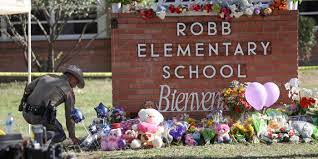
By now, everyone in the United States, at least in Texas, has heard of the Uvalde, Texas murders. We are referring to the twenty-one people who were murdered in Uvalde, Texas. I think that this was a “middle school” (as they call it today) at Rob Elementary School. We grieve along with the fathers, mothers, and the whole community.
We know that all of this has not been settled at this point. There is an investigation going on and I don’t know how long it will take. At least, for the present, we can express our sorrow for this tragedy and offer our condolences. Even without all of the answers (socially and theologically) we know that God knows and will do all things well.

There is one point that I don’t understand—and perhaps you will be able to help in this. We know that 1,800 or 1,900 years ago there arose a belief that there was an “impurity” attached to a child in his or her early years. This needed to be eradicated through baptism—and so arose baby or infant baptism—a false teaching that attaches a special saving significance to this rite. By the time of Augustine (about AD 400), he proposed the need to “baptize” a baby to eliminate inborn or Adamic sin. Some reacted to this and, gratefully, the Catholic Church has avoided this false doctrine in their loyalty to this famous theologian, author, and preacher.
Augustine thought that if the child was not immediately “baptized” that child would go to hell, a place of eternal fire. This was eventually altered into the Catholic doctrine of “Limbo” that says that the child was not to go to hell but would not go to heaven either. He would go to another place where the baby would miss out on the glorious presence and “beatific vision” of God.

Even at this time, there are a number of churches and denominations that tenaciously cling to “infant baptism”—which is really not a “baptism” (an immersion in water). We refer to such churches as the Catholic Church, the various Orthodox Churches, the Anglican Church, the Methodist Church, the Presbyterian Church, the Episcopalian Church, and others. As you can see, millions of denominations continue to “baptize” little babies or infants. (Obviously, this is all in vain for this amounts to nothing.)
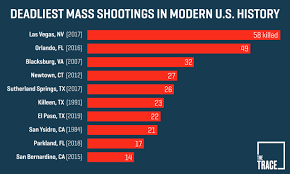
This is all background for our comments about the Uvalde murders. We understand that the young person who shot his grandmother and then murdered 21 people at the school (19 children and two teachers) was eventually killed himself. We now have 21 dead persons at this eventful encounter in the Hill Country of Texas. Another 17 students were injured. From what we’ve seen online, many of those murdered were about age 10 with one or two age 9 or 11.

We wonder . . . and probably many may think that I wonder too much. If we reject the Augustinian theology that says that an “unbaptized” (actually a baby that did not have water poured on him or her) was to be sent to hell—then what? If a child grew to an older age (perhaps adolescence and surely adulthood), what then? Scripture is clear: a boy or girl without salvation will be cast off by God. This is what the Bible clearly says: “The wages of sin is death, but the free gift of God is eternal life in Christ Jesus our Lord” (Romans 6:23).
In another place, God says, “. . . the Lord Jesus will be revealed from heaven with His mighty angels in flaming fire, dealing out retribution to those who do not know God and to those who do not obey the gospel of our Lord Jesus. These will pay the penalty of eternal destruction, away from the presence of the Lord and from the glory of His power” (2 Thessalonians 1:7-9).
There is a lot that we don’t know and I freely admit my ignorance. So far, there has been about 11,000,000 dollars raised for the families involved. Regardless of the financial aspects to all of this, what about the spiritual aspect?
We know that a 5 year-old child is “safe” in the arms of God. And a 16-year-old needs to be saved or forgiven. What about the 8, 10, or 12 year old? Some churches teach what has been called “the age of accountability” but neither they nor I know when that age is. Surely the teachers at Uvalde were old enough to come to Christ, but what about the 19 students who were murdered? Did God hold them accountable? We don’t know the number involved but if they were in 4-6 grade, we suppose that they were about aged 10 (as we mentioned earlier). Did God hold them accountable for their sins? Probably at least some of them would be rejected by a holy God but could it be that some of them (the younger ones, mentally and socially) were not held accountable?

Whatever the answer, it would seem that this question (which is a very, very important one—we hope you will agree) that has to do with the eternal welfare of these children is a critical one. It is also a difficult and awkward question when young children are involved. These were not age 4 or 5 or age 15 or 17, but perhaps age 10.
Sadly, this is a concern that seems to have been entirely missed by the media, by the parents, by the educators, and by nearly everyone else. We know that in this matter, in which vast numbers of people just assume that “everyone” will go to heaven, it really doesn’t matter to many or even most people. But it matters to God. And it should matter to us too.
We ask, “As sad as this shooting or murder was, it would be far better for a child to go to God in heaven than to spend eternity away from God, wouldn’t you say?” And if you were a parent who has young children, surely you would want them to know God and be safe, wouldn’t you? Even if God were to accept these children or some of them, what of those who are not? What would happen two or four or more years from now—if they were to reject coming to God in repentance? What about them? I urge everyone—especially the parents and relatives—to consider this question carefully. Ponder it without delay.


 You can reach us via e-mail
at the following address:
You can reach us via e-mail
at the following address: