
The Simplicity of the Great Commission (Sequel)
Richard Hollerman
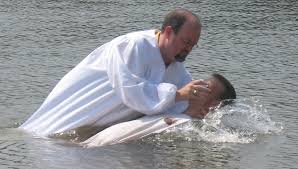
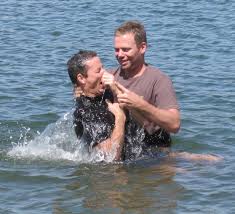
We’ve just completed an article that we posted on the website entitled “The Simplicity of the Great Commission.” In this important article, we were intrigued with the question of how we are to view the Great Commission and the baptism that Jesus commanded in this Manner. We discussed how simple the so-called Great Commission is, as recorded in Mathew 28:18-20 (but this is similar to the Great Commission as found in Mark 16:15ff and Luke 24:46ff).
We discussed how we are to look at these simple words in view of the fact that so many millions of people in this world fail to see the importance of this baptism or perhaps even refuse to see the importance of this act. We discovered that, indeed, these words in Matthew 28:18-20 are extremely important! So important, in fact, that if one refuses to obey this “Great Commission” he is closing the door to a vitally important command of our Lord and must indeed face the consequences for his or her refusal to submit to our Savior’s Words!
First, why do so many People refuse to obey the Great Commission?
The reason for this may be that the given person may be more interested in pleasing his parents or other family members? Or perhaps is desirous of submitting to another person in the family circle or a trusted friend or a teacher, preacher, priest, or pastor—or even a spouse!
Although we are to please family members or religious leaders, we are not to be so concerned about obeying their orders or submitting to their wishes that we put them before the very words of our Savior in Scripture! We recall the words of our Lord in saying, “Many even of the rulers believed in Him [Jesus], but because of the Pharisees they were not confessing Him, for fear that they would be put out of the synagogue; for they loved the approval of men rather than the approval of God” (John 12:42-43).
Is it so important to you that you please your church authorities and your parents that you are willing to put their words before those of the Lord Jesus? Paul asked the pointed question: “Am I striving to please men? If I were still trying to please men, I would not be a bong-servant of Christ” (Galatians 1:10b). Are we wanting to please Jesus or please another person? Paul rightly stated that he was not “pleasing men, but God who examines our hearts” (1 Thessalonians 2:4b). Let this be our attitude.
Let’s not forget the words of our Lord: “He who loves father or mother more than Me is not worthy of Me; and he who loves son or daughter more than me is not worthy of Me” (Matthew 10:37). Thus, let us determine to submit to Jesus regardless of anyone we must reject!
Second, is this a difficult command?
We know that some people believe that what Christ commanded here is just too hard to obey, thus they are willing to lay aside the request and command of our Lord. But is it so difficult? The apostle John said that His [Christ’s] commandments are not burdensome” (1 John 5:3b). While His command is maybe not something that is easy or desirous, we know that it is not really “burdensome.” We may find Christ’s requirement of baptism [immersion] to be more difficult than what we are familiar with, however, we must realize that He is not requiring the impossible. After all, if Jesus gave His life for you, surely you can give your life for Him!
Third, is this an ambiguous command?
We know that some people may think that the command to be immersed into Christ is difficult or hard to understand, but generally we must say that it is not really ambiguous. While it may be difficult to obey because a certain pastor or preacher will not like it, or because a father or mother may say that this is being disloyal to your family or relatives, if we take off our religious “glasses” and look afresh at the command and the requirements attendant to this command, we must admit that this is not really ambiguous. It is simple and doable.
Fourth, why do so many religions not obey the Great Commission?
We know that many (most) churches do not obey the command of the Great Commission or don’t even understand this requirement, for there are millions who do understand the command. Further, we think that if more pastors, priests, and preachers of popular churches simply looked at the command and what it requires, perhaps the majority will both understand the command and encourage others to submit to it.
True, many ecclesiological organizations will refuse to obey, some will not have the desire or interest in submitting to this command, and some others will not want to step out in a way different from their rule books or theology books, but we think that others may welcome truth when it is to be seen clearly.
Fifth, how do we look at these many cases of people not submitting to the Great Commission?
This is similar to the first point above. Put yourself in the shoes of the person who doesn’t know of the Great Commission or refuses to obey the Commission. Although there may be some dishonest souls who refuse to submit to Christ’s authority (even though the very Commission itself says that Jesus does have all authority), and others just don’t know of the command as Jesus gave it, there may be others who are unaware of what Jesus required and what He requires. We think that they are at fault since it is so simple that even a child can see and submit to it, but regretfully many do reject it.
Let’s make sure that people do understand the Lord’s Commission, and then trust that many of these people are looking for the opportunity to submit to our Lord. It will require much humility, much submission to what they consider an onerous command, and much willingness to have humility (and swallow one’s pride), still there may be many who want to know and do what Jesus commanded.
Sixth, what will be the outcome of those who do not obey the Great Commission?
We only have the inspired words of the Lord in Scripture but this would be sufficient to know the requirement of Jesus. As you must know, there are many insights into Christ’s will found in the New Testament. For example, the Lord declared, “He who rejects Me and does not receive My sayings, has one who judges him; the word I spoke is what will judge him at the last day” (John 12:48). To me, this says that Christ’s Word (and will) are of utmost importance! Again, the Lord Jesus said, “Who doe does not love Me does not keep My words; and the word which you hear is not Mine, but the Father’s who sent Me” (John 14:24).

As you will remember, Matthew 28:18-20 points out that we must definitely obey our Lord Jesus, in what He said and how He lived. There is no other option. We literally must submit to Jesus’ will. We must not equivocate, deny, reject, or substitute for what He clearly said. He spoke so as to be understood and gives no reason to deny His words. As we mentioned, the so-called “Great Commission” (as found in Matthew 28 as well as Mark 16 and Luke 24—and we might add Acts 1) was meant to be understood and obeyed.
Are you obeying it yourself? Have you insisted on bending the rules or making certain substitutes? Or have you been willing to humbly obey our Lord in what He plainly said? And are you obeying it today? As Jesus said in Mark 16:16b: “He who has disbelieved shall be condemned.” If we have submitted to Jesus in this, wonderful way, what will you do about it? But if we have refused to obey His words, what will you answer on the Great Day of Judgment? Now is the time to think and choose to obey! There is no excuse or denial—but we must read, understand, and yield our own will to that of our Lord.


 You can reach us via e-mail
at the following address:
You can reach us via e-mail
at the following address: