
The Sad Lot of Black Women and their Hair
Richard Hollerman
Granted, I am not part of the 12% of Americans that are black or brown in color. My color is not of this controversial color. I suppose this would say that about 6% of Americans are female blacks, but we haven’t seen this figure in print. Although black men do have a problem—a serious problem—with the worldly hairstyles they have (at least some of them), we are focusing on women with these words.
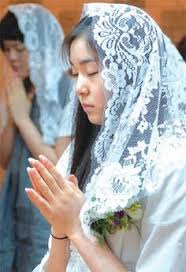
As a Christian, I have always thought that women would not have much of a problem in regard to hair styles. Since Scripture says that a woman is to cover her head while praying and prophesying (and some would say that this applies to her every waking moment), I always thought that women would not have much of a problem (at least a major problem) in their hair styles (see 1 Corinthians 11:1-16).
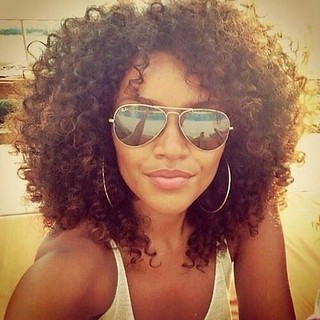
Yes, I knew that black women (and men) had different hair textures than white or those of other skin colors from various other origins. We didn’t think that this should be a serious obstacle to a woman’s appearance. Since God is the Creator and He made every person different, why shouldn’t we be content with the way God has made us?
Yet we know that traditionally, women have been somewhat more aware of their external appearance than men—or so it seems to be the case. This is the way with African-American women. This would not merely be the case of those whose origin is Africa but those who were sent to other lands from Africa, which, today, may include North America, South America, the Caribbean islands, perhaps even Europe and various countries around the world.
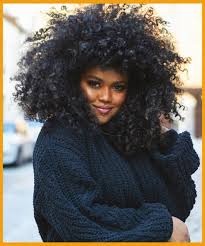
This is not to say that men don’t also relish their outward appearance but that women, it seems, are more interested (see 1 Timothy 2:9-15; 1 Peter 3:1-4). And maybe this is why women, including blacks, are much more concerned about their hair than others. Yes, Caucasian women are interested in their external appearance, but perhaps because black women have a certain texture of hair, they are more concerned about how this hair is stylized and presented. Further, we know that one need go into any department store and there are dozens of products, particularly for the hair, aimed at black women.
Although the beauty industry professes inclusiveness, stylists aren’t being trained in all hair types, including textured hair common among Black women. As a result, Black women cannot be expertly serviced in all salons. This is problematic, especially as the salon is a place dedicated to self-care, a place to be pampered and feel beautiful.read this online about hair stylists. (https://www.huffpost.com/entry/racial-bias-salons-black-hair_l_5e5d45fec5b63aaf8f5b199d)
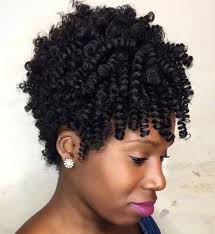
Is the styling of hair something that you are aware of? We find this:
As an extension of identity, hair is deeply tied to ritual and memory. Perhaps your mother pressed the locks from your first haircut in a keepsake book, or you have hazy recollections of a parent combing your hair in a bath. For African-American women especially, hair is culturally laden with significance and collective memory. (Ibid.)
We don’t know but it would seem that black women are responsible for the article that we are referencing.
Authors Ayana D. Byrd and Lori L. Tharps explain in their seminal book “Hair Story” that before the African diaspora, hair functioned as part of a complex language system, indicating geographic origin, community rank and marital status, among other cultural markers. (Ibid.)
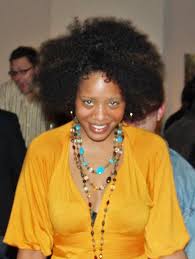
We don’t know for sure, but it may be that Byrd and Tharps are black (but it may be that they are not). We know that the first-named woman does have a strange name but this doesn’t say in an absolute way, the ethnic background that she stands for. Either way, they write from a black perspective. As we continue to read, we are quite convinced that both black and white (and other) types of hair reign in such a way that people need to heed the kind of hair they have and the “salons” that they frequent.
In the current zeitgeist, there’s a movement for people to be educated in cultures other than their own, and for stylists in particular to be adequately educated in all types of hair. However, this isn’t always the case.
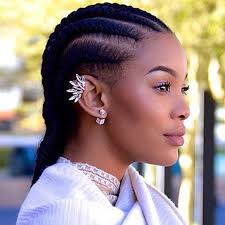
“As a Black woman, and someone who goes on TV regularly, I’m hypersensitive about who touches my hair,” said Cindy Conroy, a TV personality and stylist. “My hair needs an expert and gentle touch to keep it healthy,” she explained. “I feared [an inexperienced stylist] might not know how to gently coax my locks into bouncy curls.” (Ibid.)
Sadly, we are convinced as we read more and more that people are servants of the hair industry and submissive to what this industry wants. Where is God in all of this? Where is the Lord’s will in all of this? Where is it possible to seek God’s will regarding the outward appearance—particularly the hair? What about God’s Word?
As we continue to read, the author (a black woman) says that “white” women simply don’t understand the black culture! “We wear Bantu knots, cornrows, locs, big Afro curls and twists. We still live in a culture where there is discomfort surrounding these styles. These styles represent a push back.” (Ibid.) (Of course, we have the impression from this excerpt and all that we have read and quoted, that the authors are referring to evil and sinful hairstyles—that the Christian woman must reject and renounce.
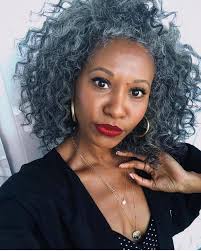
I continued to read more and more in this article and it was plain to see that the authors were focused on style. They expected the stylist to cater to the 5% of the public who had black hair and were black themselves. (Of course, as we have discovered, some 12% of the public are black—either women or men.)
This is where we must emphasize that people are to focus on the inside, on the spirit, and that God as Creator rules—whether red, yellow, black, brown, or white. God knew what He was doing when He created people and He continues to know people. We were glad to read at the very end of the article we were reading: “Why are we focusing on physical attributes? There’s so many deeper things to focus on.” I would need to say, with firmness, that this is correct.
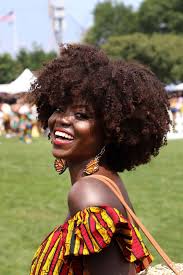
I might add here that we are not suggesting that God created black or white women or men. No, we can all trace our ancestors back some 2450 years to the time of Noah and His family. He had three sons and their wives and from these few all of the families have their origin. We refer to blacks and whites and olive-skinned people.
Further, it is good to know that a woman is to “cover” her head (and hair) and this would settle at least some of the ultra-concern that the authors have and most others have—regardless of their ethnic background. After all, if Sue, Sandy, Sarah, or Stacy have covered heads, why would they need to be utterly concerned about the style of hair they have? Of course, we are referring to 1 Corinthians 11:3-16 and ask that you read this carefully.
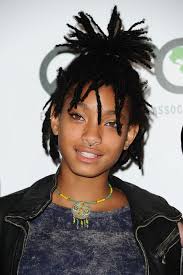
Let’s come to Christ and glorify God! Let’s not fill our hair with manifold ways to “beautify” the hair, to “straighten” kinky hair, to make the hair like another ethnic group. Be content with the way that God has made you and go on with a focus on the Lord and a determination to do His will. This is what God wants—and it should be what we also want!


 You can reach us via e-mail
at the following address:
You can reach us via e-mail
at the following address: