The Rainbow
Richard Hollerman
The Original Significance and the Present Significance
What do we know about the rainbow? Let’s go back some 4450 years to the time of Noah—and then we will come to the present day and the way the Rainbow is used in our world
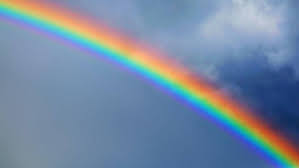
The first reference to the rainbow in Scripture and in history would be in Genesis 9. We suggest that you read verses 8-17 for it is there that we find the significance of this covenant sign. We assume that it was the first time that it was seen in the clouds. In short, God placed this “bow” in the clouds, saying, “I will establish My covenant with you; and all flesh shall never again be cut off by the water of the flood, neither shall there again be a flood to destroy the earth” (9:11).
God then referred to the Rainbow as the “sign of the covenant” (v. 12). He said further, “I set My bow in the clouds, and it shall be for a sign of a covenant between Me and the earth” (v. 13). The Lord said that this “bow” would be seen in the cloud so that He would remember the covenant He had made (vv. 14-15). “When the bow is in the cloud, then I will look upon it, to remember the everlasting covenant between God and every living creature of the flesh that is on the earth” (v. 16).
As we consider the “rainbow” we come to the present time. Just what is this item and how is it maintained? We find this
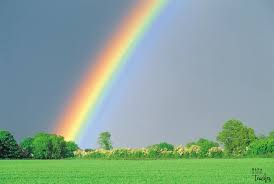
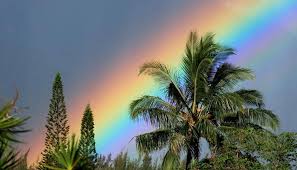
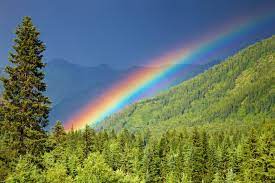
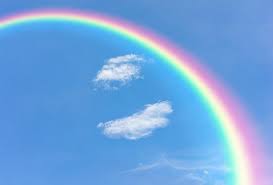
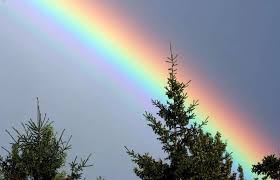
A rainbow is a multicolored arc made by light striking water droplets. The most familiar type rainbow, including this one in southern Chile, is produced when sunlight strikes raindrops in front of a viewer at a precise angle. The colors on a primary rainbow are always in order of their wavelength, from longest to shortest: red, orange, yellow, green, blue, and violet. (https://education.nationalgeographic.org/resource/rainbow)
We also find this from another source:
The rainbow, series of concentric coloured arcs that may be seen when light from a distant source—most commonly the Sun—falls upon a collection of water drops—as in rain, spray, or fog. The rainbow is observed in the direction opposite to the Sun.
The coloured rays of the rainbow are caused by the refraction and internal reflection of light rays that enter the raindrop, each colour being bent through a slightly different angle. Hence, the composite colours of the incident light will be separated upon emerging from the drop. The most brilliant and most common rainbow is the so-called primary bow, which results from light that emerges from the drop after one internal reflection. (Encyclopedia Britannica)
This, of course, is a scientific and secular explanation of this weather issue. Regardless of how it is formed, we know that God used it in Genesis 9 for his purposes. And that is to indicate to human beings (us) that He will not destroy the world with water. Of course, we know that He will destroy it by fire the next time (2 Peter 3:4-13). It is the climactic way that God will judge the world and those who dwell on it at the end of time!
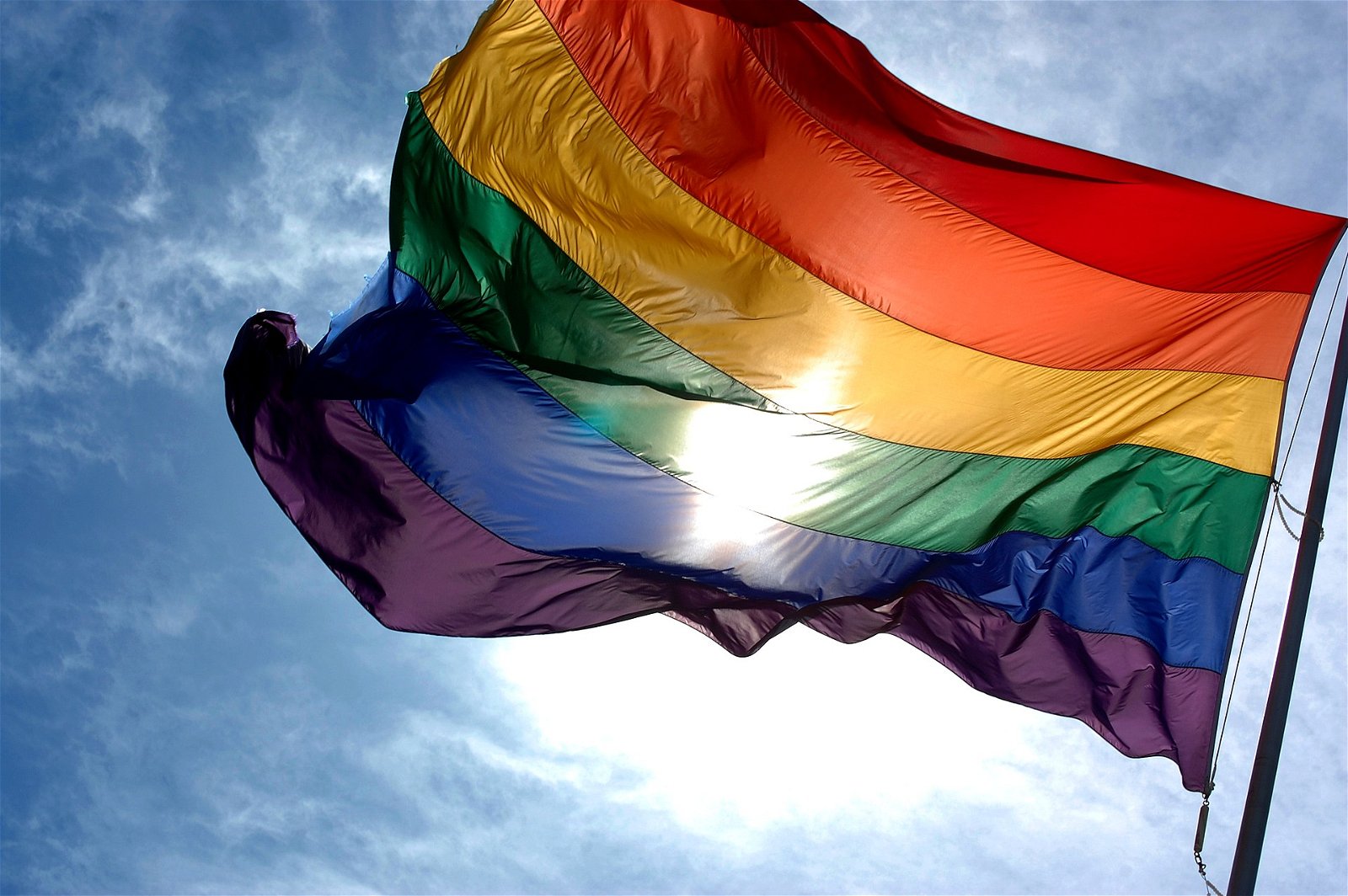
In more recent times the sodomites or homosexuals have taken the rainbow.
The rainbow, however, wasn’t popularized as an official symbol of the gay community [the sodomites or homosexuals] until the 1970s. In 1978, San Francisco artist Gilbert Baker designed what is believed to be the first modern gay pride flag by combining eight stripes, each a different color with its own symbolism: pink for sex, red for life, orange for healing, yellow for sunlight, green for nature, blue for art, indigo for harmony, and violet for the human spirit. When he wanted to manufacture the flag for sale, he found that hot pink wasn’t as available as the other colors, and so the flag dropped to seven colors. Baker later dropped indigo to maintain an even number, and the flag arrived at its contemporary six colors. When San Francisco gay activists marched to protest the 1978 assassination of city supervisor Harvey Milk, they marched with Baker’s flags.
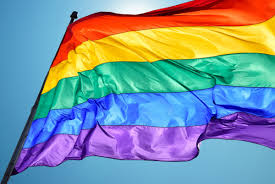
Pop culture also gave the rainbow resonance with gay activists, perhaps because of Judy Garland and her signature song “Somewhere Over the Rainbow.” Garland was a major star to the gay community throughout the 1950s and 1960s. Gay men came out in droves for her performances, and, from World War II forward, many in the LGBT community referred to themselves as “friends of Dorothy,” a phrase that seems to have derived from Garland’s performance in The Wizard of Oz. The pivotal riots at the Stonewall Inn occurred just hours after Garland’s funeral, and her death may have helped provoke the unrest. Garland had earlier bragged, “When I die I have visions of fags singing ‘Over the Rainbow’ and the flag at Fire Island being flown at half mast.” Garland died in 1969, before the popularization of the modern LGBT flag, but some Fire Island houses were reportedly draped in black.
Of course, rainbows and rainbow flags carry significance outside the LGBT community. The rainbow is an important symbol in the Bible, representing a promise of peace from God to Noah, and some Christian groups have used that symbol in their iconography. The German anti-Lutheran leader Thomas Müntzer flew a rainbow flag during the Peasant War in an effort to show that God was on his movement’s side. Hippies sometimes used a rainbow flag when marching for peace in the 1960s and 1970s, which may have helped inspire Baker’s design. (https://slate.com/human-interest)
Thus, we can see that the six colors used in the sodomite “flag” has a meaning but it extends beyond this. Probably people in general think of homosexuality when they see the Rainbow flag or the Rainbow colors. In other words, they have taken God’s symbol that was wholesome and good and used it in a wicked way to indicate perversion.
We are sorry that this is a long article but it is quite relevant to the meaning of the “rainbow” and the colors involved. Thus, we read:
Of all the iconic symbols that God has given us, the rainbow stands as the most vibrant reminder of his faithfulness. After the global flood, God set the rainbow in the sky as a sign that he would never again flood the whole earth (Genesis 9:8–17). . . .
While this event occurred over 4,000 years ago, the covenant stands today. We can trust this covenant and the original rainbow meaning because God is faithful—his character cannot change. We know there will never be another globe-covering flood because our God has promised so.
Changing Colors and the Original Rainbow Meaning+
Recently, the rainbow imagery has been used to remind people of another idea, but one that is from the mind of man and not the mind of God. Their rainbow meaning is different from the original.
The rainbow flag was first developed in 1978 by Gilbert Baker and used as a symbol of pride for the gay community.1 The flag originally included eight stripes, but the most common version today consists of six colors. However, there are many variations intended to include the ever-increasing identities of people who shun God’s Word and let their feelings guide their actions. This symbol is used around the world to indicate support for those promoting free expression and equality for everyone, regardless of their sexual identity. Homosexual activists expect everyone to toe the line of the sexual revolution; many Christian churches [apostate churches] have actually done so, flying the flag in support of this movement.
As would be expected in today’s culture, this symbol of aberrant sexuality is used widely with badges, filters, overlays, and countless other variations. As Christians seek to engage on this topic, particularly on social platforms, a particular biblical-sounding truth claim has become popular. As always, we should stop and consider such claims made to see if they match reality and the Bible.
The claim that “the official rainbow” is “the Lord’s creation” is one that we can accept as the rainbow is part of the physical world, all of which was created by God. This claim is consistent with Scripture. But what about the claim of seven colors? A rainbow forms as a result of the laws of nature that God imposed on his creation. As light from the sun passes through droplets of water suspended in the atmosphere, it’s bent (refracted) and bounces back (reflected) toward the source at an angle of 40–42° and then is refracted again. The refraction causes the various colors of visible light to separate from one another, creating a spectrum of visible light that we know as a rainbow. But the keyword to describe the rainbow is spectrum.
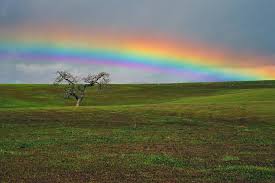
Can you look at a rainbow and point to where the yellow ends and the green begins? Would any two people indicate the same dividing line? That helps to illustrate the fact that the seven colors we have traditionally assigned are arbitrary. We could just as easily have 9, 12, 18, or 144. Just because a teacher introduced you to Roy G. Biv (red, orange, yellow, green, blue, indigo, violet) doesn’t mean he is real. We use the seven colors as a helpful device to talk about the rainbow, but there is nothing in nature or Scripture that would demand a seven-fold division. The claim that “the official rainbow” has seven colors cannot be substantiated—a rainbow has an infinite number of colors in a continuous spectrum.
We use the seven colors as a helpful device to talk about the rainbow, but there is nothing in nature or Scripture that would demand a seven-fold division.
A second claim is that the “LGBT flag only uses 6” colors. As mentioned previously, there are many different versions of the flag used to represent the sexual revolution. While six is common, the number of stripes and colors used varies in different contexts. On the face, this claim is selective, referring only to one expression of the flag, though arguably the most common.
Significant Figures?
So what about the claims made of the numbers six and seven in the Bible? A fairly solid case could be made that the number seven is symbolic of completion or fullness in the Bible. But to make a biblical case that the number six “represents falling short, imitation, and satan [sic]” is quite a stretch. The only passage that makes any sort of explicit statement is Revelation 13:18, in which 666 is called the “number of the beast” and the “number of a man.” Biblically speaking, this connection is tenuous at best.
While it is true that some gay pride flags omit the indigo stripe, it is only “omitted” if the standard we are using is the arbitrary seven-color rainbow. That is a logical fallacy called begging the question—you must assume there are actually seven colors in the rainbow to claim that someone has removed one of the colors. Other versions of the flag include indigo, pink, black, and brown. What should we conclude of those flags that don’t have six stripes?
As for the connection between indigo and royalty, that has been true in some historical contexts. But so were violet and red, colors that are still in the six-stripe flag. Connecting indigo to “spiritual knowledge and wisdom, often connecting heaven to earth” sounds much more like Gnostic or New Age philosophizing than biblical truth. In Baker’s original flag, the indigo stripe represented harmony. If we want to accurately represent our opponents’ views, we should ask them, “Why does your flag not include an indigo stripe as it originally did?”
While it is true that the LGBT community and its allies do not want to be connected to and bound by the laws of the God of the Bible, the conclusions used in posts like this are not based on sound arguments. The premises and explanations are not consistent with science or the Bible. Christians should strive to make their arguments consistent with both.
Seeing Us in the Wrong Light
Comments on the original post show that the members and allies of the LGBT community are aware of the changing nature of the flag symbol and the continuous nature of the rainbow’s spectrum. They have used this image to heap scorn upon Christians and mock them for their ignorance of science and history. Some examples include:
If there is going to be mocking of us for our beliefs—and Christ himself was mocked—let them mock us for the truth we are proclaiming, not falsehoods.
Before you accept the claims on social media, take care to consider whether they are accurate, and then indicate your approval or share them with others.
Before you accept the claims on social media, take care to consider whether they are accurate, and then indicate your approval or share them with others. The rainbow has a significant meaning assigned by God, and we should use that fact to point people to the judgment that came as a result of sin (cf., Genesis 6). The Bible is clear about the fate of those who take pride and persist in sin—they will not inherit eternal life (1 Corinthians 6:9–11).
As Christians, we should be concerned enough to explain to them their rebellion against God, so they understand they have offended him and then point to the remedy for that sin. Jesus Christ came to offer hope and forgiveness to those who turn to him in faith, repenting of their sin, and trusting in his sacrifice to pay for their sins. If we are going to use the rainbow, let us do so in love and truth (i.e., both biblical and scientific) that we may praise and glorify God and rejoice as he grants new life to others in Christ as he has already done for us: “And such were some of you. But you were washed, you were sanctified, you were justified in the name of the Lord Jesus Christ and by the Spirit of our God” (1 Corinthians 6:11).
Footnotes
- “Rainbow Flag,” in The Gay Almanac, National Museum and Archive of Lesbian and Gay History (New York: Berkley Trade, 1996), 94.
- (https://answersingenesis.org/the-flood/rainbow-meaning-
See also “Taking Back the Rainbow” at (https://answersingenesis.org/the-flood/taking-back-the-rainbow/),
Whose Bow is It, https://answersingenesis.org/family/homosexuality/whose-bow-it/.
Also
Rainbow Fries and Flags: A Sign of Our Secular Times (https://answersingenesis.org/blogs/ken-ham/2017/06/24/rainbow-fries-and-flags-sign-our-secular-times/).
The following are also available:
Pride: The Sin at the Root of Pride Month | Answers in Genesis
https://answersingenesis.org › culture › pride-sin-root-p…
A Storm of Response After the Rainbow at the Ark
https://answersingenesis.org › culture › storm-response-…
Rainbow Lights at the Ark | Answers in Genesis
https://answersingenesis.org › ken-ham › 2016/12/20 Dec 20, 2016 — Why Rainbow Colors? …
The True Meaning of the Rainbow Pack
Hopefully, those who read these words will oppose all forms of sodomy or homosexuality. And the “rainbow” flag of the homosexuals will also be rejected. Some of us know of the “Ark” in Kentucky produced by the “Answers in Genesis” ministry. Although we might have certain questions regarding what this ministry presents, we believe that what they say about sodomy and the sodomite flag is true and for this reason we must forthrightly reject it!
In fact, when we see the Rainbow being abused in this manner, let us stand for truth. Yes, it may be by the entertainment world or the educational world, but it does still deserve to be repudiated by true Christians who value truth more than culture!


 You can reach us via e-mail
at the following address:
You can reach us via e-mail
at the following address: