

The Jesus People
We might know these people and this movement as the “Jesus People.” Or maybe the “Jesus Revolution.” Or it may be “Jesus Freaks.” Whatever label we apply, we are speaking about one of the most powerful and influential movements in recent “Christian” history—the so-called Jesus Movement.
This movement may be dated from about 1967 to 1975, although the dates may be different according to what we read. Although the Jesus People might be dated from about 1966 or 1967, it went on until the 1980s, when it finally “died.” It primarily reached out the North America, Central America, and Europe, but pockets appeared elsewhere. (https://en.wikipedia.org/wiki/Jesus_movement).
Beginning in the Haight-Ashbury area of San Francisco, California, and the Costa Mesa area of California, the movement seemed to be concentrated not only on this city (known for its proliferation of drugs), but also in Sothern California (from North of LA) to San Diego. It was also found in such places as Chicago, Houston, Berkeley, Seattle, and other major cities.
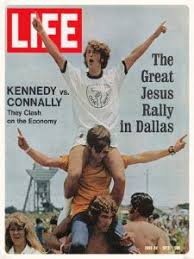
Although many younger people have not heard of the Jesus People movement, it has been estimated that some 250,000 claim to have become Christians during this period and through this means. We’ll provide documentation after our short discussion for readers who would like to examine the details of the “Jesus People” or “Jesus Freaks” further. We encourage you to remember that these sources are not given to indicate our approval or endorsement. They are only given for those who wish to learn something of the characteristics of the Jesus People of long ago.
As a background, it is good to refresh our minds about the time. During the 1960s, various elements were making inroads into the United States (and other countries). The War (Vietnam War) was developing, drugs were proliferating, riots were rampant, the women’s “liberation” movement had begun, soon abortion would be legal (1973), prayer and Bible reading had been removed from American classrooms, and the sodomite (homosexual) movement had begun in New York City. It was a time of social unrest and upheaval.

Out of the background of drugs and sex came individuals who were attracted to the young people who called themselves “Jesus People” or street people. They came to see that drugs and sex did not satisfy but Jesus and His salvation did seem to bring a rescue or deliverance to their lives. They often came from a totally secular culture—filled with gross wickedness—or even from a religious culture in which the young people were tired of religion. Not only did they give something up, but a whole type of music also came. This music had come from the countercultural movement but it was “baptized” by the Jesus movement itself.
Chuck Smith and his “Calvary Chapel” figures prominently in this mixture (1,700 churches), particularly in the Bay area of Northern California, but other names could also be mentioned. We think of John Wimber of the Vineyard movement (2,400 churches). (Both Smith and Wimber have died.) Converts to this new way of life went to the streets to give away their literature and disseminate their message. Dauane Peterson claims that one million of his magazines came from the press. The movement was non-theological, but it seemed like it was linked to the second coming of Christ, to the charismatic movement, to a different way of dressing, a new style of music, and Evangelical Protestantism.
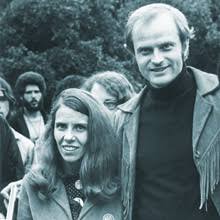
In some ways, it was naïve, with a heavy emphasis on personal experience. Many thought that God had “spoken” to them and directed them apart from Scripture. They looked to well-known speakers, authors, and preachers who were willing to bow the knee to this new way of thinking.
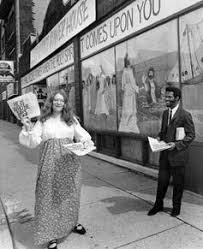
The outcome was a new music (that came to be called Contemporary Christian Music—CCM), a new way of dressing (unconventional in every way), a new look (with long hair on men), and a new way of worshipping. The older songs and hymns were gone and new choruses were added. The piano and organ was gone, to be replaced by the guitar. The old suits and ties were gone, replaced by more casual clothes and sometimes no shoes.
Since music was so primary to the Movement, let us give a bit of background here:
Jesus music, which grew out of the movement, was very influential in the creation of various subgenres of contemporary Christian music during the late 20th and early 21st centuries, such as Jesus Culture and Hillsong in both America and the UK. This also led to the inclusion of new musical instruments in churches all over the world, such as guitars and drums, in addition to traditional musical instruments such as pianos and organs. Music in other parts of the world was also greatly influenced by the Jesus Movement, such as music in Central America and the UK. In Central America, Pentecostal churches under the charismatic movement began to compose spiritual music called coros (fast-paced hymns) which is normally accompanied by dancing as worship. (https://en.wikipedia.org/wiki/Jesus_movement).

Although I could see through much of the dangers (such as experience-centered living, music, and basic orientation), I did appreciate the desire these young people had to understand the basics of Scripture and share this with other young people who were “hooked” on drugs, music and sex. They seemed to care little about what others thought of them. Instead, they went to the streets and talked to anyone (especially youth) who was willing to listen.
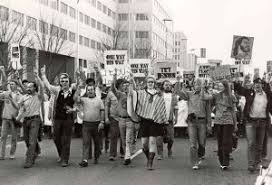
This was the time of the “Christian” coffee shop. It was the time of the “Christian” commune. The time of the Christian rallies. It was the time of the new style of “Christian” worship. To these young and zealous “believers,” it seemed that everything was new! And if Christ was returning at any time, what else really mattered?
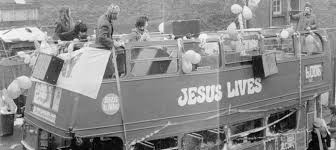
Thus, as I think about my connection with the so-called Jesus Movement, several things come to mind. It should be remembered that I could see through many of the dangers which kept me from personal involvement in the movement, but these observations should be kept in mind.
First, the orientation to personal experience was a real danger. While it definitely is good to “feel” one’s relationship to Christ, the “Jesus People” emphasis on this experience-centered approach led many people astray. They seemed to be more interested in what God said to them personally rather than what He revealed on the pages of Scripture.
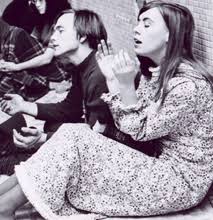
Second, Bible reading was good. I remember how many would take the Bible with them wherever they went. One person (as I recall) had a box tied to his belt that carried his personal Bible! But it was not good that they read it uncritically and without regard to the form of literature involved. It was a very naïve approach, one that would get many of them into spiritual trouble.
Third, although the music of the past left something to be desired and could have been (should have been) changed, the “music” of the Jesus Movement had no regard for discovering early or primitive worship music. In time, it led to wild and bizarre “music” that departed from what was surely sober and God-centered music. Many musicologists are convinced that the early Christians used only a cappella music, rather than this new style of music promulgated by the “Jesus Freaks.” As we all can testify, it went “downhill” from there. It seemed that every decade resulted in more and more questionable music—so much so that one could not tell the difference between this “Jesus People” music and that of the world.

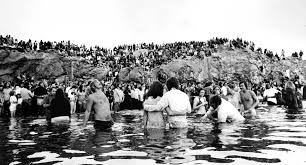
Fourth, salvation itself was altered. It seemed that the Movement was led by charismatic and other leaders or preachers who introduced and promulgated the popular “invite Jesus into Your Heart” form of conversion! They seemed to emphasize the “Sinner’s Prayer” approach while true repentance and genuine baptism had little place. The significance of true baptism (as an immersion of a person who was coming to Christ for His forgiveness) was missing. It was easy to be immersed in the Pacific Ocean (as many of these young people were), but not so easy to have a radical break with Churchianity and sin. This omission was disastrous.
Fifth, the “casual” approach to Christianity was reflected in the dress, the language, the hair, the music, and much more. In leaving the formal religion of their past, it seemed that they went the opposite direction. Much of this came from their former life in drugs and sex and worldly music. This casual perspective is seen even today.
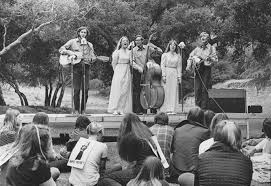
Sixth, it seemed like the concept of the body of Christ was nearly entirely missing. How many in the “Jesus Movement” really had any concept of Christians meeting as a body to observe communion, to sing and pray, to study their Bibles, to do all of the things that early Christians did? To get together to sing and sway or to gather as a commune is one thing, but to be an integral part of Christ’s body is another.
Seventh, the idea that Jesus is coming was indeed important, but it seemed that the Jesus People focused on what their first teachers and preachers taught (such as pre-tribulation pre-millennialism), the idea that Christ would come invisibly at any moment. It seems that the Jesus People simply accepted what they were taught instead of being diligent students of eschatology.
Eighth, some items such as feminism seemed to thrive in this atmosphere of personal experience. For instance, Catherine Kuhlman—an early Pentecostal preacher actively presented herself in public. She seemed to take a special interest in the movement, whereas Scripture says that a woman is not to speak in public or to teach over the man (cf. 1 Corinthians 14:3-37; 1 Timothy 2:11-15).
Ninth, we wonder how many were living hypocritical lives. Frisbee lived an active sodomite life. Some could not understand how he could go to immoral parties on Saturday night and then preach on Sundays. Eventually all of this came out. Both the Calvary Chapel and the “Signs and Wonders” movement rejected him and he died of AIDS in the 1990s. How many others claimed to be followers of Christ but lived worldly lives?
Tenth, we admire the zeal shown in the personal outreach. There was also street preaching, mass rallies, and even mass baptisms. The large groups of baptisms in the Pacific Ocean come to mind. (Bear in mind, of course, that the meaning of these baptisms were quite faulty.)
In time, the flame of this Movement seemed to dim and even die. Some went back to their drugs. Others fell into the American dream of riches and abundance. Still others sought refuge in Protestantism (especially the charismatic form it). In their pursuit of education, they seemed to fall into a more traditional and acceptable form of life. If we were to seek out the leading names of the movement as it was found in the history of the Jesus People (from about 1967 to 1975), we could probably find very many who still had the counter-cultural perspective and the zeal that they once knew.
Not all has been well with the Jesus People outlook. Duane Pederson, founding editor of the Hollywood Free Paper, converted to the Antiochian Orthodox Church and became a priest.

Chuck Smith became the founder and leader in the Calvary Chapel Movement. Also, the movement became the originator and leader of the Vineyard Church (with John Wimber) with the unscriptural involvements and beliefs of this cult.
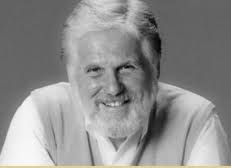
As we have said, some leaders have clearly gone astray. There was the acclaimed Lonnie Frisbee who confessed to his ongoing sodomy (we wonder how a church could put up with gross and continued homosexuality over the years).
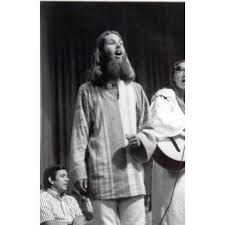
Protestantism was transformed by the movement. The music was transformed (the choir was replaced by “praise teams” and the stately hymns were replaced by “praise” choruses). The clothes were transformed (with a more casual approach to what we wear). The message was transformed (with easy believism replacing a more Biblical approach—to some extent). The Biblical way of salvation was replaced by a simple “sinner’s prayer” approach.
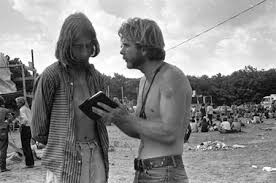
Hopefully, the reader can detect that there are positives and negatives related to the Jesus Movement of the past. We could wish that more of the positives could be retained in people of today. And we wish that more of the negatives could be eliminated. We realize that we cannot capture a movement that was prominent some fifty (50) years ago. It is good that we cannot. We shouldn’t even want to do this for we must turn from the negatives and urge people to strive for the positives.
Yet we must remember that what was prominent long ago has, in part, continued on in the two churches begun by the movement as well as the various emphases found in many different denominations. The music has been transformed, the casual approach has continued, the subjective approach (for better or for worse) has spread.
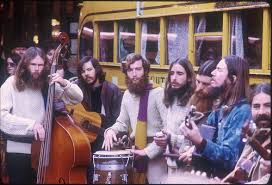
Let us learn from this past Movement and seek to be just what God wants and what we see in the Scriptures! This is what God would want and it should be what we also want! If we seek God with all of our heart, if we study Scripture, and if we follow the will of the Lord, we will recapture what was good and reject what was wrong. Jesus declared, “I am the Light of the world; he who follows Me will not walk in the darkness, but will have the Light of life” (John 8:32).
–Richard Hollerman
The interested reader may want to check out the following sources. Keep in mind that we cannot endorse this movement but we do wish to discover the factors therein that may be good:
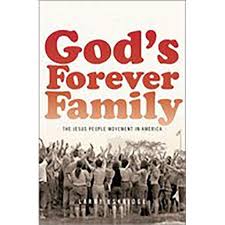
The Jesus People Revolution: the 60s hippies who changed the worldhttps://www.premierchristianity.com/Past-Issues/2017/September-2017/The-Jesus-People-Revolution-the-60s-hippies-who-changed-the-world
The Lasting Legacy of the Jesus People
Andrew MacDonald, Ed Stetzer — June 17, 2020
https://www.biola.edu/blogs/talbot-magazine/2020/the-lasting-legacy-of-the-jesus-people
Jesus People Movement
http://www.thearda.com/timeline/movements/movement_47.asp
What Happened to the Jesus People?
By Mark Hulsether | March 22, 2016
https://religionandpolitics.org/2016/03/22/what-happened-to-the-jesus-people/
Jesus People film 1972 Full Length Movie
https://www.youtube.com/watch?v=S_eLDz_pWRY
Association of Vineyard Churches
https://en.wikipedia.org/wiki/Association_of_Vineyard_Churches
Jesus Movement
https://en.wikipedia.org/wiki/Jesus_movement
Lonnie Frisbee
https://en.wikipedia.org/wiki/Lonnie_Frisbee
The Funeral of Chuck Smith (who was involved in the early Jesus Movement)
https://www.youtube.com/watch?v=JSy6UpiAtXw


 You can reach us via e-mail
at the following address:
You can reach us via e-mail
at the following address: