

Starbucks and Paganism
Richard Hollerman
Many of our readers may be acquainted with the ubiquitous soft drink store called Starbucks. We may also be aware of the emblem that is used to portray their brand of drink. I wonder how many of us know the meaning of this design?
I once asked an employee of Starbucks if he knew the meaning of the emblem—and he didn’t. But another time I encountered him and he said that he had done some research. In substance this is what he told me:
The Starbucks logo is widely regarded as one of the most popular and instantly recognizable logos in history. This memorable emblem has garnered broad worldwide recognition and several prestigious design awards.
The earliest version of the Starbucks logo was introduced in 1971, based on a 15th century Norse woodcut. It comprised of a circular ring surrounding the mythical two-tail mermaid figure in a coffee brown color palette. The design was intended to symbolize the overpoweringly attractive and almost seductive quality of the coffee. (https://www.famouslogos.net/starbucks-logo/)
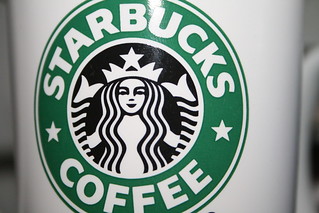
First, we learn that this represents a mermaid—a 15th century Norse fictional character. A mermaid is “a legendary sea creature having the head and upper body of a woman and the tail of a fish” (The American Heritage College Dictionary). Then we learn that this legendary woman was a mythical two-tailed mermaid!
Just looking at this from a Christian viewpoint, we must ask what connection the ways of Jesus Christ might have with a mythical character, a two-tailed mermaid! For those of us who need a reminder, a mermaid is supposed to be an entity that is half woman (who is nude) and half fish—in this case, a two-tailed fish!
As we continue to read this information, we see this:
When Starbucks was acquired by Howard Schultz in 1987, the corporate logo was significantly simplified and the bare breasts were covered up by the mermaid’s flowing hair. Furthermore, the green color was introduced so as to imply the growth, freshness, uniqueness and prosperity of the rapidly developing brand.
The Starbucks logo underwent another overhaul in 1992, when the image of the mermaid was given a closeup view and her navel disappeared from the design.
This shows that the nude figure of the mermaid was covered up somewhat. By 1992, a further adjustment to her nude appearance was made.
Let’s ask this question: What connection is there between the Christian (the one determined to follow the Lord under all circumstances and in all contexts) and the emblem we discuss above? Consider something else. One of Starbucks’ principles (according to their own pronouncements), at least in 2003, was: “Embrace diversity as an essential component in the way we do business” (thebalancesmb.com/starbucks-mission-statement).
Consider another statement regarding “diversity”:
Creating A Culture of Belonging, Inclusion and Diversity
At the heart of our business, we seek to inspire and nurture the human spirit – understanding that each person brings a distinct life experience to the table. Our partners are diverse not only in gender, race, ethnicity, sexual orientation, disability, religion and age, but also in cultural backgrounds, life experiences, thoughts and ideas.
Embracing diversity only enhances our work culture, it also drives our business success. It is the inclusion of these diverse experiences and perspectives that create a culture of empowerment, one that fosters innovation, economic growth and new ideas.

And still another quotation:
Since the very beginning, Starbucks Mission and Values have reflected our fundamental principle that we welcome everyone. That belief has resulted in an unrelenting dedication to foster a diverse, inclusive and equitable environment for our partners (employees), customers and the communities we serve.
And another:
Our Aspirations
- Provide Inclusion training and tools to people managers to ensure that we are preparing all leaders to foster a diverse and inclusive culture based on merit.
- Provide diversity education for retail partners.
- Drive leader accountability for diversity and inclusion outcomes.
- Increase internal pipeline of diverse leaders at VP and director level.
See: https://www.starbucks.com/responsibility/community/diversity-and-inclusion
Does this sound quite contemporary? We know that the term “diversity” is a catchall term that often covers all sorts of sinful and wicked lifestyles and activities, including homosexuality, transgenderism, adultery, abortion, and the like! Would this have any bearing on the Christian who seeks to follow the ways of the Lord?
We wouldn’t be saying that simply having a compromising or evil logo or emblem is the final answer to this company. But we do have an opinion here. I’ve never bought anything from this company and don’t plan on this in the future. I wouldn’t do so since I value good nutrition and my health—and the company openly advertises that the drinks they serve are not nutritious. In fact, they are generally very high in fat—and we know the damage that high fat content can have on our health.

Further, I don’t plan to begin to support a company that has pagan elements to it. My intention is to renounce all paganism and mysticism and only devote myself to God’s will. Further, the drinks are far, far too expensive—and the devoted Christian is interested in the quality of thrift and saving money rather than wasting it. (Cf. John 6:12). So for these and other reasons, I don’t plan to promote or support these drinks or this company. Yet it is quite interesting to learn the origin of the emblem as well as the principles on which the company is based.


 You can reach us via e-mail
at the following address:
You can reach us via e-mail
at the following address: