
Pharisees and Sadducees Today!
Richard Hollerman
Do you know who the Pharisees were? They were a small sect of the Jews in the first century, living during the time when Jesus walked on earth. Beginning during the intertestamental period, these devoted Jewish men sought to obey the Law of God as best they could in order to please God and be ready for the Judgment. They counted 613 commands in the Old Testament and added to this, they sought to keep the “traditions” of the elders (cf. Matthew 15:6-14). Jesus, however, was aware that they had twisted God’s Word to hold to their own commandments. In fact, they held to these additional interpretations and commandments that later were collected in written form and called the “Mishna” (about AD 200).
The Sadducees were another sect of the Jews. They only followed the Pentateuch, the first five books of the Hebrew Bible. These religious people denied the resurrection (Acts 23:8) which the Pharisees accepted. Further, they denied angels and spirits (Ibid.). Instead of holding to the written code and seeking to obey it, these sectarians were often wealthy and sided with Rome. But, together with the Pharisees, they opposed Jesus.
Are there Pharisees and Sadducees today? While we need not delve into their beliefs, we do find people today who have certain characteristics as did the Pharisees and Sadducees. Consider certain external points that perhaps you have observed, as I have often observed.
What do you think of contemporary religionists (whether Catholic, Orthodox, or one of the many Protestant sects) who insist on sitting on the church stage in order to show their position and power? You have seen them. Perhaps you have even filled their shoes! They sit on religious seats on the stage in the front of the sanctuary and enjoy being in a position for their followers (which could be 50 or 150 or 1,000 or 3,000 people!) to admire and respect!
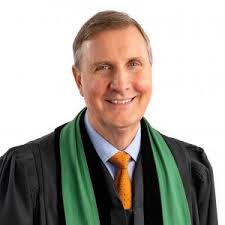
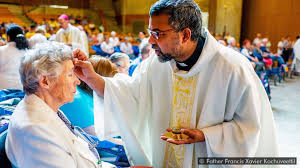
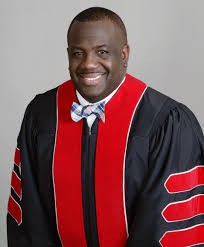
Many of them wear clerical garb and their obvious clerical collars. They sit in prominent places in the church, places where the audience can see them and admire and respect them. They may wear long black robes or white robes. Catholic prelates may wear head gear that displays their prominent position in the church. The same is true for Orthodox leaders and other religious clergy. This is true of not only men but also women in our day. What the Lord Jesus said about the Pharisees and Sadducees and others of His day could be rightly said of these modern-day Protestants, Catholics, Orthodox, and others. Don’t they resemble the Pharisees and Sadducees in some respects?

But what did Jesus our Lord say of the “scribes and the Pharisees” (Matthew 23:2)? Jesus declared, “The scribes and the Pharisees have seated themselves in the chair of Moses” (23:2). He said, “They do all their deeds to be noticed by men; for they broaden their phylacteries and lengthen the tassels of their garments. They love the place of honor at the banquets and the chief seats in the synagogues, and respectful greets in the market places, and being called Rabbi by men” (vv. 3-7). There are differences, of course, but maybe we can see some parallels here. In fact, there are many similarities!
In my research, I’ve been to many different churches and even other religious gatherings. By this I mean that I have visited various Roman Catholic churches, Greek and Syrian Orthodox services, Episcopalian, Presbyterian, Methodist, Assembly of God, Christian Church, Church of Christ, Church of God, many independent churches, Mennonite, Amish, Church of the Brethren, River Brethren, United Church of Christ, Ultra-dispensational, Baptist, Nazarene, Messianic, Reformed, Lutheran, Charismatic, and other churches. Some are sets or what people call cults: Jehovah’s Witnesses, Mormons, Adventists, Jesus Only Pentecostals, and the like. Many or most of these do have some sort of vestments but a few do not. As you can imagine, I’ve seen a massive amount of variety. On the other hand, I’ve seen a lot of similarities. And a great amount of false doctrine!
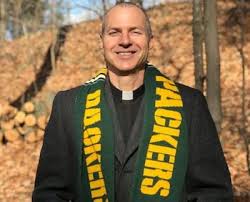
What shall we say about Pontifical vestments, liturgical vestments, clergy vestments, pastoral stoles, religious robes, and the like? Are these pleasing to God? Do they add something to the wearer? All of this must surely be an abomination to God who warned against ostentation or pride in any way, including religious displays!
I well recall when I left the denomination of my youth. I wanted to write a respectful letter of resignation that would indicate that I was turning from (renouncing) my earlier membership. Of course, I refused to use any religious title, but this wasn’t at all appreciated. Instead of using such a title (in this case, it would have been “Pastor” or “Reverend”), I insisted on using a neutral term such as “Mr” [Mister] or “Sir.” Wasn’t this fine? I thought so.
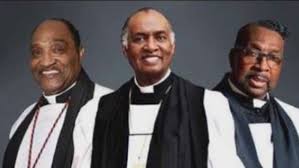
Remember what the Lord Jesus said, “Do not be called Rabbi, for One is your Teacher, and you are all brothers.” “Do not call anyone on earth your father; for One is your Father, He who is in heaven.” “Do not be called leaders; for One is your Leader, that is, Christ” (Matthew 23:8-10). Christ then sealed His restrictions by saying, “The greatest among you shall be your servant. Whoever exalts himself shall be humbled; and whoever humbles himself shall be exalted” (vv. 11-12).
When we think of the various expressions of prideful clergy dress and relationships, what do we think of Jesus’ comments at Luke 20:46: “Beware of the scribes, who like to walk around in long robes, and love respectful greetings in the market places, and chief seats in the synagogues and places of honor at banquets.” I recall how nervous I was when addressing the “pastor” and calling him “Reverend.” I was a mere man and he was a chief religious clergyman. (Today, with women’s lib or feminism, we might say “clergy person” or simply “clergy.”)
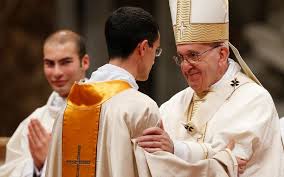
Is this the way it should be? Does any of the above sound familiar? Do you know of any religious clergymen who “walk around in long robes”? Do you know of any religious leaders who “love respectful greetings in the market places”? Do you know of any who demand “chief seats” in the churches and “places of honor” in church gatherings?
What do we think of the clergy sitting in the special chair/seat on stage? Or calling the clergyman with religious titles such as “pastor” or “Reverend” or “Doctor”? What about “Father” or “Minister”? What about the position of “trustee” or “clergyman” or “clergywoman”? What about their desire to place their degrees on the wall—degrees from a seminary, a university, a theological school? Do all of these lend to an attitude of humility? What about our Lord’s warning, “Everyone who exalts himself will be humbled, and he who humbles himself will be exalted” (Luke 14:11). Do you want to be humbled or would you rather be exalted?

Are you determined to avoid religious titles? Do you call anyone “pastor”? Do you call anyone “Doctor” or “Reverend” or “Elder” or “Bishop” or “Arch-bishop”? Do we realize that this sort of nomenclature is an abomination to God—for He never gave us the right to address others in this manner or accept such titles from others? Generally, these titles may (or may not) use a Biblical term and rip it from the context. These were never meant to elevate a person into a non-Scriptural position or give a man or woman a prominent place over others.
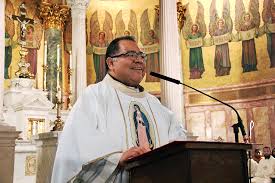
We encourage you to renounce denominationalism and the unbiblical terms that go alone with this. Totally abandon such terminology and the spirit of pride that evokes such a way of speaking. Recognize the prideful arrogance that the religious garb, the religious terms, religious bearing that are found in churchianity. Be determined to simply be a lowly, plain, simple, Biblical follower of Christ. This is the way! This is the only way!


 You can reach us via e-mail
at the following address:
You can reach us via e-mail
at the following address: