
GUEST ARTICLE
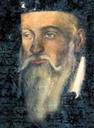
NostradamusProphet or Pretender?
Predictive prophecy is one of the strongest evidences in support of the biblical claim that the Scriptures are inspired of Godonly God knows the future. If the Bible contains genuine prophecy, such would argue for its divine origin (see Isaiah 41:21-23).
Atheists allege, however, that there are examples of prophecy in writings other than the Bible, and so such a phenomenon no more proves the inspiration of the Scriptures than it does for these other works.
For example, Dan Barker, a former Pentecostal turned atheist, claims the prophecies of the Bible are no more remarkable than those of the French prognosticator Nostradamus. In attempting to evade the force of Ezekiels predictions concerning the destruction of Tyre (chapter 26), Barker declares: [I]f Ezekiel is a true prophet, then so are Nostradamus and Jeanne Dixon (1992, 192).
The careful student who compares the oracles of the prophet Ezekiel with those of Nostradamus and Dixon will see light-years of distance between the specificity of the divine utterances and the garbled verses of bogus prophecy.
Let us briefly consider the case of Nostradamus since his name is frequently mentioned in connection with prophecy.
Nostradamus was the assumed name of Michel De Notredame, a French physician-astrologer who flourished in the sixteenth century A.D. In 1555, he published a book of rhymed prophecies under the title Centuries, which secured for him considerable fame in an age of gross superstition.
The success of Nostradamus is based upon the following factors:
(1) The declarations are extremely vague. One authority notes:
The verses are deliberately obscure. Couched in a French that was already archaic in the sixteenth century, they are interlarded with words from other languages, as well as with anagrams, obscure images, and terms the seer apparently invented (Visions and Prophecies 1988, 18).
(2) Some of the prophecies were obviously written after the fact.
(3) A number of the predictions were simply educated guesses. As one scholar observed, arrows shot in all directions, even in the dark, are bound to hit something occasionally (MClintock and Strong 1969, 198).
Even the most devoted disciples of Nostradamus have been woefully confused as to the meaning of his prophecies.
For example, during World War II, devotees of the seer in Great Britain claimed that Nostradamus had predicted the defeat of Germany in the war, while fellow disciples in Germany were claiming their prophet had foretold the destruction of England. The truth is, neither prediction had been made.
Here is another example: Nostradamas wrote about the birth of an emperor in Italy who would be less a prince than a butcher. Some see the allusion to Napoleon, while others think the reference is to Hitler. Which is it?
But try one of the prophecies for yourself. To what does the following refer?
To maintain the great troubled cloak
The reds march to clear it.
A family almost ruined by death,
The red reds strike down the red one.
Give up? Of course you do. According to some, however, the above lines foretold the fate of the Kennedys (as quoted by Barker, 185).
Nostradamuss most famous oraclesupposedly the best evidence for his giftreads as follows:
The young lion will overcome the old one,
On the field of war in single combat:
He will burst his eyes in a cage of gold,
Two fleets one, then to die, a cruel death.
Allegedly, this has reference to the death of Frances king, Henry II, who was wounded in a jousting contest in 1557; he died ten days later. Here are the actual historical facts:
- Only six years separated the ages of Henry and his opponent in the tournament; it was hardly a contest between the young and the old (Henry was only forty).
- The accident occurred during a friendly sporting event, not on a battlefield.
- There is no evidence that Henry was wearing a gilded visor (cage) of gold. Moreover, the kings eyes were not damaged; a splinter from the lance pierced his skull and entered the brain.
- The reference to two fleets is utterly meaningless.
Besides these significant factors, only two years before this tragic accident, Nostradamus had written a letter to Henry in which he had described the monarch as most invincible (see Randi 1990, 173). The king was hardly invincible!
A fair consideration of the facts clearly demonstrates that Nostradamus was not a genuine prophet. His feigned ability stands in bold contrast to the unambiguous and precisely fulfilled predictions of the Old Testament prophets.
Consider, for instance, the Messianic prophecies of the Old Testament Scriptures. Scholars have cataloged more than three hundred. A convincing example is found in Isaiah 53. In this remarkable chapter of a dozen verses, there are more than twenty-five prophetic details regarding Christ. If we may borrow the words of infidel Dan Barker, It would be very unlikely that so many predictions would all be accidentally satisfied in one person (186).
That is our very pointthey were not accidentally fulfilled!
–Wayne Jackson
Sources/Footnotes
Barker, Dan. 1992. Losing Faith in Faith. Madison, WI: Freedom From Religion Foundation, Inc.
MClintock, John and James Strong. 1969. Cyclopedia of Biblical Literature. Vol. 7. Grand Rapids, MI: Baker.
Randi, James. 1990. The Mask of Nostradamus. Amherst, NY: Prometheus Books.
Visions and Prophecies. 1988. Des Moines, IA: Time-Life Books.
http://www.christiancourier.com/articles/
193-nostradamus-prophet-or-pretender


 You can reach us via e-mail
at the following address:
You can reach us via e-mail
at the following address: