
Music that Pleases God
Richard Hollerman
We know that music is a gift given by God Himself. Scripture says that even the stars “sing” (in a figurative way) and God has commanded singing in both the Old Testament and the New Testament! In the Old Testament, in the “old covenant” writings, God commanded Israel in their singing to and about God and this was with various instruments. (cf. 1 Chronicles 9:29; 16:42; 2 Chronicles 30:21; Nehemiah 12;26). Psalm 150 gives several of these:
- Trumpet
- Harp
- Timbrels
- Stringed instruments
- Pipe
- Loud cymbals
- Resounding cymbals
- Lyre
In other contexts, there would be other instruments given. However, as we come to the period after Pentecost and before the book of
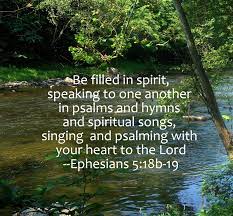
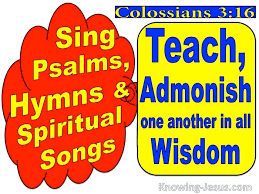
Revelation in the new covenant period, we see no indication of any instruments at all. In this period, we find total silence regarding mechanical instruments. Yes, there is the reference to our attitude in praise with songs and this comes in the heart to God (see Ephesians 5:19-20 and Colossians 3:14-17). And there is the symbolic use of instruments in such passages as Revelation 5:8; 14:2 and 15:2. Other than this, we find that there is silence regarding anything other than vocal music.
Much has been written about this subject, such as Everett Ferguson, A Cappella Music in the Public Worship of the Church. Years ago, I attended for a couple years a college run by the Reformed Presbyterian Church in which only non-instrumental music was allowed. The theology behind this practice would be called “the regulative principle of worship.” They contend (and rightfully so) that we must have only what we are permitted to do and not otherwise. This was John Calvin’s view, as you may know, and he differed with his opponent, Martin Luther. Luther said that whatever is not condemned is permitted. Thus, Luther (from Germany) promoted Christmas and so much more, whereas Calvin (from Switzerland) opposed whatever was not allowed—including the issue of music (along with religious holidays and other additions).
I have also been associated with conservative Mennonites and the so-called Church of Christ, as well as certain Anabaptist groups (such as Church of the Brethren and Brethren in Christ) and smaller groups of a variety of backgrounds (such as Primitive Baptists and others), all of which reject instrumental music and insist on a cappella music.
I recall that one professor in South Carolina, teaching at a Presbyterian theological school, wrote a huge book on this subject. I’ve also seen and heard a long conference on the subject. These, of course, opposed instrumental music in worship. (I really don’t think that they went far enough—for this music in other forms would also be problematic or wrong.) In another occasion, in a college, instrumental music was disallowed in the chapel; in fact, in three chapel services this was the case.
Recently I overheard contemporary music that was in a fashion that people might sing today by CD, by other means, and especially on You Tube and on “Christian” websites. I had to wonder why people might be inclined to listen to this corrupt and worldly music at all. In short, it was definitively bizarre, loud, cacophonous, and surely only those who had no inclination to hear and sing pure, holy, and vocal music could appreciate.
As I think of the musical landscape in America (and we suppose that this is the case around the world), I am reminded of the bizarre “music” (if it may be called by this “polite” title). In my time, I’ve gone to many different denominations and churches to examine everything. As I think about the musical styles that are available, I am shocked and chagrinned by what I see and hear. In congregation after congregation, there are guitars, drums, cymbals, and virtually anything that will make noise and, sadly, these churches call this “music”! We find this very disturbing and saddening.
In the past, of course, “church” music was deeply involved in piano music and organ music. Then came guitar music. Or various “horn” type of music. And today, we seem to especially hear drumming (as well as guitar). But with all of these instruments, we wonder. With this noise, we would ask whether this is something that we would find years ago? Would this be something that would delight God? Or bring joy to the Lord Jesus? To ask these questions, we surely know the answers.
If we were to return to the early Christian practice of no instrumental music, but use only spoken words, we think that the bizarre noise of these latter years could be resolved. Actually, in our own day, people are forcing others to listen to and sing with guitars, drums, and the like when they really don’t want to either listen to this or participate in it. It can be said that they can’t “stand” to hear this music. It grates on their ears. It is a pain to their heart. It grieves them deeply and even angers them. Is this really fair for people who love and revere God? And is it really loving to force others to endure this sort of “music”—if it can be called with this term? And yet Jesus in Scripture says, “You shall love your neighbor as yourself” (Matthew 22:39). If we love others do we want them to merely “endure” the instrumental music that we play?

It would be good to notice the three reasons given by Ferguson that might oppose instrumental music. First, as historians tell us, the early Christians for some centuries didn’t use instrumental music but only vocal music. Second, theologians, tell us that the early believers opposed instrumental music because of the nature of the music itself. Third, the terms used (as in Ephesians 5:19; Colossians 3:16; etc.) give no place for instrumental music but only vocal music.
It is also helpful to remind ourselves that the early Christians were more in harmony with the synagogue worship in which the Jews did not use instrumental music but only vocal music. Further, these early believers didn’t pattern their worship after the temple (with its instruments) but only the synagogue (with their non-use of instruments). Of course, that was not the reason why they didn’t use this music but we simply make this observation.
We might also bear in mind that there are great compromises regarding the lyrics of the songs that are common in modern “religious” and “Christian” music versus what we would consider sound music from a Christian perspective. If we were to compare Pentecostal, Protestant, and Catholic music with the primitive music with its rational, pure, and sober notes we might be shocked.
No, we don’t want to revert to the music of the early Presbyterians or Puritans, with their insistence on the 150 psalms of the Old Testament in which Jesus is not mentioned at all, but nor do we want to blindly accept all of the words of the early Methodists and Revivalists of the nineteenth and twentieth centuries. Rather, we want to strive for truth regardless of the cost.
We know that people (or some of them) have become complacent and settled in their views on music, Perhaps because of the incessant beat, pounding, yelling, and screaming of the modern singers (and players), they have become accustomed to this bizarre or peculiar music. Rather, let us strive for truth, sobriety, and equanimity in all of our singing of “psalms, hymns, and spiritual songs” (Ephesians 5:19-20; Colossians 3:15-17).
Sadly, we believe strongly, that most modern religion musicians and singers have adopted the styles and agendas of the secular and worldly crown around them. They have been exposed to this input of worldly music and simply transferred it to the religious sphere. These worldly secular performers have influenced the religious or “church” music that we hear and this is what we have accepted. Either we have been exposed to and accepted this worldly style or we have accepted this worldly style that has jumped over into the religious songs and hymns. Either way, we find that for decades now, this music has been transformed into a worldly style and must now be changed—drastically and dramatically.
We have several books written to show that the evil and worldly modern music that claims to be Christian must cease. These books show that much of the theology is compromising and the Biblical content is wrong. We must fully agree with this view. The little that I’ve heard of this music shows that it is not only strange or weird but also defective regarding Biblical content. Let it stop immediately.

Concerning these books, some oppose all instrumental music of a religious nature. They “close the door” to all of this and will hear or produce none of it. On the other hand, some are more judicious (shall I say “compromising”?) and accept music without the beat and the accompanying worldliness. Needless to say, I urge you to accept the former. In this way, we adopt more of the New Testament way (as we have described above) and avoid the negatives in the world around us!
Sadly, we know of some (which I have come across online) in which there is not only a loud beat, loud singing, displays of utterly worldliness, jumping around, dress that is inappropriate, and the like. Further, this worldly religious music often has female singers which God has strictly outlawed and condemned (1 Timothy 2:9-10; 1 Corinthians 14:33-37; etc.) but this is part of the wicked culture in which we live. When women are not permitted to even speak a work in public and in teaching, we find that they even lead the music in some churches! Further, we find “worship teams” (which never would have been seen formerly), and women are permitted and encouraged to be part of such teams and even lead them! We know that some women (gladly, not all women) will not only object to these comments but will be angry because of them. But let us be controlled by the limitations of Scripture and not by the evil intents of modern performers!

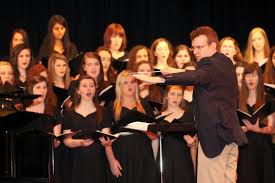
Maybe we should mention a word about choirs. Of course, we find no authorization for this form of worship in Scripture. I recall when I was a child and my uncle and aunt were part of choirs in the church of my nativity. One was in the men’s choir and the other was in the women’s choir. And there was also a juvenile or children’s choir as well. Of course, the New Testament knows nothing of this and we should abstain from this.
Further, we find strobe lights, with the room dark but with multi-colored lights, bedecking the presentation. We find it amazing that people can maintain their sobriety in the midst of this confusion. Yet we find it in thousands of churches. We refer to America but the same exists around the world! (We wonder what non-Christians think of this sound and display! It is no wonder that they reject anything to do with Christianity!) And we are referring not only to Charismatic or Pentecostal type of worship, but it has invaded many other venues as well—virtually all of the Protestant (and even Catholic) denominations! With the lights we think that we are more in keeping with worldly rap, rock, and other worldly music—not “Christian” music!
Thus, we encourage you to “come out from their midst and be separate” (2 Corinthians 6:17). Let your worship be distinctive! Let your singing be wholesome and pure, spiritual and uplifting, and not pattered after the secular “music” of the world! Be a true follower of Jesus, not in name only but in reality!
It is helpful to know that others have also opposed the instrument in Christian worship. Many writers in the first four or five centuries would commend vocal music and condemn the instrumental music. We also might think of the more recent (but still older) personalities:
Charles Haddon Spurgeon (Baptist, London).
John Calvin (Reformed, Switerland)
Heinrich Bullinger
John Bunyan (Baptist, England)
Matthew Henry (the commentator)
Adam Clark (the Methodist commentator)
Philip Schaff (the church historian)
Alexander Hislop
Oliver Cromwell
Martin Lloyd Jones
https://purelypresbyterian.com/2019/09/16/the-history-of-instrumental-music-in-the-church/
Everett Ferguson, A Cappella Music in the Church
John L. Girardeau, “Instrumental Music in the Public Worship of the Church.” See: https://www.amazon.com/Instrumental-Music-Public-Worship-Church.
James McKinnon, “The Church Fathers and Instrumental Music”
https://truediscipleship.com/what-is-christian-a-cappella-music/
Our website: www.Truediscipleship.com
Our email: Godloves@att.net


 You can reach us via e-mail
at the following address:
You can reach us via e-mail
at the following address: