

Early Christians: Where did they Go?
We have often wondered where all of the early believers went and why the body of Christ didn’t continue for centuries and beyond. We know that some groups, such as the Roman Catholics, the Greek Orthodox, and some Protestants somehow think that these early saints of the first century just “evolved” into the Christians of the second, third, and fourth centuries—and even beyond to our present day. Why do we find such differences?
There are also some who think that “true” Christians just hid in the mountains and were not found to historians. And there are others who think that the faithful Christians died out generation by generation and revived again and again through history. Perhaps some of these look on the Protestant Reformation of the 1500s and look with glee on how God used this period to “reform” the Catholic Church or perhaps “restore” the ways of God to the apostate church.
Some of these would look on Martin Luther (a Catholic priest who is looked on as the “father” of Protestantism), or John Calvin (who some people are convinced had it “right” doctrinally), or John Knox of Scotland (who rejected Anglicanism and spread the Calvinistic doctrines in Scotland), or perhaps Ulrich Zwingli (a Calvinist who promoted certain doctrines that people cling to today). Yet we must say that all of these are problematic. These are assessments of certain people who, themselves, have doctrinal issues that are unresolved.
Going back to the Scriptures now, some people simply assume that these Christians of the first century just merely took “the keys of the kingdom of heaven” (Matthew 16:17-19) and had the authority to change the basic structure of the early assembly of the Lord into the radically changed “institution” of the second and later centuries.
Others think that built into the early body of Christ was the ability to change the body and “evolve” it into something else. This continued on from the first, to the second, and onward until we come to the 21st century.
And there are others who do acknowledge that the body of Christ of the first century did change into something else but there were a few who remained true to the Lord’s commands in the succeeding centuries. Thus there was a “remnant” of faithful Christians who remained true even when the large body of believers fell away and the structure of the body was changed.
We do find a strange occurrence in the first century. If you have read over the New Testament, as I have, and especially the letters of Paul, maybe you have wondered about the early Christians who heard the words of the Lord and Paul and the other apostles. What happened?
We read in Matthew 16:18 that “the gates of Hades” would not overpower Christ’s assembly. But we do find such a disparity between what we read in Scripture and what we see in “church history” that we are made to wonder.
What happened to the 12 apostles, for instance? We know that Judas defected and then Matthias became an apostle (Acts 1:12-26). We also continue our reading and have reason to believe that John the apostle may have lived most of the first century. Finally, he died after Patmos. But what about the 10 or 12 others? From what I’ve read, the remaining apostles were killed or shall I say martyred in the first century as they reached out to other countries.
But what about the many others? We learn of many people’s names during the earthly life of Christ—such as Mary and Martha, Mary (the mother of Jesus), the women of Matthew 27:55-56, 61; 28;10, and Mark15:40-41, 47; 16:1; and so forth. We think of all of the men and women (brothers and sisters in Christ) in places like Romans 16:1-16 and all of the epistles/letters of Paul (for instance). What happened to Aquila and Priscilla (Prisca), Apollos, Barnabas, Timothy, Titus, and others? Yes, some of them may have been martyrs or simply died, but others just seemed to disappear from history.
Jesus died about AD 30 and both Paul and Peter may have died about AD 64 to 67. Jerusalem was destroyed about AD 70 and the group of Jews who escaped who went to Masada (where my wife and I visited a few years ago) were killed in AD 73. There were about 960 (or 967—Joseph) of them! Of those who were from Jerusalem, perhaps one million were murdered and 100,000 were taken captive to Rome as slaves. Finally, John the apostle died about AD 95 (as we have said above).
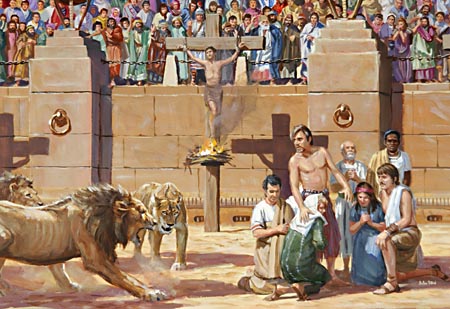
We search in vain for some hint. We think of the “early church fathers” or writers. You may recall some of them: Clement of Rome (whom some say wrote about AD 90 or 95), Ignatius of Antioch (AD 110), Hermas (AD 130), Barnabas, Justin (AD 150), Irenaeus of Lyons, France (AD 180), Clement of Alexandria (AD 190), Tertullian (about AD 190-210), Hippolytus (AD 210), and Cyprian (martyred about 255 from northern Africa), whom some have called “the first Catholic” because of his ecclesiology. (Of course, others could be mentioned and are known in history.) Yes, some of these were martyred or put to death by Roman authorities, but not all of them.
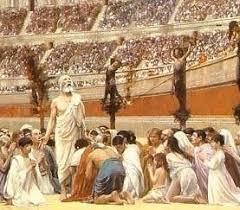
But consider the body of Christ from about AD 255, and what happened to all of the faithful Christians? Were there any? When we read Revelation, we learn that the Lord Jesus (who was responsible for Revelation 2-3) commended two of the seven assemblies but reprimanded five (5) of them.
Did all of the people commended in the New Testament letters just fall away? Or did all of the assemblies fall away or apostatized? What was it that after AD 60, 70, 80, 90, or 100 we read of very few faithful men and women, brothers and sisters? Why is that that the writers and others mentioned after AD 100 or 150 or especially 170 or 180 taught various false doctrines, believed false doctrine, and were accepted by the mass of “Christians” as God’s people?
These are some of the questions that we need to ask and seek answers. Maybe you have never asked them or just assumed that they could be easily answered by the so-called “scholars” or “theologians.” But can they? Or do they merely compound the problems by their assumptions and their own compromises? What of people who claim to be Christians but write histories of this era of “church history”? Do they have any truth and do they just imagine it? Does their own theology influence their ways of examining this period?
These are some of the questions that we need to think through and even answer—if we can. What do you think? What of those who can articulate the question but don’t know how to delineate the answer?
We realize that many of you, the readers, may wonder what we have in mind. For a few of you, everything is fine and what we see today is exactly what we see 2,000 years ago. Isn’t this right? Yet, we realize that probably most of you do know that something is wrong—something dreadful is wrong.
This is what we mean: The church of the second century and later promoted an institutional view of the church, whereas the early Christians believed that the community of Christ should be non-institutional. What happened?
People went through elaborate ceremonies in the early and latter centuries, whereas people came to Christ in a very simple way in the first century. They turned to God, believed in Christ, turned away from their sins and self-life (repentance), and were immersed into Christ upon their confession of Jesus as Lord. What happened to change this?
People raised men up as their leaders, called “Bishops” and “Arch-bishops” and “Cardinals” and so forth, whereas in the early body of Christ, each assembly had their own elders, shepherds, or overseers. They also had servants, preachers, and similar simple positions. We read about them in the New Testament scriptures.
Well, we could go on to mention dozens of differences between the institutional church of the early centuries and the body of Christ of the first century. I’ve corresponded with people who seem to not see what we mean. They just seem to assume that what their pastors or bishops have told them is correct and should be continued. Hopefully, you can see a difference. It makes no matter what Cyprian, Constantine, or Augustine believed and promoted. We are interested in God’s will—not in the beliefs and practices of others. Further, we are not that concerned with what Luther, Melanchthon, Zwingli, Calvin, or Wesley believed and practiced. We want to know what God wants!
Let us return to Scripture and live as Jesus wanted His people to live, believe, and act.


 You can reach us via e-mail
at the following address:
You can reach us via e-mail
at the following address: