

Denominations in Our Area
Pondering the Meaning of Such Appellations
Richard Hollerman
What can we discover about the denominations in our area, particularly in Fort Worth, Texas? We realize that people who read our website are scattered across the world and for this we are grateful. It was our inquiry that led to a little project that would tell us more and you may be interested in this yourself.
We know that you come from many different places in our local area in the United States and abroad. But in our little area, we have many churches and denominations. Some of them are within a few blocks from our area. Obviously, as Christians, we don’t find all of them acceptable at all but we do find some interest in them.
In the past (and this may be dating us) we know that they were found in main denominations. They say that there are perhaps 3,000 in America and perhaps 30,000 worldwide. But something strange has happened in the last few years that has changed all of this—to some extent.
We find that certain denominations began to change their official names and they took more neutral and esoteric names that would be “catchy” and be more acceptable to the masses of people who would be exposed to this and be more likely to find this acceptable.
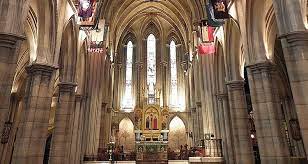
For example, not far from where I write this, there is a leading church that changed the name that would make it more acceptable to others, Further, we find that a “stone’s throw” from our house, there is another church with a name that surely must be the only one in the world of like nature, called Trademark Church. Again, we find that these change of names (from a denominational name to a more worldly or contemporary name) and now they find this to be more acceptable. Whether this has a more acceptable relationship with the public is something that may or may not be true). One denominational church changed the name since “Baptist” has a bad connotation to some (some consider it “legalistic” and more restrictive than others).
And others have become “community” churches for this has a more “neutral” sounding meaning to some. I suppose that it also gives an idea of being one with the local people, for “community” does sound like it is unified with the local townsfolk.
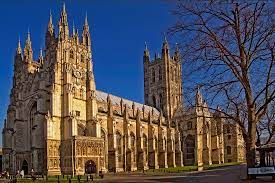
The other day, when driving in the area, we came across these church names and we wonder about them. Some of them are in the neighborhood and others are scattered in the area.
Gateway Church
The Hills Church
Paradox Church
Hillside Community Church
Milestone Church
Abundant Life Community Church
City Life Church
The House
The Crosswalk Church
The Potter’s Church
Turning Point Church
Compass Church
Mercy Culture Church
Capstone Church
Buffalo Wild Wings
Legacy Church
Life Church of Fort Worth
High Ridge Church
Met Church
The Uprising
Restore Church
Calvary Chapel
Cross Timber Church
Fellowship of the Parks
Heartland Church
Calvary New Life Fellowship
Second Metro Church
Shiloh Church
The Heights Church
The Resurrection
Generations Church
Harvesting Lambs for Christ Meeting
We don’t know and it may be that this is merely a phenomenon of this area or this state or even the United States. Or is it something that we find worldwide at this time? Nor do we know whether this is an effort to be different. Or is it an effort to be non-denominational? Or is it a way to avoid a denominational name, from which they came in the past? We don’t now and perhaps you (the reader) can check out your own community and see whether this is something that is found in your area also.
We also wonder whether this is good or better than other means of identifying God’s “church” or His community of believers. Further, those of you who know me realize that we don’t at all believe in “church names” (whether denominational or not). Thus, we simply would encourage you to refer to the body of Christ in your area as the body of Christ or the community of Christ—and not by a denominational name of whatever brand or kind.
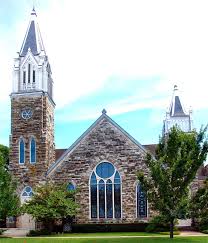
Some of you live in a part of the country (probably) where there are few churches and maybe some of you have certain denominational churches around—and these are unafraid to manifest their denominational affiliation. Whether we speak of Saint Ann’s Catholic Church, Saint Thomas Orthodox Church, Saint Michael Lutheran Church, or the local Calvinistic church (such as a Presbyterian Church), we know that some of what we have presented above may be bewildering. But this local phenomenon seems to say that these churches realize that denominationalism is bad and to be remedied in this way. What do you think?


 You can reach us via e-mail
at the following address:
You can reach us via e-mail
at the following address: