
Richard Hollerman
Do you believe in cremation? Do you believe in burial? Or do you believe in something else?
Of course, I suppose that you know what cremation would be. One course says that cremation may be defined in this way:
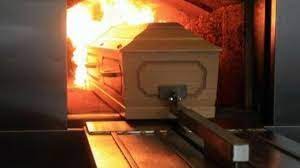
Cremation is a method of final disposition of a dead body through burning. An electric cremator in Austria. Cremation may serve as a funeral or post-funeral rite and as an alternative to burial. In some countries, including India and Nepal, cremation on an open-air pyre is an ancient tradition.
This is from Wikipedia.
This article continues by saying:
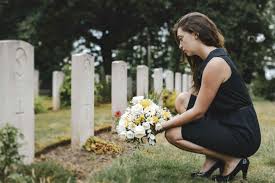
Cremation leaves behind an average of 2.4 kg (5.3 lbs) of remains known as “ashes” or “cremains”. This is not all ash but includes unburnt fragments of bone mineral, which are commonly ground into powder. They do not constitute a health risk and may be buried, interred in a memorial site, retained by relatives or scattered in various ways.
On the other hand, burial may be defined in this way:
Burial, also known as interment or inhumation, is a method of final disposition whereby a dead body is placed into the ground, sometimes with objects. This is usually accomplished by excavating a pit or trench, placing the deceased and objects in it, and covering it over. A funeral is a ceremony that accompanies the final disposition. Evidence suggests that some archaic and early modern humans buried their dead. Burial is often seen as indicating respect for the dead. It has been used to prevent the odor of decay, to give family members closure and prevent them from witnessing the decomposition of their loved ones, and in many cultures it has been seen as a necessary step for the deceased to enter the afterlife or to give back to the cycle of life.

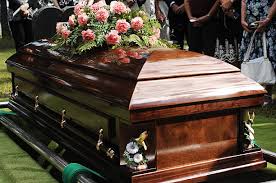
Methods of burial may be heavily ritualized and can include natural burial (sometimes called “green burial”); embalming or mummification; and the use of containers for the dead, such as shrouds, coffins, grave liners, and burial vaults, all of which can slow decomposition of the body. Sometimes objects or grave goods are buried with the body, which may be dressed in fancy or ceremonial garb. Depending on the culture, the way the body is positioned may have great significance.
The location of the burial may be determined by taking into account concerns surrounding health and sanitation, religious concerns, and cultural practices. Some cultures keep the dead close to provide guidance to the living, while others “banish” them by locating burial grounds at a distance from inhabited areas. Some religions consecrate special ground to bury the dead, and some families build private family cemeteries. Most modern cultures document the location of graves with headstones, which may be inscribed with information and tributes to the deceased. However, some people are buried in anonymous or secret graves for various reasons. Sometimes multiple bodies are buried in a single grave either by choice (as in the case of married couples), due to space concerns, or in the case of mass graves as a way to deal with many bodies at once.
(This also is from Wikipedia.)
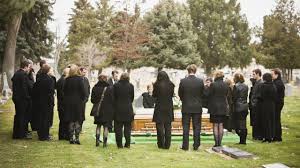
We realize that there are different forms and reasons for an actual burial. For instance, we find the following:
Respect for the physical remains. If left lying on top of the ground, scavengers may eat the corpse, considered disrespectful to the deceased in many (but not all) cultures. In Tibet, sky burials deliberately encourage scavenging of human remains in the interest of returning them to nature, just as within Zoroastrianism, where burial and cremation were often seen as impure (as human remains are polluted, while the earth and fire are sacred).

Burial can be seen as an attempt to bring closure to the deceased’s family and friends. Psychologists in some Western Judeo-Christian quarters, as well as the US funeral industry, claim that by interring a body away from plain view the pain of losing a loved one can be lessened.
Many cultures believe in an afterlife. Burial is sometimes believed to be a necessary step for an individual to reach the afterlife.
Many religions prescribe a particular way to live, which includes customs relating to disposal of the dead.
A decomposing body releases unpleasant gases related to decomposition. As such, burial is seen as a means of preventing smells from expanding into open air. (The same source.)
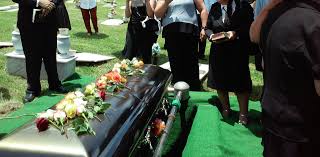
Some of this would be true of the Christian and the Christian’s way of looking at death. First, we believe that burial does respect the person’s death. Some of this pertains to a Jewish way of looking at death, and this might have a bearing on the subject. The Christian’s view of death might also have a bearing for in this way the unbelieving way of cremation can be avoided. Hindus also cremate, of course, and this would be wrong. So we would say that burial might be a better alternative.

Further, although unbelievers treat the body with disrespect, and thus “get rid” or burn or dispose of the human body, we know that (as Christians) we do want to have the human body as a means of remembering the dead person. In the New Testament times, the Jews would bury the person, in whole, then come back later, perhaps a year, dig up the body, and put it into a form that would last for a while.
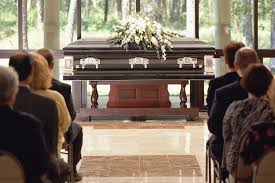
Muslims think that their dead should be preserved and will rise again. According to the same source, we find the following:
Funerals and funeral prayers in Islam (Arabic: جنازة, romanized: Janāzah) follow fairly specific rites, though they are subject to regional interpretation and variation in custom. In all cases, however, sharia (Islamic religious law) calls for burial of the body as soon as possible, preceded by a simple ritual involving bathing and shrouding the body, followed by Salat al-jinazah (funeral prayer). Burial is usually within 24 hours of death to protect the living from any sanitary issues, except in the case of a person killed in battle or when foul play is suspected; in those cases it is important to determine the cause of death before burial. In Islam, mourning for the deceased is observed for four days by the relatives.
From what we have found Islamic rituals show that the person is truly dead and the body should be treated with respect.
Further, we know that in the Bible resurrection was used and this is something that we would want to use in our own case. Although the body will disintegrate, resurrection does lie out before us and we can look forward to this (John 11). Remember that Jesus said, “I am the resurrection and the life,” and resurrection is dependent on Him!


 You can reach us via e-mail
at the following address:
You can reach us via e-mail
at the following address: