
Comments on Children’s and Parents’ Roles
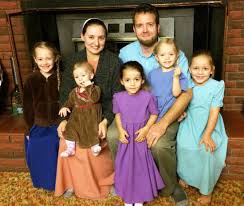
How do you view your children? You will have control of them and the ability to teach and train them for only about twenty (20) years. How are you raising them during this rather brief time? Are you raising them for the Lord—and will this go on for all eternity?
This is not intended to be a long or expansive article at all but we wish to merely comment briefly about what Scripture says of the duty of children to their parents and the duty of parents to their children. We realize that there are literally millions of people who are young in age (or young in heart). But how many of these children and young people are submissive (or should be) to their parents? (We realize that millions of them don’t even have two parents!)
Think of the many young people who are under a father and/or mother. We don’t know about the life of Jesus Himself but this might be a good place to start. Jesus may have lost his father (Joseph) after the age of 12 (see Luke 2:41-52) or there are some indications that Joseph was still alive longer than is commonly thought (cf. Matthew 13:54-56; Mark 6:3). Either way, we think that most of our readers would think of Jesus as a model young person since He never sinned even once. He was flawless in His speech, thought life, and actions.
We have very little insight into Christ’s early life but Luke 2 does mention an incident when He was twelve years of age (vv. 39-52). This is when Jesus was in the temple asking questions of the aged men to be found there and also listening to them. After this incident, the text says that Jesus “came to Nazareth, and He continued in subjection to them (the father and mother) (Luke 2:51). If Jesus was in subjection to His parents, it would surely be proper for human young people to be submissive as well. (We don’t deny that Jesus’ real Father was the Heavenly one and Joseph was merely a “legal father”.)
We also receive the distinct impression that Timothy (who must have been an older teenager) when he began to follow Paul must have been very obedient young man. He was respectful, zealous, and an ideal young person. As to His personal life, He was the son of a Jewish woman and a Gentile father (Acts 16:1-3) and must have been submissive to his parents. The text says that “he was well spoken of by the brethren who were in Lystra and Iconium.” Let’s remember too that this is the Timothy (a disciple of Paul) who urged children to be obedient to their parents. Timothy definitely would have been submissive to his mother (and perhaps father, although we do have indications that the father may have died prematurely).

When we think of Timothy, let’s remember that he had a devout mother and devoted grand-mother: Paul was able to write, “I am mindful of the sincere faith within you, which first dwelt in your grandmother Lois and your mother Eunice, and I am sure that it is in you as well” (2 Timothy 1:5). As we read this we cannot at all receive the impression that this follower of Paul (and Jesus—note 1 Corinthians 11:1) would have led a disobedient or insubmissive life. His behavior must have been ideal in every way. Surely he was not worldly or hypocritical.
Even though Timothy must have been quite young, he must not have been insubordinate in any way. Paul speaks of this young man’s “youthfulness” (4:12). If Timothy was about 18 when Paul had him join the travel party, he would have been barely a year or two older when Paul circumcised him (Acts 16:3) and began to send him on important missions (cf. Acts 17:14, 15; 18:5). Indeed, this young person must have been generally responsible and manifested the “fruit of the Spirit” (Galatians 5:22-23).
Notice now the way godly children are described in Scripture. For example, Paul lays down requirements for the children of elders/overseers on the island of Crete. He says that one chosen for this important function is to be “the husband of one wife, having children who believe, not accused of dissipation or rebellion” (Titus 1:6). How different from many (or most) children in our age! Here, the overseer is to have believing children! Today, how many leaders in assemblies have sons and daughters who believe in Christ—a total faith in Jesus!
Paul says, “Children, obey your parents in the Lord, for this is right” (Ephesians 6:1). He goes on, “Honor your father and mother” (v. 2). And, of course, we read, “Fathers, do not provoke your children to anger, but bring them up in the discipline and instruction of the Lord” (v. 4). Fathers (and mothers) do you do this? Do you bring up your sons and daughters in the “discipline” and “instruction” of the Lord? Further, we also read, “Children, be obedient to your parents in all things, for this is well-pleasing to the Lord” (Colossians 3:20). Even when a child has ungodly parents who require sin of some sort, we believe that the son or daughter should at least have a submissive spirit!

It was a major emphasis that children were not to be disobedient. One of the major sins that Paul mentions in 2 Timothy 3 is that the child must not be “disobedient to parents” (v. 2). Another sin in a listing that Paul gives in Romans is that of “disobedient to parents” (Romans 1:30). If disobedience to parents is such a heinous sin described in Scripture, we also are aware that the opposite (obedience to parents) is an essential and important requirement!
Further, these children are not to be guilty of “dissipation” or “rebellion” (Titus 1:6). The KJV has “riot” and “unruly” here. The Greek has asotia which means, “prodigality, a wastefulness, profligacy.” Sadly, this definitely describes millions of young people today, doesn’t it!
There is also the term “unruly” (KJV) or, better, “rebellion.” As you can imagine, this describes millions of young people in our age. Let’s do all we can to not only teach our children to avoid this sin but also encourage others to refrain from this evil attitude! Children are to be yielding, submissive, obedient—and like Jesus!
We would do well to also notice the kind of person that Paul says qualifies as a father. He tells us that a deacon (one who serves well) is to be a husband of only one wife, and a good “manager” of their children and their own households.” Would you say that you and other leaders in the assemblies are “good managers”? Some parents seek to keep their children “under control” by imposing strong restrictions. Further, the apostle says that an elder must be “one who manages his own household well, keeping his children under control with all dignity” (1 Timothy 3:4).
We might well ask the pointed question not only whether a leader (or any true male Christian) is a good manager of his children but whether he keeps his own sons and daughters “under control with all dignity.” As we continue to read, we see that, “if a man does not know how to manage his own household, how will he take care of the church of God?” Again, we see how vital this matter of “management” is!
Vine well says that this term (semnotes) is a necessary characteristic of the teaching imparted by a servant of God.” Arndt and Gingrich (and Bauer and Danker) say that the term means reverence, dignity, seriousness, respectfulness, holiness, probity (A Greek-English Lexicon of the New Testament). Let’s determine to so teach our children that they will have these traits—reverence, dignity, seriousness, respectfulness, holiness, probity.” We dare say that most young people fail to manifest such characteristics today. Instead, most are disobedient, worldly, and manifest the “deeds of the flesh” (Galatians 6:19-21).

Regarding “love,” we notice the utter importance that a mother (and father) truly love her children (Titus 2:4). If you are a parent, do you have an outgoing concern for the welfare of your sons and daughters? Are you interested that they pursue sports and achieve academic success—or are you genuinely concerned for their spiritual growth and welfare? Renounce this matter of sports, TV, computers, cell phones, and so much more—and teach your children true godliness!
When Paul wrote of Timothy, he said that this young man “served” with him in the furtherance of the gospel “like a child serving his father” (Philippians 2:22). Is this something that is done in our day? Do young men “serve” their father so that this attitude may be found in sons in general? So teach your sons that they may serve you or serve with you! The same would be true of daughters learning from their mothers.
Doesn’t the Lord Jesus say anything about children? Of course, He does. Jesus said that a child must “humble himself” (Mathew 18:4; cf. vv. 1-6). We also learn that a child is to come to the Lord Jesus for “the kingdom of heaven belongs to such as these” (19:13-15). Does your son or daughter have a deep and abiding love for Jesus and God the Father?

In your own teaching and training your sons and daughters, are you utterly concerned about their spiritual welfare? Do you want them to have a “kingdom” focus in life? Or, instead, are you interested in their academic prowess, their athletic achievements, or how much they show progress in their other activities? Are you positive about their computers, their computer games, their worldly literature, or talking to worldly friends by phone? This child is to either find fulfillment in the kingdom of God for all eternity—or the child is to find earthly accomplishments in life. What do you want for your child?
I hope that these scattered brief remarks will encourage us to have a “heavenly” focus in all things as you point your children to God’s ways!


 You can reach us via e-mail
at the following address:
You can reach us via e-mail
at the following address: