

Can We Learn from the Muslims?
(The Experience of Afghanistan and other Islamic Countries)
Richard Hollerman
As I was noticing the news this morning, I noticed that the Taliban, after a 2 year rule, had declared a “Holiday” in the country. This was a matter of rejoicing to the local Muslims in Afghanistan and a matter of sorrow for many (especially women and girls) in the country.
I know that many of those who read these words will be dismayed with our comments. So be it. We know that many of our readers are worldly and cater to worldly standards. But we must tell the truth at all costs, even at the price of losing readers. After all, this is what we read in Scripture (Ephesians 4:15).
Not all Muslims will agree with our words, but some might. We must make it plain at the beginning that Islam, the religion of the Muslims, is a defective and faulty religion that is gaining ground in the world. Among the nine billion inhabitants of the world, we know that nearly two billion belong to this religion, that of this sect Islam.

What made me “perk up” and notice the news was the description of Islam in this Muslim stronghold of Afghanistan. The Taliban were denounced again and again, and part of this was rightly so and should be done, but some was not and (from a Christian standpoint) should not have been done. Some was good and some was bad. Remember, that the “news” that we saw was from a worldly standpoint and the “news” from this Islamic country was and is biased. We know that over 99% of the people who live there are Muslims, thus they belong to an evil religion that oppresses people and believes wrongly and does wrongly. Thus, when we offer our critique, you might keep this in mind.
The people (particularly the men) of Afghanistan hold to a very conservative (or shall we say this “terroristic” form) of Islam. In 2021 there were 40 million people living there, so perhaps there are 43 million today (this would be approximations, of course). This might compare to other Islamic countries:
Iraq has 43 million in 2021 (today perhaps 46 million now)
Syria had 21 million in 2021 (today perhaps 25 million)
Iran had 88 million in 2021 (today perhaps 94 million)
Thus, we find this a sizeable number. In comparisons, the United States, with about 333 million population (in 2023), and seven million illegal immigrants, perhaps living with 42 million people (seven times five), plus the seven million mentioned above, gives us many Spanish-speakers. And if we were to include the 50 million blacks, we have (perhaps) 92 blacks and illegal immigrants!
Now to return to Afghanistan and their present holiday. From what we have read, the men (loyal Muslims) generally approve of the present direction of the country and the women and girls do not. We know that Islam is part of the reason and part is not. What have the Taliban religion taken away that makes the women and girls (generally) unhappy?
- They are now required to wear the “hijab” as part of their wardrobe.
- They are not permitted to go to school.
- They must wear clothing that fully covers their body.
- They must refrain from public speaking.
- They must not have jobs that place them in public scrutiny.
These requirements come to mind but it may be that one or more of our readers can inform us further.
Of course, the conservative and Biblical Christian knows that some of these are Biblical in nature and should be implemented if we seek to please God. (But some are not.) We know that Islam (as a religion) displeases God and brings on His wrath and condemnation. It is a wicked religion that rejects the Lord Jesus and His ways and insists on following an Arab prophet instead. So (to begin) we must reject this religion that those from Afghanistan cling to so fervently.

So what about some of the elements that many Afghanistan men want and many Afghanistan women reject?
We know that the “hijab” is wrong and must be rejected. While the Bible does teach that a woman should cover her head when she prays of prophesies (1 Corinthians 11:3-16), we know that this item of Islamic clothing is neither required nor is it good.
This is what we read from Wikipedia (not a reliable source, we know):
In modern usage, hijab (Arabic: حجاب, romanized: ḥijāb, pronounced [ħɪˈdʒaːb]) generally refers to various headcoverings conventionally worn by most Muslim women. While a hijab can come in many forms, it often specifically refers to a headscarf, wrapped around the head and neck, covering the hair, neck, and ears but leaving the face visible. The use of the hijab has been on the rise worldwide since the 1970s and is viewed by many Muslims as expressing modesty and faith. There is a consensus among Islamic religious scholars that covering the head is either required or preferred, though some Muslim scholars and activists argue that it is not mandated.
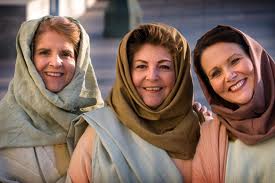
Thus, the “hijab” may have certain Biblical elements, but in other respects it does not. This item of clothing, generally worn by Muslim women in the Near East and North Africa, does have certain elements that would be Biblical and others that may not be. Yes, it does indicate modesty, and yes, it does indicate “faith” (unfortunately a false religion or faith), but it goes beyond this. Scripture doesn’t seem to require something that completely covers the hair, although this is permissible.
We find this on the internet, regarding the use of the “hijab” in public:
In private, and in the presence of close relatives (mahrams), rules on dress relax. However, in the presence of the husband, most scholars stress the importance of mutual freedom and pleasure of the husband and wife.
Traditional scholars had differences of opinion on covering the hands and face. The majority adopted the opinion that the face and hands are not part of their nakedness.[citation needed] Some held the opinion that covering the face is recommended if the woman’s beauty is so great that it is distracting and causes temptation or public discord. (https://en.wikipedia.org/wiki/Hijab).
We know that this is a liberal source, but it goes give some idea of the Muslim perspective. We know that some of this is not only good but it does represent a Biblical perspective that should be followed.
There is a great amount of variety in the implementation of the hijab in public. And so we read: “Hijab is similar to the tichel or snood worn by Orthodox Jewish women, certain headcoverings worn by some Christian women, such as the mantilla, apostolnik and wimple, as well as the dupatta worn by many Hindu and Sikh women (as well as by Muslim women from the Indian subcontinent). This shows a certain amount of variety in the use of this headcovering. (https://en.wikipedia.org/wiki/Hijab/)

What about schooling? In the United States, public schooling began about two hundred years ago (in the early 19th century). Of course, this was for boys and girls, although boys were generally the ones educated. Before this time, people were not educated, and those who were experienced teaching at home (such as George Washington and others). Instead of “public education,” we had various forms of “private” education. We find this as to the beginning of the “public school” phenomenon:
Colonial New England encouraged its towns to support free public schools funded by taxation. In the early 19th century, Massachusetts took the lead in education reform and public education with programs designed by Horace Mann that were widely emulated across the North. Teachers were specially trained in normal schools and taught the three Rs (of reading, writing, and arithmetic) and also history and geography. Public education was at the elementary level in most places. (https://en.wikipedia.org/wiki/Education_in_the_United_States.)

Today, of course, with mandatory schooling (in America), most receive public education. This began in the primary level and then went on to high school and beyond.
With the upheaval in society in the United States, we wonder what the coming years will bring! Nearly 85 or 90 % of children receive public education along with other forms of education (there were “parochial” schools, run by Lutherans, Episcopalians, Jews, and Catholics) But we recognize that over 50 million children are taught in public schools. Do the Muslims (such as those in Afghanistan) have a right in their own religion? We find that Muslims, Adventists, and others do have their own funding and administration.
Personally, we would think that much of the female education is unneeded and even wrong (keep in mind that we—as Biblical Christians—believe that women should not hold down regular jobs but should remain at home, for the most part). Thus, we would think that girls do have some allowance for education but much of this is unneeded. We might also keep in mind that education (as it is generally found in society) is wrong also for boys, for it is filled with worldliness, evolution, sports, scientism, and other forms of unchristian elements that lead away from God rather than to Him!
As Christians (who base one’s lifestyle on the Bible), we know that clothing must be considered. We are aware that Muslim-type of clothing would be unneeded and even wrong, but the Christian also realizes the most of the clothing of women and girls today (with the approval and even direction of males) would be wrong! The girl is to be fully clothed and unseen and have certain elements that we must bear in mind.
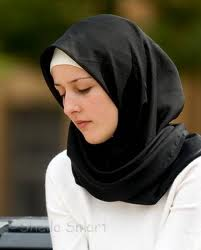
What do we mean? 1. The clothing must fully cover. (2) The clothing should not be provocative in any way. (3) The clothing surely must be ones that cover a woman (and not reveal her anatomy) but not like Muslims would have us believe. (4) Of course, male clothing must be unlike that of the world as well. (5) Surely the clothing need not be black (for this would totally contradict Scripture). These are some of the differences that we must keep in mind regarding Islamic dress for women and girls.
As for speaking in public, this again is a mixed requirement. On the one hand, the woman is to refrain from speaking publicly and in a teaching setting (1 Timothy 2:11-15; 1 Corinthians 14:33-37; etc.) but she is to be vocal with her faith, especially with her fellow-girls and fellow-women (if this is the correct term, using “fellow” in this way). Thus, the Bible would forbid the woman from having social intercourse (not using this in a sexual way) with the man, but should not be forbidden from interacting with the opposite sex in certain settings.
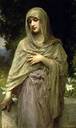
We are aware also that the woman is generally to be domestic, or she is to be related to her home and not expose herself in public (see 1 Timothy 5:14; Titus 2:4-5; etc.) but we think that Islamic tradition goes too far. In other words, this forbids what Scripture doesn’t forbid. And it requires what Scripture doesn’t require. Yes, she is to be domestic and is not to have a public role and this violates the practice of the majority of women and girls. Instead of their having unlimited and indiscriminate interaction with the opposite sex (especially), they should be judicious and private in their activities. But, at the same time, we know that the Muslim prohibitions do prohibit the fairer sex from legitimate expressions in public—and this must not be done.
All of this shows that the Afghanistan prohibitions are both good and bad. They are good inasmuch as much of Western society has greatly de-parted from the Biblical norms. But they are bad inasmuch and this religion confines women into a wrongful and evil system that is both confining and also more tradition than Biblical.
We call on you (our readers) to go back to the Bible and receive your instructions from it rather than a false religion. Let us find God’s “rules” rather than man’s “rules” or tradition that would subjugate and denounce rightful expressions of sexuality. This alone will be the Biblical way. It alone will be what God requires.


 You can reach us via e-mail
at the following address:
You can reach us via e-mail
at the following address: