
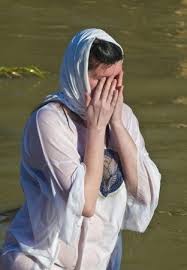
Baptizing in Cold Weather?
Richard Hollerman
Strangely, in the United States (and perhaps in the whole northern hemisphere), we are enduring a severely cold period. This is the background for such an unusual title as this. We know, therefore, that we are addressing a subject that may or may not pertain to you and your circumstances.
Some time ago a preacher who knew of my convictions on immersing converts said that he pitied me. To him, it was a very simple matter of visiting the prison and speaking to the inmates there and then pouring water on their head—if he wanted to “baptize” them. This he called “baptism” and he said that this was so much simpler than my own conviction of dipping a person in water. Of course, I must admit to at least parts of his reasoning.
On another occasion, another preacher who knew of my convictions on immersion and his own exposure to this “form” of baptism, said that he was able to resolve the matter by going to the early writing called “The Didache” (the “Teaching”). In chapter 7 of this document (dated about AD 100 to AD 150), we learn that if there is not sufficient water to baptize a person (immerse a person), then that person should be “poured” with water. Presumably, if there is not enough water for some reason (what that reason could be, we don’t know), then the person should be thoroughly drenched with water to get as close to immersion as possible.
This aforementioned preacher then said that if it was good enough for the second-century church, then it is good enough for him. (We might also mentioned that by the third century we have “clinic” baptism for those who were too ill to be immersed. Again, in this case, the ill person was drenched as much as possible so that if he or she could not easily be immersed, pouring would suffice.)
Some of you might know that about twenty-two years ago I wrote a manuscript on the “action” (form) of baptism. I could not afford to have the manuscript published, thus I just abandoned the project temporarily. What was meant to be a temporary issue has turned out to be a long-term problem. Today, since publishers have ways to publish a book one by one and I need not publish 1,000 copies, I have resumed the editing of the manuscript and, hopefully, within a year this project will finally be finished.
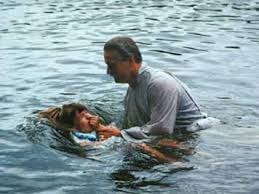
Thus, some of you know that I have worked with this subject on the “action” (or form) of baptism for a long, long time. The language seems to be clear that baptism is an immersion or dipping in water. The theology seems to be clear also, as such passages as Romans 6:1-5 and Colossians 2:11-13 would show. And, finally, the history of baptism also seems clear. Immersion was the typical “form” of baptism until about AD 1311 and the Roman Catholic Council of Ravenna.

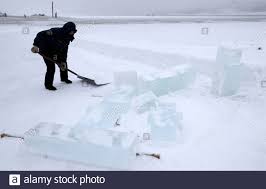
You may wonder what the “problem” might be. It is this. Let me give a bit of background. This person called from a northern area and said that the forecast said that it would drop to about 50 degrees below zero! You read this correctly. It was supposed to be far, far below freezing (some 80 degrees below the freezing point). How is it possible to immerse a person in such a frigid temperature? We know that today a person can be immersed inside (in a bathtub or baptistery), but until recently this indoor baptism would have been impossible. One would need to break or saw through the ice outside, in a natural body, in order to have water for the immersion. And even if this were done, is it really possible for a person to withstand such cold, cold water and not die!
Even today in north-central Texas, it is about 15 degrees. They say that in a day or two it may drop down to 0 or minus 5 degrees. It must be painfully cold outside! How is it possible to break the ice and immerse a person outside on a day like this?
Let’s bring another issue into this discussion. If we were a Baptist (which we are not), we suppose that it would be possible to arrange a baptism to occur not in February but perhaps in March, April, or May. This might make an immersion more feasible for then a man or woman would not need to endure 0 degrees of temperature in a river or lake or pond.
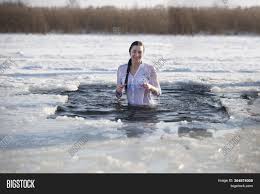
But if one takes Scripture seriously, we do have a serious problem, don’t we! Those of you who are students of the Scriptures are aware that Jesus instructs us to make disciples of people around the world and immerse them (Matthew 28:18-20). Also, if we take Mark 16:15-16 seriously, we can see that Jesus said that one who believes and is immersed will be saved. This makes the act very important!
Further, let’s remember that Peter immersed 3,000 people on the Day of Pentecost (in Acts 2:37-41). This shows the utter importance of baptism, so important that the apostles (and perhaps their acquaintances) immersed some 3,000 people in one day. The same could be said of other passages of Scripture (e.g., Acts 8:12-13, 35-39; Romans 6:1-5; Colossians 2:11-13; etc.). We can see how vital baptism is and the fact that there should be no delay.
If people were affusionists (those who pour) or aspersionists (those who sprinkle), there would be no problem. One can easily sprinkle or pour a person inside of a dwelling. But the immersionist does have a problem—of sorts. Today, with so many baptismal pools available in a dwelling (e.g., a church), this is not so much of a problem, but with outside immersions, it could be a problem (if we only immerse in a natural body of water). When I was a child, I was first “baptized” as a baby at a font in the Lutheran Church in town and, again, there would be no problem, but if we are immersionists (such as Baptists and others) and have convictions on immersion, it does pose a serious problem—unless we want to subject ourselves to dangerously cold temperatures!
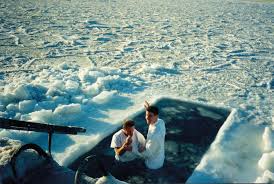
Why do we have such a problem? It would seem that a number of issues combine to make this especially problematic. Generally, the winter is not quite as cold as we have described it. Secondly, we need to remember that in the Bible, the land of Israel was not utterly cold (although they did sometimes have snow). Thirdly, we do need to remember that some locations did get very cold (we are thinking of places where Paul traveled, such as Syria, Turkey, Macedonia, and Italy). Fourthly, we might also remember that in the early centuries after the New Testament times, there were places that were quite cold (such as Gaul [France], Britain, Switzerland, Germany, Sweden, Norway, Finland, Russia, Poland, or Austria). Fifth, although most baptisms were surely done in natural bodies of water (rivers, streams, lakes, ponds, the sea, etc.), we imagine that there were also some immersions happening inside (in artificial baptisteries).
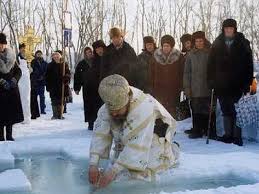
We know that some baptisms were probably a challenge. There were also times of the year when one could immerse without much trouble. What about March, May, July, or October? While the immersions may be uncomfortable, still in many times of the year, it could be done with more of less trouble. Let’s also remember that in places like Russia where the Orthodox Church is located, this church immerses people regularly. We don’t know what time of the year this is done, but some of those times may be quite cold. We think that these immersions are actually performed on babies (which is another false doctrine that the church insists on).
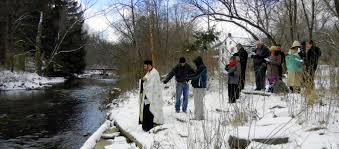
Personally, I like the warmer months of the year even though I grew up in Pennsylvania. I can recall that it has dropped as low as 0 degrees in this state. And I know that at one time, the snow did reach as high as 36 to 48 inches. That is cold and it is snowy! Of course, in those days we did not immerse. (I was a Lutheran.)
Whatever the problems encountered in the colder months of the year, let’s be glad that artificial bodies can generally be found inside and many avail themselves of these venues. Do we reinterpret Scripture to allow baptisms only in the warmer months? Do we reinterpret the Bible to allow pouring or sprinkling instead of baptism (immersion)? Do we make baptism “convenient” and “easy” when the temperature drops?
Did God know what He was doing when He inspired Scripture that would direct us to immerse those who repented of their sins and believed in Jesus (cf. Acts 8:12, 35-39; 18:8)? Did He know what He was doing when He specified that people are to be immersed in water (in cold water) in November, December, January, and February? We know the answers. Let’s do what we can to overcome these hindrances and look to the Lord in faith—and in obedience! It is always the will of the Lord that we seek and we are determined to do this.
Richard Hollerman


 You can reach us via e-mail
at the following address:
You can reach us via e-mail
at the following address: