

Atheism and Religion in America?
Richard Hollerman
Supposedly there are about 195 or 196 different countries in the world at present. These different nations have many different population groups living in them. There may be one single group or there may be many different peoples and they all believe something different.
For example, as we go to the World Almanac for 2022, we discover the various groups that compose the religious landscape of the earth. Keep in mind that there are about nine (9) billion people now living.
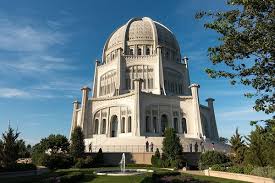
Of this number, there are about 9 million Bah’is; 545 million Buddhists; 476 million Chinese folk religionists; 2 billion, 560 million “Christians” (of all sorts); 8 million Confucianists; 280 million Ethnoreligionists; 1 billion, 73 million Hindus; 6 million Jains; 15 million Jews,’ 1 billion, 748 million Muslims (of Sunnis and Shites); 65 million “new religionists; nearly 3 million Shintoists; 28 million Sikhs;15 million spiritists; nearly 10 million Tauists; and 200 thousand Zoroastrians. These, of course, are approximate counts. (See The World Almanac and Book of Facts: 2022, p. 700).
To be complete, we must also mention this. According to the above book, there are about 750 million agnostics plus 147 million atheists, for a total of 897 million
“nonreligious” persons in the United States. As we go to the world, we discover a wider view of religion in general (https://en.wikipedia.org/wiki/List_of_religious_populations). Thus, if one were to consult the previous source, we would see how the various religions fit into the religious groupings, including the atheists and agnostics, the Catholics, the Hindus, the Buddhists, the Muslims, and others.
Notice this information that shows something of those people in America who are now total unbelievers (or atheists and agnostics). This reveals how much this country of the United States has changed:
Number of Americans who believe in God drops to historic low:
Danielle Wallace
Sun, June 19, 2022, 12:10 PM
The percentage of Americans who say they believe in God has dipped to the lowest number in the past nearly 80 years, according to a new Gallup poll published Friday.
The Values and Belief poll, conducted from May 2 to 22, showed 81% of people answered that they believe in God. That is down six percentage points from the 87% of respondents who said they believed in God in the 2017 poll. This year is the lowest percentage in Gallup’s trend since the public opinion polling company first asked the question in 1944.
This year’s poll found 17% of Americans said they do not believe in God.
When asking the question first in 1944, again in 1947, and twice each in the 1950s and 1960s, a consistent 98% of respondents said they believed in God. When Gallup asked the question nearly five decades later, in 2011, 92% of Americans said they believed in God.
A subsequent survey in 2013 found belief in God dipping below 90% to 87%, roughly where it stood in three subsequent updates between 2014 and 2017 before this year’s drop to 81%.
The poll found that the belief in God has plummeted the most in recent years among young adults and people on the left of the political spectrum, namely liberals and Democrats.
Gallup said those groups show drops of 10 or more percentage points comparing the 2022 figures to an average of the 2013-2017 polls. Most other key subgroups have experienced at least a modest decline, although conservatives and married adults have had essentially no change, according to the polling company.
The poll found the groups with the largest declines are also the groups that are currently least likely to believe in God, including liberals (62%), young adults (68%) and Democrats (72%). Belief in God is highest among political conservatives (94%) and Republicans (92%), which Gallup said reflects “that religiosity is a major determinant of political divisions in the U.S.”

We know that the majority of people do not live in the United States. About 4 to 5% of people fit this description, with about 95% to 96% outside of America. Thus, the number of people who profess no religion or the many false religions would be even lower. According to the above statistics, we notice this information that show the number of people in the States who hold to various religions—or don’t hold to religious convictions. This, of course, would refer to political respondents: “liberals (62%), young adults (68%) and Democrats (72%). Belief in God is highest among political conservatives (94%) and Republicans (92%).”
There are many who refuse to believe in God in America, as we learn from these statistics. We don’t know about you, but we find these numbers quite dismal and dismaying. The only bright spot is that when the good news of Christ went out, the condition of the world (religiously) was just as dire. Further, we know that there are many people from around the world who profess some sort of conversion to the generic “Christianity.” Of course, we know that the vast majority of these would be false. They would be fictitious and wrong, even though they may assume that they are Christians. Sadly, most of them are not and never have been truly saved. Maybe we must also conclude that they will never come to Christ as Scripture reveals!

This is not meant to be an exhaustive study of this topic. We are merely mentioning that atheism is growing and religion itself is changing in America. Let us be prepared and do what we can to share Jesus to a “lost and dying world” that desperately needs Christ and His salvation! Actually, as we have stated, we know that most of the world is not only “dying” (physically) but sadly is “dead” (spiritually—Romans 6:23; Ephesians 2:1, 5; Colossians 2:13).


 You can reach us via e-mail
at the following address:
You can reach us via e-mail
at the following address: