
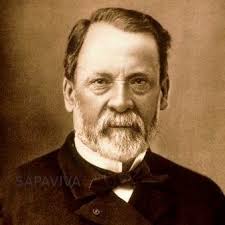
What about Louis Pasteur?
Richard Hollerman
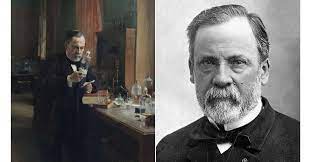
We probably know him as Lewis Pasteur, the French scientist who majored in the fields of chemistry and microbiology. We may think of his connection with items such as pasteurization (named after him). Or maybe fermentation, germ theory and discovery, microorganisms, tartaric acid (which was the object of his special study), and virulence. He did so much, discovered so much, accomplished so much, invented so much, and his name is scattered across the nation of France and beyond.
Living from 1822 to 1895, and dying in Paris, France, we may know him as a strong, steadfast, and knowledgeable “Christian.” I have seen his name and life referred to many times in articles. We may think of a statement that I recall (but couldn’t find) that says something like: “If you go before me, and you remain an atheist, we will both just cease to exist. But if we die at the same time and I am right and you are wrong, we will both know this for all eternity.” This struck me as quite significant, but I couldn’t discover it on the internet, regardless of my futile efforts. It does make sense, however, and it is one that we should keep in our mind at all time! Let us live (and die) with eternity in mind! We’ll have more to say about this statement (a defective and incomplete statement) toward the end.
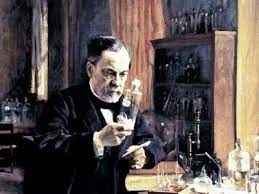
We read this from one of our sources:
Pasteur’s academic positions were numerous, and his scientific accomplishments earned him France’s highest decoration, the Legion of Honour, as well as election to the Académie des Sciences and many other distinctions. Today there are some 30 institutes and an impressive number of hospitals, schools, buildings, and streets that bear his name—a set of honours bestowed on few scientists.” (https://www.britannica.com/biography/Louis-Pasteur).
But, of course, we know that this would not at all qualify him (from God’s standpoint) in being a devout Christian of any sort!
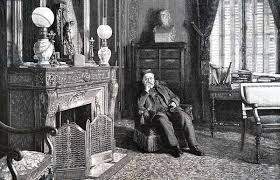
But was this man of renowned really a strong Christian who should be followed? In our research, we did discover that he was a nominal Catholic. But we know that nominalism will do nothing to indebt us to God. Yet we do find that Pasteur is often looked on as a worthy example of a scientist and Christian! (See https://creation.com/louis-pasteur).
We also find this (taken from Pasteur’s grandson, Louis Pasteur Vallery-Radot:
[He kept a record that] . . . Pasteur had kept from his Catholic background only a spiritualism without religious practice. However, Catholic observers often said that Pasteur remained an ardent Christian throughout his whole life, and his son-in-law wrote, in a biography of him:
Absolute faith in God and in Eternity, and a conviction that the power for good given to us in this world will be continued beyond it, were feelings which pervaded his whole life; the virtues of the gospel had ever been present to him. Full of respect for the form of religion which had been that of his forefathers, he came simply to it and naturally for spiritual help in these last weeks of his life.
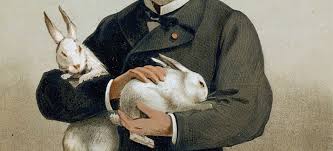
The Literary Digest of 18 October 1902 gives this statement from Pasteur that he prayed while he worked:
Posterity will one day laugh at the foolishness of modern materialistic philosophers. The more I study nature, the more I stand amazed at the work of the Creator. I pray while I am engaged at my work in the laboratory.
Maurice Vallery-Radot, grandson of the brother of the son-in-law of Pasteur and outspoken Catholic, also holds that Pasteur fundamentally remained Catholic. According to both Pasteur Vallery-Radot and Maurice Vallery-Radot, the following well-known quotation attributed to Pasteur is apocryphal: “The more I know, the more nearly is my faith that of the Breton peasant. Could I but know all I would have the faith of a Breton peasant’s wife”.
According to Maurice Vallery-Radot, the false quotation appeared for the first time shortly after the death of Pasteur. However, despite his belief in God, it has been said that his views were that of a freethinker rather than a Catholic, a spiritual more than a religious man. He was also against mixing science with religion.
We must point out that good deeds (including all of the scientific progress attributed to this great Frenchman) and his connection with an apostate Catholicism was insufficient to save Pasteur. We encourage you to read such passages as Ephesians 2:8-9; Philippians 3:9; Titus 2:4-7; and others.
We further read this:
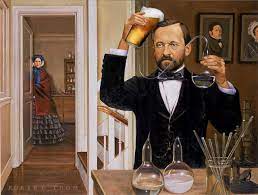
Pasteur had great respect for the unknown and the infinite, but did not allow himself to become a victim of superstition and fanatical religious explanations. As his work displays, Pasteur believed that the human mind was capable of making discoveries and clearly identifying causes, even of the unseen or “invisible” world. His work in chemistry and microbiology proved that, through applying scientific principles to industry and commercial processes, mankind could rise above disease and poverty. This ideology in many ways contradicted the Catholic Church, which, meanwhile was teaching the indigenous peoples of the new American colonies that “poverty and suffering are signs of true Christians.”
Louis Pasteur did not deny religion, but was compelled to say that, “religion has no more place in science than science has in religion.” The role of religion in his mind was clear:
In each one of us there are two men, the scientist and the man of faith or of doubt. These two spheres are separate, and woe to those who want to make them encroach upon one another in the present state of our knowledge! (https://www.pasteurbrewing.com/louis-pasteur-a-religious-man/)
This should convince us that good deeds (regardless of how worthy) just won’t endear us to God our Creator. Further, we must also conclude that Pasteur’s connection with the Roman Catholic faith was not sufficient to reconcile him to God! In fact, all of this, instead of drawing him closer to God, to His truth, and to His ways, served only to pull him away from a saving relationship with God through Christ!
In reality, faith in God must inform science! Faith in Christ must dominate all religion! The Lord Jesus and our loyalty to His must supersede everything else.
If Pasture did utter those memorable words attributed to him, let us take heed: “If you go before me, and you remain an atheist, we will both just cease to exist. But if we die at the same time and I am right and you are wrong, we will both know this for all eternity.” Isn’t this right! But we know that this is not reality. We have a massive amount of truth that informs us and we need not rely on a faulty saying. If one dies without God, He will go to a place of anguish for all eternity. And if one dies with Christ, He will go to a place of bliss for all eternity (Luke 16).
Thus, when we read of Pasteur, his many achievements, his discoveries, and his character of humility and religiosity, we should keep these facts in mind. Other sources would say the same thing and should convince us of both the positives and the negatives in this great man. Only Christ matters and it is true of Pasteur and anyone else who may call on His name!
https://en.wikipedia.org/wiki/Louis_Pasteur#Faith_and_spirituality
https://www.britannica.com/biography/Louis-Pasteur
https://www.pasteurbrewing.com/louis-pasteur-a-religious-man/


 You can reach us via e-mail
at the following address:
You can reach us via e-mail
at the following address: