
Remarriage, Death, and its Implications
Richard Hollerman
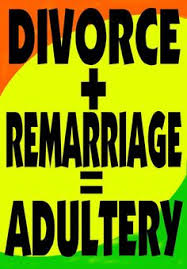
What we want to address has to do with the millions of those who divorced their first spouse (a husband or wife) for unscriptural reasons (such as “incompatibility”—Matthew 19:9) and then remarried. Those of us who believe the Bible know that this would be adultery (cf. Mark 10:11-12; etc.) and those who do this as unrepentant adults will face God’s wrath because of this sin (see 1Corinthians 6:9-10; Hebrews 13:4; etc.).
This question is an honest one and the thought then arises (and you have probably had it yourself), what if such a person (who has remarried and is “living” in adultery subsequent to this), is married to a spouse who dies—when then? Obviously, if the person is unrepentant for the sin of adultery he or she will be held accountable before God for such sin. But what if the person (who is an adulterer or has an adulterous spouse, and then that person died)—what then?

Further, what if such a person is deeply sorry for his or her sin and then thoroughly repents (as much as possible) and seeks to undo it, what then? Granted, it may be difficult for such a person to repent—for he or she, in effect, will be leaving the dear adulterous spouse to face God in sin. But, if the person can “get over” this barrier, repent of this sin of adultery (and remarriage), and seeks God’s forgiving favor of this sin, it perhaps can be done. Is this right reasoning?
Do we now see the “picture” of this situation? Surely it is one that has been committed by hundreds of thousands of people in our day. Actually, there are multiple millions around the world who are remarried and then the one spouse dies. We speak of not only America but much more around the world. Apart from this repentance (cf. Acts 8:22-24; 2 Corinthians 7:10; 2 Peter 3:9), the person will remain his or her sin.

And why would this person want to do this? We can think of a leading reason: if this woman (or man) realizes that this is a sin that will bring one under God’s judgment (cf. Hebrews 13:4), he or she may hesitate doing anything that would cast some reflection on the departed (dead) spouse. In other words, the remaining spouse would want to think of the departed being with the Lord—and not cast off forever because of adultery and sin in general (Isaiah 59:2).
But if the person so loves God and can overcome this “barrier” we think that there is true hope. The person can be forgiven, as rare as it may be.


 You can reach us via e-mail
at the following address:
You can reach us via e-mail
at the following address: