
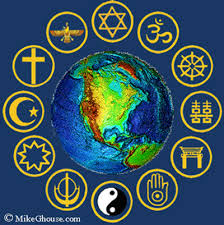
Similarities and Differences in the Religions World
We are discussing particularly the “similarities” and “differences” in Islam and Christianity, for this is particularly true of these religions but these “similarities” and “differences” are found in all religions of the world. In some ways, Islam and Christianity are similar. But, in another respect, they are very different. Let’s remember that there are hundreds of millions, even billions, of others who are adherents of other religions and if we were to interview them, each of them would tell us that their religion is important to them.
Here we are referring to various world religions. Notice a few of them with the number of adherents:
Christianity—2.382 billion
Islam 1.907 billion
Secular and agnostic—1.193 billion
Hinduism—1.161 billion
Buddhism—506 million
Chinese traditional—394 million
Ethnic religions—300 million
African religions—100 million
Sikhism—26 million
Spiritism—15 million
Judaism—14.7 million
Baha’i—5 million
Jainism—4.2 million
Shinto—4 million
Cao Dai—4 million
Zoroastrianism—2.6 million
Tennnikyo—2 million
Animism—1.9 million
Neo-paganism—1 million
Unitarian Universalism—0.8 million
Rastafari—0.6 million
This gives us a total of 7.79 billion. We know that this is a very long list but it does give us something substantial to see and work with. (en.wikipedia.org/wiki/List_of_religious_populations)
But two of these are important to us in this study. They will be our primary focus today: In Islam, there are some 1.907 billion Muslims, thus it is a very important religion in our world. Additionally, another religion would be Christianity that most source books would say has some 2.382 billion devotees.
However, these religions are somewhat different and the statistics above are a bit misleading. For instance, although there may be 1.907 billion Muslims (those who follow Islam), there are great differences between the devotees. Some follow Muhammad’s writings devotedly. They also follow the life of Muhammad. Irefer to the Hadith and others. Some Muslims are Shiites and others are Sunnis. Some are different yet.

The same and much more so would be true in the case of what is generally called “Christianity.” Classified within this broad category would be various religions: Roman Catholicism has some 1.329 billion devotees in the world! (This would be the greatest part of the above statistic in “Christianity” with 2.382 billion professing “Christians” worldwide!) In this one “religion” alone, we find over half of those who profess Christ in one way or another! But some Catholics are traditional and conservative while others are liberal or progressive. Most do follow the so-called “pope.”
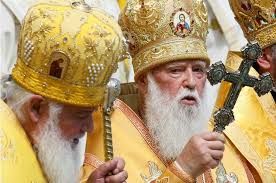
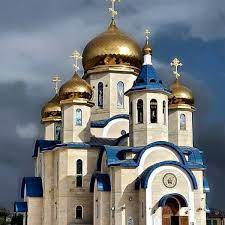
Apart from Catholicism, there is Orthodoxy with many branches. The Orthodox Church is found in various countries: Russia (the Russian Orthodox Church), the Ukraine (The Ukrainian Orthodox Church) (and we just placed a new article in our website on the various branches of Orthodoxy), (www.Truediscipleship.com). There would also be the Orthodox Church in Greece, the Middle Eastern countries, Egypt (the Orthodox Church in Egypt is called the Coptic Orthodox Church), Antioch (the Antiochan Orthodox Church in Syria), and others. There would also be the “Old Believers” in various countries (this is an Orthodox Church that is a breakaway from the Russian Orthodox Church), the Arminian Orthodox Church, and other denominations and churches.)
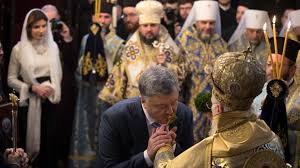
As you can see, this becomes quite confusing since all of these different churches that often fight among themselves, believe in different tenants, and have different headquarters, yet all claim to be Christians!
Apart from this, we find many other churches in Protestantism. (It has been said that there may be 30,000 different Protestant Churches in the world.) There would be such groups as the Anglican Church (in England, the head quarters, but in numerous other countries) (some 110 million people claim to be members in Anglicanism—but this would be 2001 statistics). There would also be Methodists, Presbyterians, Baptists, Episcopalians, Lutherans and many others!). Of course, we should remember that there are many different kinds of Methodists, Presbyterians, Baptists, Lutherans, and others—each of which do not have fellowship with the other and believe, teach, and practice differently.
We must not forget about certain groups that have been called “cults” although each of them would deny this category. We refer to Jehovah’s Witnesses, Mormons, Seventh-day Adventists, Christian Scientists, Oneness (or “Jesus only” or Modalistic devotees), and others. There would also be others who must be placed in such a list even though they don’t conveniently fit into the above categories, such as the “Two by twos,” and others.
Generally, although sources may say that there are 2.382 billion “Christians,” we must say that this is a misleading statistic. Yet Those who are categorized as Christians may believe in one God and believe in Christ Jesus (and, of course, in the Holy Spirit)—at least usually—yet we know that some who are called “Protestants” (protesting the Roman Catholic Church) actually reject the idea that Christ is Deity. Further, although we may think that all Muslims would reject the belief that Jesus is Deity, there are many differences between the various sub-groups of religions.
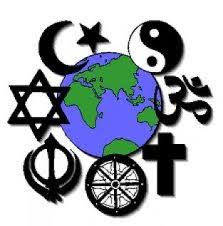
We can affirm that many adherents to both of these groups (Christians and Muslims) do believe in one God. (See particularly No God but One: Allah or Jesus? By Nabeel Qurish, pp. 29-31). But other than this, there are differences—even vast differences between them!
It is time that we become aware of such differences. Let’s remember that God has made His truth known, loud and clear! If He has created us in the beginning (and He has), if He has revealed His will and His truth in His written Word (cf. 2 Timothy 3:15-17), communicated by chosen apostles and prophets, and if we must believe in Him and in His Son to be eternally saved (John 3:16-18), then this is a non-optional, utterly necessary fact and truth! We can’t deny it or avoid it. (See especially 1 John 2:22-24; 3:23-24; 4:11-21; 5:11-13; 2 John 6; Colossians 1:13-18, 21-23; Galatians 1:3-8; 5:19-23; Ephesians 1:3-14; 4:4-6; Philippians 2:5-11; John 1:1-18; 3:1-18, 36; 17:1-26).

Obviously, there are many, many other passages (in the hundreds) that would say the same thing. In short, we must believe in God, in Christ Jesus, and in the Holy Spirit. Further, we must walk in the light of truth and righteousness, and depart from evil in all of its forms (1 John 1:5-10; Galatians 5:19-23). There is no other way to be forgiven, saved, redeemed, reconciled to God, and go to be with God eternally!
Although this is true, we know that most of the world religions do not accept this. In fact, they deny it! Beyond this, most actually reject and fight against these truths! Ask one who is committed to Islam, or Hinduism, or Buddhism whether he or she can accept these truths, and they will absolutely deny it! Ask one who is committed to Sikhism, Judaism, Baha’I, Jainism, Shinto or Zoroastrianism whether he or she can accept what we have stated, and they will totally and completely reject this too.
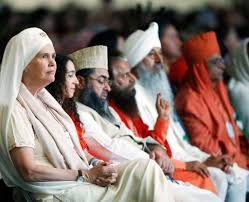
Even among those who profess some form of “Christianity,” we know that many don’t believe that Jesus is the only way to God the Father! Some might say that they don’t believe in the Lord Jesus in this way. Others may say that they think a person must approach God through Mary, the dead mother of Jesus the Son. Still others may think that there are many ways to God and we must not limit such ways to Christianity. What do you think?
Maybe we have not fully carried out our goal of writing about “the similarities and differences in the religions of the world.” But we have shown that these differences cannot really be reconciled. Maybe some of you have heard or read of the principle of “non contradiction.” This is what we read: “The law of non-contradiction is a rule of logic. It states that if something is true, then the opposite of it is false” (https://simple.wikipedia.org/wiki/Law_of_noncontradiction).

To make this practical and relevant to our discussion here, we must say that if Christianity is true, then Islam, Hinduism, Buddhism, and Judaism is false. This is elementary. If Jesus is the Son of God and if we must believe in this fact to be eternally saved, then we must reject the conception that Jesus is not the Son of God! If there is one God and one God alone, then we must reject the idea that there are multiple gods or that there is no god. This is elementary—and true.
In our short article above, we have examined the fact that there are many different religions in the world and they all can’t be true. Either they all are false or one may be true and the remainder are false. As it turns out, there is one true answer, one true “religion” (even though we would not call Christianity a “religion” among others). Scripture calls this a “way”—the way to life, eternal life.
Are you willing to accept Jesus as “the way, and the truth, and the life” (as He has clearly said) and are you willing to come to God through Him as He has said? Jesus said, “No one comes to [God] the Father but through Me” (John 14:6). There is no other way. Are you willing to accept this?
The religions of the world do believe—but they all believe in a false way that will not save. These religions (of which there are many, or which we have discussed earlier) are dreadfully and fatally false. They result in the condemnation of the ways of error and they teach falsehood. May you totally reject and leave such false ways and come to the Christ of the Bible, the only true way!


 You can reach us via e-mail
at the following address:
You can reach us via e-mail
at the following address: