

A Struggle to Understand
We all read the Scriptures and seek to understand it. My Bible has 2045 pages and this is just too long to read it every day or even every month—especially if we wish to read with deliberation and understanding. We may want to know God’s Word and have a perception of what He wants, but 2045 pages are too many to devote the needed time to this unending task. Maybe you feel the same way.
Some of you who are reading these words know what I am writing about and can empathize with me in this matter. You may read the Bible every day, either one chapter or maybe even 10 chapters, but you have some difficulty understanding the Scriptures (cf. Acts 8:30).
At the same time, you know that God does want you and me to read with understanding (cf. Matthew 13:23)! We must not only read, but also believe the Scriptures, obey the Scriptures, and surely share or proclaim the Scriptures. But do you really read with understanding and perception? Do you truly want to know the Lord’s will, believe it, and obey it? If you don’t, we realize that you and I are in “deep trouble” with God!
Although I may not know many people, compared to some of you, still I know different people and want to reach them with truth. You know what I mean, I assume. Let these words motivate you to read with understanding and do God’s will in all respects.
I am thinking of various ones who may not know God’s will but still want to do it. It is one thing to not know the measurements of Noah’s ark, or the age of Zechariah when he began his reign, or the number of years that are between the death of David and the Babylonian captivity, or the number of siblings that Jesus had. Please don’t misunderstand about this for every single fact in Scripture is God’s Word and is “inspired by God and profitable for teaching, for reproof, for correction, for training in righteousness” (2 Timothy 3:16). Why? Paul tells us the answer, “. . . so that the man of God may be adequate, equipped for every good work” (v. 17). God does want us to know His will, believe it, and obey it.

This, however, leads us to a difficult dilemma and it is hard to answer. Perhaps you know what to say and do even in the midst of the dilemma. For example (and this should touch your heart as it does mine), what about those who seemingly want to do God’s will but don’t know it? Further, they may think one thing but the truth is something else—in fact, it may be the very opposite! Again, I hope that you don’t misunderstand my point here. I believe (and I hope that you do too) that most people don’t really want to do God’s will. They would rather have their pastor or priest or minister tell them what to do and how to be a “good church member” but they don’t really want to discover God’s will in other matters.
In other words, we are not particularly referring to those who pray to Mary and call her the “virgin Mary.” We know that prayer is not to be directed to Mary, a mere human, and especially to a person who died two thousand years ago! Mary did die although no one knows where her grave is and she can’t be reached by anyone even though multiple millions of people wrongly think that they can actually talk to her. Further, she is no longer a virgin for she had at least five (5) sons and two (2) daughters, although she may have had many more. Thus, she is no longer a virgin even though she was a virgin at the time of Christ’s birth (see Mark 6:3; Luke 1:26-27).

But we are referring to people who have not been Biblically saved or have not come to God through Christ! More about this. I grew up in a denomination you would all recognize (and I’ve written about this on the website) but remember that we all seemed to know little or nothing about true conversion. We may have prided ourselves on being “Christians” and being in a prominent denomination but we failed to know about salvation and how to become a Christian. We seemed to just assume that we all were Christians if we believed in Jesus, thus we were on our way to heaven! It was some years before I learned something about how to be saved or come to Christ!
Were we saved? Maybe saved without becoming saved? Converted without a conversion experience? Did we really belong to God even though we thought we were already saved?
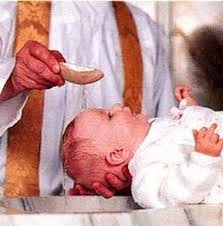
This is the way it is for tens of millions in America and over a billion worldwide (just now we aren’t referring to non-Christians). Some claim that there are some 2.38 billion people in the world claim to be “Christians.” (https://worldpopulationreview.com/country-rankings/most-christian-countries). I and hundreds of millions of others just assumed we were saved, forgiven, and were children of God in a way that we read nothing about in Scripture. For instance, we read nothing about a baby being baptized, especially baptized by sprinkling or pouring. Yet we were told by the pastor (or the same could be said of a priest) that the baby is saved and forgiven.

You may ask, “Is this true?” Sadly, it is. For example, the great defender of “Scripture only” and “faith only” says: “This is the simplest way to put it: the power, effect, benefit, fruit, and purpose of baptism is that it saves. For no one is baptized in order to become a prince, but as the words say, ‘to be saved.’ To be saved, as everyone knows, is nothing else than to be delivered from sin, death and the devil, to enter into Christ’s kingdom, and to live with him forever.” ( Martin Luther, Luther’s Works (ed. Jaroslav Pelikan and Helmut T. Lehmann; 55 vols.; Philadelphia: Fortress, 1955–76, 40:244).
Let’s notice a bit more about what Martin Luther, the great Reformer, said:
“Defining baptism as God’s work wherein he saves by means of his word or promise is a crucial aspect of Luther’s baptismal doctrine because he thereby avoids the error of Thomas Aquinas and the Dominicans, “who forget the Word (God’s institution) and say that God has placed a spiritual power in the water which, through the water, washes away sin” (Book of Concord, 320).
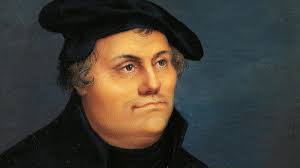
Baptism is God’s work; and “God’s works are salutary and necessary for salvation, and they do not exclude but rather demand faith” (Book of Concord, 461).
Therefore, “if you desire to be saved, you must start from faith in the sacraments—anterior to any works” (The Pagan Servitude of the Church, 296).
Wanting to maintain sola fide and the saving/justifying nature of infant baptism, Luther eventually came to the settled conclusion that infants receive the Holy Spirit at baptism and believe with their own faith (See Althaus, Luther, 364; John W. Riggs, Baptism in the Reformed Tradition, Louisville: Westminster John Knox, 364–69).
This “baptismal regeneration” view is one that says that God forgives sin, converts the sinner, saves from God’s wrath, and gives the Holy Spirit. We don’t know, but this view (held by millions) contradicts God’s Word thoroughly. In what way? Baptism must be an expression of faith (which is impossible for a child to exercise). Baptism of a child does not remit sin, doesn’t cleanse from wrongdoing, doesn’t impart the Holy Spirit, and doesn’t add to the church (at that age). Further, baptism is an immersion or dipping in water, not a sprinkling or pouring that those who think they are baptizing babies fail to realize.
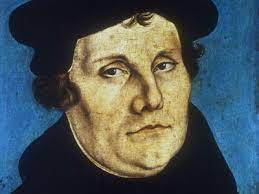
We may learn of Lutheran baptism in this way:
“The Sacrament of Holy Baptism is the ceremony by which one is initiated into the Christian faith. Lutherans teach that as a result of baptism, you receive God’s promise of salvation. At the same time, to receive the faith you need to be open to God’s grace. Lutherans baptize by sprinkling or pouring water on the head of the person (or infant) as the Trinitarian formula is spoken. (https://www.christianity.com/church/denominations/lutheran-church-15-facts-to-know-about-martin-luther-history-and-belief.html)
Thus, in many ways, Luther had it wrong! Luther thought and taught that in baptism, one is forgiven, saved, added to the church, and given the Holy Spirit! We are speaking not of adult believers, but generally of babies!
Yet, some seventy-seven (77) million of Lutherans in the world think that they have been saved and forgiven in this manner—when, in reality, they haven’t been baptized or saved at all! (https://www.google.com/search?q=How+many+Lutherans+in+the+world&sxsrf=APq- Or possibly 81 million adherents (https://en.wikipedia.org/wiki/Lutheranism_by_region).
This is one among many reasons why I left the Lutheran Church when I was very young. What about Episcopalians, Methodists, Anglicans, members of the United Church of Christ, and others? They think that they have been saved and forgiven but they have barely gotten wet as babies when the pastor or priest says that the subject has been “baptized” as a baby or infant. How sad—how very sad!
Besides all of these baby baptizers, there are a few adults who have been “baptized” (or so they thought) as teenagers or adults. They may have a Baptist view or an Assembly of God view that claims that they have testified to a prior conversion or another view that gives credence to a mental state that they may have in thinking that they are obeying God, or pleasing the Lord, or joining God’s church—but are these views really correct? Yet they are surely not saved. Many of these regretfully have not even been baptized (immersed or dipped) but have merely undergone a water ritual or ceremony that only got them wet and did little more. Sadly, there are now hundreds of thousands (and maybe millions) who are convinced that they have been baptized when they haven’t been at all!

We entitled this article, “Struggles to Understand,” for some of these latter people that we have discussed really do think that they are saved. For example, I know a number of devoted, consecrated, and dedicated people who are part of a conservative Mennonite Church. Many are in America but there are others around the world. Most of them (but not all of them) have submitted to a ritual that was prescribed by the local “pastor’ or “bishop” but they have not truly submitted to what Scripture says. We are referring to such passages as Matthew 28:18-20; Mark 16:15-16; Acts 2:37-41; 8:12; 22:16; Romans 6:3-5; Galatians 3:26-27; Colossians 2:11-12; 1 Peter 3:21; Hebrews 10:22; and others.
Are we to just condemn these hundreds of millions or only a million (depending on one’s frame of reference) to hell? Of course, we don’t need to do this; God is the great Judge and He knows best. He will be able to evaluate these cases truly and thoroughly. If He wants to honor His Word and adhere to this, He has the prerogative. On the other hand, if He wishes to grant mercy in some way (perhaps because of ignorance), He is able to do this too. He is the Judge and will always do what is good and right. As Abraham asked, “Shall not the Judge of all the earth deal justly” (Genesis 18:25).
Yet we must realize that God has given us His Word and says that this is the Source of His will. We must believe it and obey it. We will be judged by it. As Jesus our Lord has said, “He who rejects Me and does not receive My sayings, has one who judges him; the word I spoke is what will judge him at the last day” (John 12:48).
It is always right to submit to God and His will. We know that this can lead to many, many problems and family conflicts. What if a father or mother doesn’t see, understand, or want to accept the Word regarding salvation, regarding baptism, regarding truth, and regarding conversion? What if a pastor, priest, or minister thinks that he knows everything already and doesn’t want to accept Scriptural conversion? What if one’s peers make fun of a person and dares to not turn to the Lord or obey Him? This can be a painful decision and it is one that sometimes must be made.
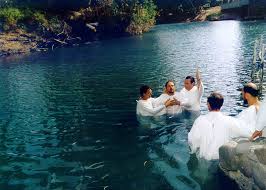
We can think of a family with many dozens of children, spouses, and even the extended family—but apparently haven’t been Biblically saved. Does God just overlook these omissions—or does He hold each person accountable to believe and obey God’s Word regardless of the inevitable consequences? As for me, I am glad that God is God and He will always do all things well.
Let us search God’s Word and do it. Let us believe and obey God’s Word in all matters to the extent of our knowledge. Let us turn to the Lord with all of our hearts and seek His will in all things. This is the only way that is right—the way of peace, security, truth, and the inerrant, infallible, and inspired God!


 You can reach us via e-mail
at the following address:
You can reach us via e-mail
at the following address: