
What does God say about Pastors?
Richard Hollerman
There is no reason for this but for some strange reason people seem to be confused about the meaning of the “Pastor” in the New Testament. Just what does the Bible say about pastors and what should we believe about this important position?
Quite frankly, there is very little in the New Testament regarding this position even though the term is used thousands of times in common parlance today. Ask someone, “Do you have a pastor,” and he will probably say, “Yes!” Ask another if his church has a pastor, and he will answer in the affirmative. We must say that most people see nothing wrong with using “pastor” and they say that they have a pastor! Further, if you would like to know whether a man (or woman) claims to be a “pastor” of a church and has some leading role, he will almost assuredly say that he is a pastor! Is this right? Is this usage Biblical?
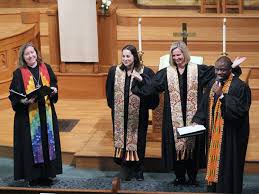
You may think that we are making “a mountain out of a mole hill,” but I have a website that reaches around the world. In some of these countries, there are many “pastors” who write or many who write about their “pastors.” They don’t question this but assume that this is a good thing! They speak or write about their “pastor” and write about following their “pastor.” Is this right?
The term “pastor” is used in the New Testament for the Greek poimen which means “a shepherd, one who tends herds or flocks” and is used metaphorically in the Bible. (see W. E. Vine, Vine’s Complete Expository Dictionary of Old and New Testament Words, p. 462). For example, we read, “He [Christ] gave some as apostles, and some as prophets, and some as evangelists, and some as pastors and teachers” (Ephesians 4:11).
We notice several things from this inspired statement: First, Christ Jesus is the One who sets these people in important, leading positions. Second, not everyone fills a position as “pastor” but only those given the position by Christ Himself. Third, one of these positions is the “pastor.” This rendering should probably be totally rejected and “shepherd” used in its place since this is the meaning of the Greek word. Thus, along with ones sent on a mission (the apostles), ones who speak for others (the prophets), ones who proclaim glad tidings (the evangelists), ones who shepherd others (the shepherds or “pastors”), and ones who teach others (the teachers), we find that Christ Jesus is responsible for all of these positions.
Vine rightly points out that shepherds “guide as well as feed the flock.” He points to the book of Acts where we learn that the “shepherd” is also the “overseer” in a flock of God’s people: “Be on guard for yourselves and for all the flock, among which the Holy Spirit has made you overseers, to shepherd the church of God which He purchased with His own blood” (Acts 20;28). It is good to notice that these “shepherds” or “overseers” are also called the “elders of the church” (Acts 20:17). When was the last time that a “pastor” (actually a “shepherd”) is called an “overseer” or an “elder”? Probably very seldom!

As Vine says, these men were not only to tend the flock of God (Christians) but they were called “elders” and “overseers” or “bishops” (meaning overseers in the Greek). 1 Peter 5:1-2 would tell us the same thing. The bottom line is that in the early assembly of Christians (in the New Testament), we find a group of specially chosen men called “shepherds” or “overseers” or “elders.” They were not filling three different positions but only one position that went by three different terms.
By the way, 1 Timothy 3 and Titus 1 would give us the many different activities that were entrusted to these important men. Further, we learn from these important passages that not everyone but only a certain number of people were qualified to become shepherds of God’s flock of Christians.
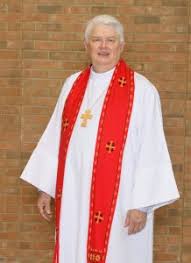
It is also utterly important to point out that women could not take the position of overseer, shepherd, or elder. This is very clear from those passages (1 Timothy 3 and Titus 1) where pastors/shepherds are mentioned and qualified. These positions were given only to men! Thus, when we find a woman today who bears these titles we know that she is taking a position that Jesus Christ has not given to her or that a body of people have given to her. Either way, it is unscriptural—and wrong.
As we study this truth out, we can see that it is ridiculous for a person to be called a “chief” pastor.” a “lead” pastor, or a “head” pastor. A person in the New Testament was merely a “shepherd” and none of these modern additional denominational terms. This nomenclature is unbiblical and should be immediately dropped.

The question that we would ask you today is: Do you use these unbiblical terms? Does the shepherd in the assembly where you happen to be use these terms? Why? Do you think it is because in certain contexts there is a certain idea of authority attached to them? Do you think that people are following unbiblical tradition rather than the Bible itself? Do you think that some people enjoy the adulation that may come with the title rather than what Scripture actually says? Let’s get back to the Bible and follow it regardless of what tradition may say!


 You can reach us via e-mail
at the following address:
You can reach us via e-mail
at the following address: