
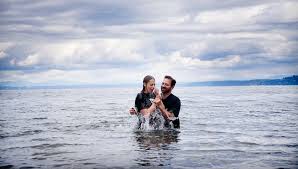
What if others refuse to come to Jesus through Baptism?
If you are like me, you wonder about others who should be able to see the truth but still refuse to either accept it or submit to it. From what you see and understand, John or Mary (not their real names) should be able to see the truth and yet, after much proof and evidence, these dear friends still refuse to accept it. You may point out that life is exceedingly brief and eternity is endless, but still your friends either don’t understand or refuse to accept your line of reasoning. What can you do?
During the past year or year and a half, I have read and studied 200 to 300 books dealing with all aspects of baptism. I have read or perused books that deal with the action or act of baptism (sprinkling, pouring, or immersion). I’ve read books that deal with the subjects of baptism (infants or believers). I’ve read books that deal with the meaning or purpose of baptism (entering the covenant, submitting to Christ, entering Jesus, and many different aspects of this subject). We know that there are hundreds of millions of people who are settled in their conviction that a certain view of baptism is Biblical and truthful. Yet we also know that not all of these views can be correct. Yet there are “Christians” who accept all of these understandings and refuse to accept anything else. How do we view them? What does God think?
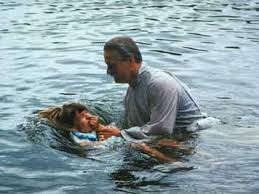
Let’s take the conservative Mennonite view as an example at this point of our discussion. We do not refer to a liberal Mennonite view which would be little different from the typical Protestant understanding. But we’ll be discussing the view that says that God inspired the New Testament and has determined what He wants of us regarding baptism. We’ll also assume that the Mennonites are correct in viewing baptism as an act arising from personal conviction and rejecting infant baptism (although, of course, we know that there would be over a billion people who hold the “infant baptism” view).
We do know that many (or most) Mennonites would totally reject a view that says that baptism may have various meanings or purposes for the baptized. We think that many Mennonites or most Mennonites would say that a person (from youth to old age) may express faith and repentance in baptism. They would say that a person should be poured with water (a few might expand this to immersion) to be baptized. And they would say that this is an act meant for a person old enough to make a personal decision himself or herself—not an adult such as a religious leader or parent. Let’s not forget either that probably thousands (perhaps only hundreds) of “Anabaptists” were murdered by fire, drowning, and other means at during the fifteenth century (by Catholics, Lutherans, and Calvinists)!
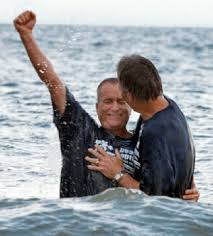
In reading many dozens of books about this subject, we have come to the conclusion that baptism is an act of a fully-responsible person who chooses to be immersed in water to receive the forgiveness of sins. This would be in contrast to the common religious view that baptism doesn’t bring forgiveness of sins and should be done by pouring (although some might say that immersion is likewise acceptable).
We know that these various views cannot be equally right in God’s sight. According to the well-known “law of noncontradiction,” it is not possible to hold opposite views of baptism at the same time and they both be right. Therefore, we can’t view baptism as an act that is immersion and pouring at the same time. It is impossible for there to be a view that would say that in baptism one must receive forgiveness of sins and another view that would reject that and say that one doesn’t receive forgiveness. And we must not see that baptism is both an immersion in water and a sprinkling with water or a pouring with water. If we would be true to Scripture, we must view this doctrine as God would.

Some of our readers may say that it really doesn’t matter what one believes about this subject (or many other subjects). But does it really matter? Consider what Jesus proclaimed: “Go therefore and make disciples of all the nations, baptizing them in the name of the Father and the Son and the Holy Spirit” (Matthew 28:19; see also vv. 18, 20). Does this sound as though it were unimportant? In the so-called Great Commission itself, the Lord said to make disciples (learners and followers) and to immerse them into the name of the Father, the Son, and the Holy Spirit. This one verse would disallow those who would say that one need not become a disciple and one need not be immersed and that this immersion may be done without being immersed into the Name.
Further, if we take Mark 16:16 as inspired, we read that “He who has believed and has been baptized shall be saved; but he who has disbelieved shall be condemned.” What if one believes in infant “baptism” and one need not believe when he is baptized? And what if one says that one need not believe and be baptized to be saved, but says that one is already saved? And what if a person says that one need not be baptized (or immersed in water) to be saved? Can we see that we are speaking about very important matters here?
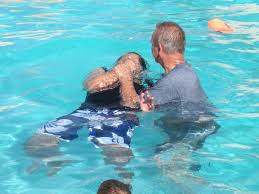
We could refer to various other passages here (cf. Acts 8:35-39; 22:16; Romans 6:3-5; Galatians 3:26-27; Colossians 2:11-13; 1 Peter 3:21; etc.) but let’s just go to Acts 2:38. “Repent, and each of you be baptized in the name of Jesus Christ for the forgiveness of your sins; and you will receive the gift of the Holy Spirit.” What if a person (at the time of his baptism) has not repented or refuses to repent? What if a person isn’t baptized “for the forgiveness” of his sins but insists that he has already received the forgiveness of sins? What if a person insists that he has already received the Holy Spirit at the time of his baptism? Can we see that these are very basic questions and very important considerations?
Let’s return to the kind and gentle people called “Mennonites” whom we referred to earlier. These devoted people refuse to be baptized (immersed) and insist on being poured. They insist that they have already received forgiveness, thus they are not baptized to receive forgiveness for they think that they have already received forgiveness. They would say that they already have the Holy Spirit, thus they need not be baptized to receive the Spirit. Can we see that there is a difference—a vast difference—between what Scripture says and what members condend?

How do we view these devoted people? Does God grant them forgiveness even though they would say that they already have it? Does God forgive them without their being immersed into Christ when they would not only omit but strongly object to being immersed? Would God give them the Spirit even though they would say that they received the Spirit long before they were baptized and without baptism (immersion)?
We realize that some might say that as long as their heart was right, God would grant them these spiritual blessings without baptism and even when they strongly oppose baptism (immersion)? Would or could they be the recipients of the Holy Spirit and have the forgiveness of their sins even when they earnestly oppose what the Bible says about this?

Do you ever think about these matters? Do they keep you awake at night? Or do you have a serious concern about Aunt Sue or Uncle Ned when they are devoted and loving Mennonites? Should we be concerned about them? Should we seek to do anything about these consecrated people who seem to be so loving but have refused to be baptized (immersed) for the forgiveness of their sins (or as they would say, because they are already forgiven)?
Although we might say that God will work all of this out in His own good time and we shouldn’t allow any of this to destroy our equanimity. But what if Jesus really meant what He said and does hold us accountable for His revealed will in this matter? And if this be true of devoted and kind Mennonites, what about people such as Catholics, Orthodox, Presbyterians, Lutherans, Baptists, Methodists, and many other Protestant members? Should we have an attitude of acceptance for these people in regard to baptism (not to speak of the dozens of other vital issues related to their beliefs and practices)?
However we choose to answer these questions, where do we go from here? Does God want us to be concerned about these matters or will he just “sweep them under his theological rug” in His own good time? What do you think?


 You can reach us via e-mail
at the following address:
You can reach us via e-mail
at the following address: