

Children?
Richard Hollerman
Most of us love children. We like to hear them speaking and see them playing. We enjoy them in all sorts of ways. However, we know that having and being around them may bring distress, anxiety, and concern in many ways. What about you? How do you respond to children? And do you have children of your own?
In the past, in the United States (which is our focus today), life was very different—some elements were for the better but some for the worst. For instance, one source says:
We ask: Imagine life without automobiles or electric lights or running water. No refrigerators, washing machines, radio, television, or movies? No computers, CDs, cell phones or credit cards? How did they survive? (https://iowaculture.gov/history/education/educator-resources/primary-source-sets/childrens-lives-comparing-long-ago-to-today).
Would you want to live from day to day or during your life without a refrigerator, a washing machine, an automobile, electric lights, or running water? Most of us would say a resounding No. On the other hand, from a spiritual standpoint, think of living without a computer, CDs, cell phones, telephones, credit cards, television, or movies. Many of these forms of technology would be negative and even opposed to the ways of God (but even here there are exceptions.)
Let’s consider this: We must remember that people had more children in the past—and there were pros and cons for this. For example, let’s take my grandparents. I think that they were married about 1899. They had four sons and one daughter, plus two babies who died. This would have been seven children, in total. This was about the same as others at the time.

Now let’s notice an article about this. I realize that both of these writers who must have collaborated on the article were probably worldly, imbibed by worldly values, and didn’t know God through His Word. Still, we can learn something from their interesting article.
Notice this quotation: “But there was a time—1850 to be precise—when huge households, chock full of tykes, were common and considered “right.” US Census data from 1850 show that families with six to nine kids were common.” (https://qz.com/1099800/average-size-of-a-us-family-from-1850-to-the-present/). This is before the time of my grandparents, probably more like my great-great grandparents. So it was common for families to consist of 6 to 9 children about 1850.
These writers then say: “One reason why was that, back then, children were considered an economic asset: with enough kids, parents could rest assured that at least some would survive and care for them in old age.” (Ibid.). (You might notice that we are not the ones who would be using “kids” in this way.) We think that this is a fact that Christians can learn from, even though it is somewhat misleading. It is true that children would be considered “an economic asset” for many parents were on farms. Others were caught up in the economics of the time. But it is probably not true that parents would have children (many of them) to be assured that they would be cared for in their older age.
It is true that insurance was not that common and that parents would depend on their children for their assets—and that many children did die young—but let’s not forget this: God said at creation: “Be fruitful and multiply, and fill the earth” (Genesis 1:28). Then, some years later (about 1,550 years later), at the time of the flood of Noah, we again read, “Be fruitful and multiply, and fill the earth” (Genesis 9:1). We come away with the impression that God does want His people to have children (providing that they can).
As an example, consider the family of Joseph and Mary, the earthly parents of Jesus, our Lord. They had four sons, plus Jesus, plus at least two daughters (see Matthew 13:55, 56). There is a possibility—and a good one—that they may have had more than two daughters. If they had five or six daughters, the total could have been 10 or 11 (or more) children. And there is no record of any of them dying as children—something that secular researchers emphasize. Remember how these two writers speak about the children “surviving”!
The next quotation is where the worldly attitude of the writers shows “loud and clear.” They are writing from a contemporary perspective in which feminism reigns supreme, whereas the article that they quote is more Biblical in perspective. Notice this:
In addition, the culture dictated that a woman’s place was in the home, and her fulfillment was found there, where she served her husband and raised her children. In his 1983 book Family and Divorce in California, 1850-1890, University of Oklahoma historian Robert Griswold cited an article published in the San Mateo Gazette in the mid-19th century that states, “Woman is set in the household and man is sent out into the world.” Even a woman of modest means could “be happy in the love of her husband, her home, and its beautiful duties without asking the world for its smiles and favors,” the article argued.

Was it “culture” that made this “dictation”—or was it God? They seem to disparage what the Scriptures teach regarding the place of women in the home! They say that “culture” dictated “that a woman’s place was in the home, and her fulfillment was found there, where she served her husband and raised her children.” Did you read this? Is this accurate?
These researchers seem to be demeaning the words of Scripture! They say that “culture” dictated that a woman’s place is in the home! But let’s not forget (or deny) that the apostle Paul says that the “younger widows [and women in general]” are to “get married, bear children, keep house” (1 Timothy 5:14). Was it culture that dictated this—or the Scriptures? Further, “the young women” are to “love their husbands, to love their children, to be sensible, pure, workers at home, kind, being subject to their own husbands” (Titus 2:4-5). Again, was this the Word of God or was it culture?
We realize that some women would literally hate this command! They would react vehemently against the command that young women are to “love” their husbands. They would say that this is chauvinism. These women in Scripture are to “love their children.” Some may be able to handle this, but let’s remember that most women just want one or two children so that they can hold down a job, so that they can put these children in “day care,” so that these children can be sent to a secular school, and so that they (the women) can get on with their lives! Is this what your Bible says?
Notice also that these women are to be “workers at home.” Is this the command that most women today seek? Do they want to be workers at home? Are these women simply imagining one or two children? Perhaps just this many children so that they can live a “normal life” like other feminist women?
It would be good to notice also the command that these women are to be “subject to their own husbands.” We can almost be assured that 95 to 99% of women would hate this command! They would probably say, “Are you [the Scriptures] saying that they [the women] are to be “subject” to their husbands? Indeed, this is true! We fear that most women today would say that this is crazy! This is something from the 19th or 20th century and not the twentieth century! Further, we dare say that most men are not prepared to be the “head” of the wife and of the family. They would be unprepared for this role.
But our main point here is that these writers are reacting to the thought that a woman would find “fulfillment” in the home, that she “served” her husband, and that she raised her children. Is this what God says? Yes, it is. If her husband is the “head” of the home and if she is raising her children, then this is true. The article then continues: “Even a woman of modest means could “be happy in the love of her husband, her home, and its beautiful duties without asking the world for its smiles and favors,” the article argued.” Isn’t it possible for a woman to be “happy” and fulfilled in receiving love from her husband, in setting up a home, and in fulfilling wifely duties, without asking the world to appreciate her?
As we continue to read this report, we notice this: “Family size in the US peaked between 1860 and 1920 because infant mortality rates were declining while large families were still valued, according to Northern Kentucky University sociologist Joan Ferrante’s 1992 book Sociology: A Global Perspective.” (Ibid.). From this excerpt, we get the impression that families continued to be large during this 60-year period (from 1860 to 1920). The authors also say that “large families were still valued,” which is an interesting comment. Are they not now? Why would “large families” not be “valued” in our day? Would there be Biblical reasons—or cultural ones?
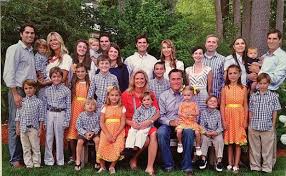
Let’s again notice the decrease of family size in relationship to the mothers: They became more strategic about childbirth. “Not only did the number of children born in the average family decrease, but the average age at which women had their last child decreased,” says the sociologist. “The mother’s median age at the time of her last child’s birth was 40 in 1850; by 1940 it had fallen to 27.3.” (Ibid.). (We must stand amazed at the lower age in 1850—but this is what the author says.)
This is a great decrease, wouldn’t you say? From age 40 to age 27.3. This once again reflects the view of modern society and their understandings of children! We realize that for the Christian, this makes very sad and even disturbing reading, but we must face the facts. Notice this:
By the mid-20th century, families with only one or two kids were the norm. In 1980, less than 0.5% of all households had eight or more children; that category thus ceases to appear on our chart above. In 2000, the six-child household disappeared. Meanwhile, households with two kids grew increasingly popular from 1920 on and remain common. (Ibid.)
Did you read this accurately? By 1980 (only a few years ago), less than one half of one percent had eight or more children! This would mean that only 99.5 percent didn’t have this number! By 2000, the family ceased to have six or more children! Families with only two children became increasingly popular. We’ll have more comments on this shortly.
Let’s notice several quotations:
World population continues to grow, but the number of children in the world has now reached its peak.
In 1960 we were 1 billion children below 15 years of age and we were 35% of the world population.
Now there are 1,9 billion children in the world, but they are but 27% of world population.
In 2050 there will still be an estimated 1.9 billion kids, but they will be only 20% of world population.
The reason, 40% of world population has less than 2 children per women and thus compensating for the 18% that get more than 3 children per women. https://www.gapminder.org/news/world-peak-number-of-children-is-now/)
Our comment: This shows that there was a huge drop in childbirth since 1960. We also learn that some 40 percent of the world population has fewer than 2 children (as compared to a certain percentage that has 18 percent or more).
But why is childbirth decreasing? From all that I see in America, we see a decrease in some measure and an increase in other measures.
- In some elements of society, women are having fewer children, even none—or one or two.
- Some portions of society seem to have more (such as Hispanics—which are entering the United States—some legally and some illegally. Or blacks, where many families are having more.
- Sadly, instead of a family consisting of one man and one woman—for life—we find some families that are living in fornication or perhaps married adulterously. (For example, some 70 percent of black families have children apart from this relationship.)
- More divorces occur. In the past there may be one divorce for 100 marriages. Now it would be more and more divorces, which then produces more unmarried people.
- Some elements (such as Asians) do have some divorces, but (compared to other ethnicities) we have fewer divorces and fewer marriages.
- Sadly, some half of couples live in fornication before marriage, and this too decreases the number of marriages.
- In some cases, people are divorcing and remarrying—which produces marriages but those marriages are generally adulterous.

All of these factors (and many more) would decrease the number of marriages and the number of children. And those children who do come are “illegitimate” or without a parent! This is so sad, but it is a reality in our age. As to the reasons why the birth rate continues to drop, we read this:
Because the fertility rate subtly shapes many major issues of the day — including immigration, education, housing, the labor supply, the social safety net and support for working families — there’s a lot of concern about why today’s young adults aren’t having as many children. So we asked them.
Wanting more leisure time and personal freedom; not having a partner yet; not being able to afford child-care costs — these were the top reasons young adults gave for not wanting or not being sure they wanted children, according to a new survey conducted by Morning Consult for The New York Times. (https://www.nytimes.com/2018/07/05/upshot/americans-are-having-fewer-babies-they-told-us-why.html)
If these are some of the reasons (as reported in people who are child-bearing age), let’s comment:
- These people want to have more leisure time and personal freedom. Where is the Biblical reason? Instead of what God says, we find something that fits into a modern era sort of matter! They want to have more leisure time! They do not want to have children bother them, thus they want their “freedom”!
- They don’t have a partner! But why do they even have children if they don’t have a husband or wife? This would again point to their fornication before marriage that brought the son or daughter into the world! Or their adultery within a “marriage.”
- Child care costs? Why even have child care—if they are home where they belong and don’t need child care. A father and mother are meant to care for their children and not send their children to an external place such as a child care center.
- We might also observe that large numbers of people who do have children send their children to the local public schools for 12, 13, 14 years—instead of home schooling them themselves.
These would be some of the reasons why parents don’t want children! But there are others, as you know. Here are some of the reasons that people give:
Why Young Adults Are Having Fewer Children Than Their Ideal Number
For the people who said they had or expected to have fewer children than they considered ideal, here’s the share that cited each of these reasons as a factor.
Child care is too expensive
Want more time for the children I have
Worried about the economy
Can’t afford more children
Waited because of financial instability
Want more leisure time
Not enough paid family leave
No paid family leave
Worried about global instability
Struggle with work-life balance
Worried about domestic politics
Met a partner too late
Worried about climate change
Responsible for other family care
Worried about population growth
Prioritized my education and career
Split from my partner
Partner doesn’t want children
Don’t think I’m a good parent
We know that some of these “reasons” are beyond reasonable and are dead wrong. Consider a few of them:
- Child care is too expensive
What are families worried about this? They need to take care of their own children and not push this responsibility off to someone else!
- Want more time for the children I have
If the present family has only two children, do these people really plan to spend more time with their own biological children?
- Worried about the economy
The Christian can depend on God to help financially.
- Can’t afford more children
Of course, this is true if they insist on luxury cars, luxury houses, and so forth. But if we take the mothers off the amount needed, perhaps we can do it.
- Waited because of financial instability
- Want more leisure time
Is this really rationale? If we give such parents more time at home, away from other duties, would there be time?
- Not enough paid family leave
Here we have another problem. Family leave? Why would people need this—if they refuse to have another job and if they insist on caring for their own children at home?
- No paid family leave
- Worried about global instability
- Struggle with work-life balance
- If families do not have “work” responsibilities, would they have sufficient time?
Worried about domestic politics
Met a partner too late
Worried about climate change
Responsible for other family care
Worried about population growth
Prioritized my education and career
Split from my partner
Partner doesn’t want children
Don’t think I’m a good parent
A lot of this, of course, displays a worldly attitude and a secular perspective. We read this: “About a quarter of the respondents who had children or planned to said they had fewer or expected to have fewer than they wanted. The largest shares said they delayed or stopped having children because of concerns about having enough time or money.” This says that some families have fewer children than they wanted to have—even though we’ve seen that many families are without children or without many children. And enough time and money? We understand this but can’t accept this. If they chose to marry, then they need to have the “time and money” for their children. And money? Again, we understand this, but most have sufficient money for what they deem valuable.
If we choose to stay at home instead of going out to work. If we choose to teach and train our own children and don’t allow the government to do our job. If we have children instead of piling up worldly things, such as new cars, new houses, large bank accounts, and the rest, we may find ourselves with the ability to have children.
We continue to read:
The survey, one of the most comprehensive explorations of the reasons that adults are having fewer children, tells a story that is partly about greater gender equality. Women have more agency over their lives, and many feel that motherhood has become more of a choice.
But it’s also a story of economic insecurity. Young people have record student debt, many graduated in a recession and
many can’t afford homes — all as parenthood has become more expensive. Women in particular pay an earnings penalty for having children.
Wait, consider this. Why did they go to college or the university? To have gainful employment. Is this Biblical? And if they did go to college or the university, who made them do this? It was their own choice. Who should pay for this—you or me or the person who benefitted from it? Quite frankly, a college or the university is not the place to find a mate. Not at all. In all likelihood, such a spouse will be worldly rather than spiritual.
“We want to invest more in each child to give them the best opportunities to compete in an increasingly unequal environment,” said Philip Cohen, a sociologist at the University of Maryland who studies families and has written about fertility.
At the same time, he said, “There is no getting around the fact that the relationship between gender equality and fertility is very strong: There are no high-fertility countries that are gender equal.”

The vast majority of women in the United States still have children. But the most commonly used measure of fertility, the number of births for every 1,000 women of childbearing age, was 60.2 last year, a record low. The total fertility rate — which estimates how many children women will have based on current patterns — is down to 1.8, below the replacement level in developed countries of 2.1. [Pay special note of this: If a family has fewer than 2.2 children, they don’t even keep the population going as at present!]
The United States seems to have almost caught up with most of the rest of the industrialized world’s low fertility rates. It used to have higher fertility for reasons like more teenage pregnancies, more unintended pregnancies and high fertility among Hispanic immigrants. But those trends have recently reversed, in part because of increased use of long-acting birth control methods like IUDs.
In the Morning Consult and Times survey, more than half of the 1,858 respondents — a nationally representative sample of men and women ages 20 to 45 — said they planned to have fewer children than their parents. About half were already parents. Of those who weren’t, 42 percent said they wanted children, 24 percent said they did not and 34 percent said they weren’t sure.
One of the biggest factors was personal: having no desire for children and wanting more leisure time, a pattern that has also shown up in social science research. A quarter of poll respondents who didn’t plan to have children said one reason was they didn’t think they’d be good parents.

Jessica Boer, 26, has a long list of things she’d rather spend time doing than raising children: being with her family and her fiancé; traveling; focusing on her job as a nurse; getting a master’s degree; playing with her cats.
“My parents got married right out of high school and had me and they were miserable,” said Ms. Boer, who lives in Portage, Mich. “But now we know we have a choice.”
She said she had such high expectations for parents that she wasn’t sure she could meet them: “I would have the responsibility to raise this person into a functional and productive citizen, and some days I’m not even responsible.”
This generation, unlike the ones that came before it, is as likely as not to earn less than their parents. Among people who did not plan to have children, 23 percent said it was because they were worried about the economy. A third said they couldn’t afford child care, 24 percent said they couldn’t afford a house and 13 percent cited student debt.
Financial concerns also led people to have fewer children than what they considered to be ideal: 64 percent said it was because child care was too expensive, 43 percent said they waited too long because of financial instability and about 40 percent said it was because of a lack of paid family leave.
Women face another economic obstacle: Their careers can stall when they become mothers.
This spring, Brittany Butler, 22, became the first person in her family to graduate from college, and she will start graduate school in social work in the fall. She said it would probably be at least 10 years before she considered having children, until she could raise them in very different circumstances than in her poor hometown neighborhood in Baton Rouge, La.
She admits being “a little nervous” that it may become harder to get pregnant, but she wants to pay off her student loans and, most of all, be able to live in a safe neighborhood.
“A lot of people, especially communities of color, can’t really afford that now,” she said. “I’m just apprehensive about going back to poverty. I know how it goes, I know the effects of it, and I’m thinking, ‘Can I ever break this curse?’ I would just like to change the narrative around.”
Starting a family used to be what people did to embark on adulthood; now many say they want to wait. Last year, the only age group in which the fertility rate increased was women ages 40 to 44. Delaying marriage and birth is a big reason people say they had fewer children than their ideal number: Female fertility begins significantly decreasing at age 32.

David Carlson, 29, graduated from college in 2010, when the job market was still rough. He and his wife had $100,000 in undergraduate debt between them. They both work full time — he in corporate finance and she in counseling — but they don’t yet feel they can take time away from their careers.
“Wages are not growing in proportion to the cost of living, and with student loans on top of that, it’s just really hard to get your financial footing — even if you’ve gone to college, work in a corporate job and have dual incomes,” said Mr. Carlson, who lives in Minneapolis and writes a personal finance blog for millennials.
He said they’d consider adoption if they decided to have children but had waited too long. Another option for having children later in life is egg freezing. Only 1 percent of female survey respondents said they had frozen their eggs — but almost half said they would if not for the cost.
Researchers say the United States could adopt policies that make it easier for people to both raise children and build careers. Government spending on child care for young children has the strongest effect. Policies that encourage parents to share child care help, too. Germany and Japan have used such ideas to reverse declining fertility.
High employment among women and high fertility don’t have to be in conflict, but they will be without such policies, said Olivier Thevenon, an economist studying child and family policies at the Organization for Economic Cooperation and Development.
[Since we seem to be having computer issues, we need to leave this site. It does show that people are having fewer and fewer children. If I recall, it is saying that instead of 2.1 or 2.2 children per family, now it is down to 1:8. The replacement number would be about 2.1, but society refuses to go higher.]
The point that we need to take away from this is that people—because of secular and non-Christian reasons—are having fewer and fewer children. This is fine—unless the reason is evil and wrong. We know that some people can’t have children, though they have sought God’s help and have “tried” again and again. But if the reason is not Biblical, that is when the reason for not having children may be wrong.
We know that this article may not be the most popular, but we believe in presenting truth as it stands. We hope that you are able to consider all that we have presented. And, we might add, we do hope that this can affect your own lifestyle—and your view of family and children.


 You can reach us via e-mail
at the following address:
You can reach us via e-mail
at the following address: