
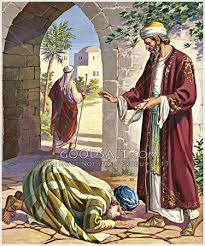
Unmerciful or Lack of Compassion
Sometimes when we learn of the news we are struck with the thought, “This is a cruel and unmerciful age.” Yet, at other times, we do see people sacrifice themselves and their money to help sick neighbors or family members or those who have suffered a natural disaster. When we consider the amount given, however, we are left with the distinct impression that most people know very little about true mercy.
As in other qualities, we need to see God as the great and merciful God. James says that “the Lord is full of compassion and is merciful” (5:11). This is comforting to our soul for we know that the only way we can be saved is through God’s rich mercy. Paul says, “He saved us, not on the basis of deeds which we have done in righteousness, but according to His mercy” (Titus 3:5). He wrote, “God, being rich in mercy, because of His great love with which He loved us, even when we were dead in our transgressions, made us alive together with Christ (by grace you have been saved)” (Ephesians 2:4-5).
God doesn’t give us the just punishment we deserve because of His great mercy. Like a fresh, cool breeze in a hot and arid desert, God’s mercy comes to our rescue. We read, “Blessed by the God and Father of our Lord Jesus Christ, who according to His great mercy has caused us to be born again to a living hope through the resurrection of Jesus Christ from the dead” (1 Peter 1:3). God is a merciful God, rich in a mercy that saves us from ruin.
There are two words we must examine when it comes to mercy and compassion, both of which are very similar. First, the word “compassion.” The noun splanchnon denotes a feeling of “affection, tenderness, compassion,” and the verb splanchnizomai means “to have compassion for someone, show compassion.” It involves being “moved in the inner parts of the body”[1] and occurs only in the synoptic gospels. W. E. Vine says that splanchnon means “affection, the heart,” and “always in the plural in the NT, has reference to ‘feelings of kindness, goodwill, pity.’”[2]
Jesus was filled with compassion as He mingled with men, women and children. Matthew says that He was proclaiming the gospel of the kingdom and healing those who were sick. “Seeing the people, He felt compassion for them, because they were distressed and dispirited like sheep without a shepherd” (9:36; cf. Mark 6:34). When the crowd was without food, Jesus said, “I feel compassion for the people, because they have remained with Me now three days and have nothing to eat; and I do not want to send them away hungry, for they might faint on the way” (Matthew 15:32; cf. Mark 8:2).
Jesus’ heart was always filled with this attitude of compassion. “When He went ashore, He saw a large crowd, and felt compassion for them and healed their sick” (Matthew 14:14). Jesus’ compassion or pity caused Him to heal the leper (Mark 1:41), heal those who were blind (Matthew 20:34), raise the son of a widow at Nain (Luke 7:13), and cast a spirit out of a man’s dear son (Mark 9:22).[3]
Not only was Jesus compassionate and pitiful toward people in need, we also are called to have the same attitude. Jesus gave a parable in which a tender-hearted Samaritan “felt compassion” on a man who had been beaten and robbed. He took the injured man to an inn to be cared for and provided for his board and room. The Samaritan had shown mercy and Jesus said this is what we are to do as well (Luke 10:33, 37). In a parable (Matthew 18:21-35),
Jesus describes how a king “felt compassion” for his servant and forgave the unpayable debt that his servant owed him (v. 27). In a another parable, Jesus told of an irresponsible son (the “prodigal son”) who departed from his father to waste his inheritance in a far country. When he returned, “his father saw him and felt compassion for him, and ran and embraced him and kissed him” (Luke 15:20). These examples show how we are to be compassionate toward those in deep need and helpless circumstances.

Paul writes of this virtue: “As those who have been chosen of God, holy and beloved, put on a heart of compassion” (Colossians 3:12a; Philippians 2:1). John writes, “Whoever has the world’s goods, and sees his brother in need and closes his heart [splanchna] against him, how does the love of God abide in him?” (1 John 3:17). Compassion definitely should be a basic attitude of heart of every Christian.
Let’s now examine “mercy” which is very similar to “compassion.” “Mercy” comes from the Greek verb eleeo, which simply means “to show mercy.”[4] The noun eleos denotes “the outward manifestation of pity; it assumes need on the part of him who receives it, and resources adequate to meet the need on the part of him who shows it.”[5] It means, “to feel sympathy with the misery of another.”[6] Richards explains, “The concept [of mercy] incorporated compassionate response. A person who felt for and with a sufferer would be moved to help. This concept of mercy—as a concern for the afflicted that prompts giving help—is prominent in both the Gospels and the Epistles.”[7]

The Lord Jesus lived a life of mercy toward the sick and afflicted. A Canaanite woman cried out, “Have mercy on me, Lord, Son of David; my daughter is cruelly demon-possessed” (Matthew 15:22). In a response of tender mercy, the Lord healed the daughter (v. 28). A man fell before Jesus and said, “Lord, have mercy on my son, for he is a lunatic and is very ill; for he often falls into the fire and often into the water” (Matthew 17:15). Jesus also cast the demon out of this son (v. 18). The Lord responded to their needs—with a heartfelt mercy.
Jesus emphasized the need for mercy when he gave the Beatitudes: “Blessed are the merciful, for they shall receive mercy” (Matthew 5:7). In the Sermon on the Plain, the Lord said, “Be merciful, just as your Father is merciful” (Luke 6:36). He said that “justice and mercy and faithfulness” were part of the “weightier provisions of the law” (Matthew 23:23). Christ often emphasized the need for mercy and said that God the Father is a merciful God (Matthew 9:13; 12:7; 18:21-35).
Paul also described the mercy that God has had on us. He said that “God, being rich in mercy, because of His great love with which He loved us,” was willing to make us alive with Christ (Ephesians 2:4ff). He wrote that God “saved us, not on the basis of deeds which we have done in righteousness, but according to His mercy” (Titus 3:5). Mercy and peace are sometimes connected (1 Timothy 1:2; 2 Timothy 1:2; 2 John 2; cf. Jude 2). If we have received God’s mercy, we will have peace with Him.
Peter also said that “according to His [God’s] great mercy has caused us to be born again to a living hope through the resurrection of Jesus Christ from the dead” (1 Peter 1:3). When we pray, we will “receive mercy and find grace to help in time of need” (Hebrews 4:16). Based on “the mercies of God,” we are urged to present our bodies as “a living and holy sacrifice” (Romans 12:1). Paul especially recognized the mercy he had received from a merciful Savior. He joyfully wrote, “I was shown mercy because I acted ignorantly in unbelief” (1 Timothy 1:13; cf. v. 16; 1 Corinthians 7:25; 2 Corinthians 4:1). Every Christian should be able to say, with faith, “You once were not a people, but now you are the people of God; you had not received mercy, but now you have received mercy” (1 Peter 2:10).
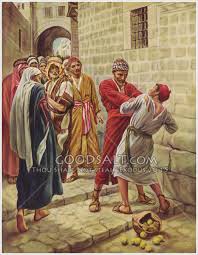
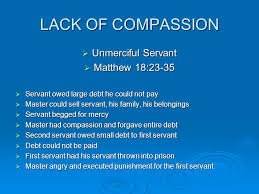
But mercy doesn’t end with us. We also are to show this mercy to others. “Because in mercy God has brought us to life in Jesus, we too can show mercy to those around us, providing in our own compassion a witness to the loving mercy of God.”[8] Since God our Father is merciful, we too are to be merciful. The Lord Jesus said, “Be merciful, just as Your Father is merciful” (Luke 6:36). He is our great example of mercy. You will remember the parable of the unforgiving servant (Matthew 18:21-35). After the ungrateful slave received mercy and the king’s forgiveness, he refused to show mercy toward his fellow-slave. The king, in anger, asked him, “Should you not also have had mercy on your fellow slave, in the same way that I had mercy on you?” (v. 33).
Remember also Jesus’ description of the judgment scene (Matthew 25:31-46). The righteous were given a place in the kingdom of God (v. 34) and eternal life (v. 46), whereas the unrighteous were given eternal fire (v. 41) and eternal punishment (v. 46). And what was the consideration in the mind of Jesus the King? It was related to whether one was willing to show compassion or mercy to Christ’s brothers[9] and bless them in their need.
Lack of compassion or mercy reveals a lack of genuine love for those in need. We are to have mercy on those who have fallen away from the faith or those who are lost. Jude tells us this: “Have mercy on some, who are doubting; save others, snatching them out of the fire; and on some have mercy with fear, hating even the garment polluted by the flesh” (vv. 22-23).
If God has shown mercy toward us so that we might be saved, we also should show mercy toward others. If He daily shows mercy toward us in forgiving our sins, in providing for our needs, and in rescuing us from distress, we should reach out a merciful hand toward others. If we have received mercy from God when we were saved, we should have mercy toward others who need to be saved. We can see, therefore, that a lack of mercy or an absence of compassion is a dreadful sin that will bring God’s judgment. In fact, God’s “judgment will be merciless to one who has shown no mercy; mercy triumphs over judgment” (James 2:13).
[1] Mounce, Expository Dictionary.
[2] Expository Dictionary.
[3] Cf. Mounce, Expository Dictionary.
[4] Richards, Expository Dictionary.
[5] W. E. Vine, Expository Dictionary.
[6] Ibid.
[7] Expository Dictionary.
[8] Richards, Expository Dictionary.
[9] Some are under the impression that these “brothers” are “Jewish people” (NASB Study Bible note), but we think that this would be “a reference most likely to Jesus’ disciples and by extension all believers” (ESV Study Bible note).


 You can reach us via e-mail
at the following address:
You can reach us via e-mail
at the following address: