
Ungodliness
In the secular world, we seldom read or hear of the word “godly.” Yet, it is an extremely important trait repeatedly mentioned in Scripture. Let’s first notice “godliness.” This term is from the Greek eusebeia¸ from eu, “well,” and sebomai, meaning “to be devout.” Thus, it denotes “that piety which, characterized by a Godward attitude, does that which is well-pleasing to Him.”[1] It denotes “the fear of God.”[2] The term theosebeia means “the fear or reverence of God.”[3]
We must greatly desire a sincere godliness. Paul says, “Discipline yourself for the purpose of godliness” (1 Timothy 4:7). Biblical godliness doesn’t come automatically; it demands great effort. The apostle goes on to say, “. . . for bodily discipline is only of little profit, but godliness is profitable for all things, since it holds promise for the present life, and also for the life to come” (v. 8). Paul encourages Timothy to “pursue” the virtue of godliness (6:11). He says that we believe and teach “the doctrine conforming to godliness” (6:3; cf. Titus 1:1).
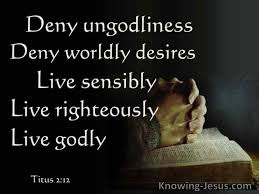
This godliness must be added to our faith and those who do pursue godliness and the other virtues will receive “the entrance into the eternal kingdom of our Lord and Savior Jesus Christ” (2 Peter 1:5-11). Indeed, godliness is necessary for our life in Christ. Our daily life must be infused with a truly godly attitude. Paul tells us that “women making a claim to godliness” will dress properly and modesty (1 Timothy 2:9-10). We are to live “sensibly, righteously and godly in the present age” (Titus 2:12).
The opposite of “godliness” is “ungodliness.” Asebeia means “impiety, ungodliness,” and asebes means “impious, ungodliness,” or “without a fear for God,” not “merely irreligious, but acting in contravention of God’s demands.”[4] It denotes “ungodly, godless, wicked,” and refers to “those who are godless and who fight against the purposes of God.”[5]
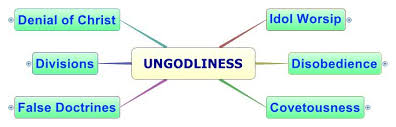
Paul tells us that the law is made for the ungodly and other classifications of sinners (1 Timothy 1:8-9). The “godless man and the sinner” cannot be saved (1 Peter 4:18). Peter says that God sent the flood “upon the world of the ungodly” (2 Peter 2:5). He also says that the destruction of Sodom and Gomorrah is an example “to those who would live ungodly lives thereafter” (v. 6). So serious is this sin that Peter speaks of “the day of judgment and destruction of ungodly men” (3:7).
Jude speaks of false teachers whom he calls “ungodly persons” who “turn the grace of God into licentiousness and deny our only Master and Lord, Jesus Christ” (v. 4). It is important that we understand how heinous ungodliness is to our holy God. Scripture says that “the wrath of God is revealed from heaven against all ungodliness and unrighteousness of men who suppress the truth in unrighteousness” (Romans 1:18). This wrath of God will condemn such a person to the lake of fire for eternity (cf. Romans 2:4-5; 2 Thessalonians 1:7-9).
Thanks to God, Jesus Christ can save those who are ungodly. Paul says, “While we were still helpless, at the right time Christ died for the ungodly” (Romans 5:6). We are now called on to believe in God “who justifies the ungodly” (4:5). God can forgive all of our sin and ungodliness! Let us utterly forsake this sin that will condemn the masses of people.
[1] W. E. Vine, Expository Dictionary.
[2] Richards, Expository Dictionary.
[3] W. E. Vine, Expository Dictionary.
[4] W. E. Vine, Expository Dictionary.
[5] Mounce, Expository Dictionary.


 You can reach us via e-mail
at the following address:
You can reach us via e-mail
at the following address: