
GUEST ARTICLE
[This is a copy of an interesting article on the reliability of the New Testament manuscripts of Mark 16. It is copied, thus the format is not perfect, but it is yet helpful. RH]
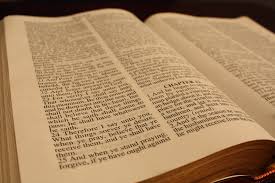
| The Authenticity of Mark 16:9-20 |
| This is a summary of a 160-page research paper.
Copies of the research paper are available on request by e-mail: james.snapp@gmail.com. |
| More misinformation has been spread about Mark 16:9-20 than has been spread about any other passage of Scripture. If you have been bothered by Bible footnotes that said that early manuscripts do not contain this passage, or if you have read a commentary that suggested that these 12 verses were added by a copyist, then please read this entire article carefully. An abundance of evidence leads to the conclusion that Mark 16:9-20 belongs in the Bible. It is in over 99% of the Greek manuscripts, and it can be shown to have been used as Scripture from the 100’s onward. Few modern-day commentators, however, have examined all the available evidence. Instead, most commentators have borrowed and rephrased statements from two earlier researchers: F. J. A. Hort, who wrote about Mk. 16:9-20 in 1881, and Bruce Metzger, who wrote about the passage in Textual Commentary on the Greek New Testament in 1971. Metzger’s statements, in the process of being rephrased, have been distorted, and as a result, many commentary-readers have received very inaccurate impressions about the strength of the evidence in favor of Mark 16:9-20. There are over 1,700 Greek manuscripts of the Gospel of Mark. A small percentage of them, such as the very earliest copy (Papyrus 45, In some translations, Mark 16:9-20 is placed within brackets. The Revised Standard Version, in its first edition (1952), even moved the
Now let’s look at the evidence against Mark 16:9-20.
EXTERNAL EVIDENCE AGAINST MARK 16:9-20
The external evidence against Mark 16:9-20 is not as impressive as some Bible footnotes make it seem. The two Greek manuscripts in
Codex Vaticanus does not contain Mark 16:9-20, but following Mark 16:8 and preceding Luke 1:1, it contains a prolonged blank space,
In Codex Sinaiticus, the four pages that contain Mark 14:54-Luke 1:56 were not written by the same copyist who produced the
Probably, the main copyist accidentally skipped from the end of Luke 1:4 to the beginning of Luke 1:8, omitting Luke 1:5-7, and the
One Old Latin manuscript, Codex Bobbiensis (from about A.D. 430), contains the “Shorter Ending” at the end of Mark instead of verses
Codex Bobbiensis and the other manuscripts that contain the “Shorter Ending” appear to descend from an ancestor-manuscript that
Now about the evidence from the writings of leaders in the early church. Some commentaries list Clement of Alexandria and Origen as
Several commentators have falsely stated that Eusebius of Caesarea, in the early 300’s, wrote that Mark 16:9-20 was absent from all
Jerome has also been sometimes cited as a witness against Mark 16:9-20. However, when Jerome produced the Vulgate Gospels (in
Furthermore, in Against the Pelagians 2:14, Jerome quoted an interpolation (now known as the “Freer Logion”) by referring first to the
Two other writers, Heschius and Severus, are also cited as evidence for the abrupt text, but this is feathery evidence because, among
There are a few other witnesses against Mark 16:9-20. One is the Sinaitic Syriac palimpsest. The Syriac Gospels-text in this copy from |
http://www.curtisvillechristian.org/MarkOne.html
| The Authenticity of Mark 16:9-20 (Part Two) |
| EXTERNAL EVIDENCE FOR THE INCLUSION OF MARK 16:9-20
Many ancient manuscripts contain Mark 16:9-20. They include Codex Codex Washingtoniensis (c. 400, which has verses 9-20 with an interpolation between v. 14 and v. 15), Codex
This numerical avalanche in favor of the inclusion of 16:9-20 is not as decisive as the evidence that shows that Mark 16:9-20 circulated in different text-types. Theoretically, a large number of manuscripts that share the same readings may be merely a large numbers of echoes of an earlier ancestor. But the manuscripts that support the inclusion of Mark 16:9-20 are from different
Furthermore, we must also consider evidence found in patristic writings — the writings of leaders in the early church. The earliest manuscripts of Mark 16 are not the earliest evidence. Not patristic writings which were composed quite a bit earlier than the production-date of Vaticanus.
Justin Martyr, who died in A.D. 165, wrote in his First Apology ch. 45 that the apostles “going forth from Jerusalem, preached everywhere,” as he explained the fulfillment of Psalm 110:1-2. The words in red here represent three Greek words identical to Greek words used in Mark 16:20, including the word pantachou, which Justin uses twice in this chapter, as if to emphasize the point. A comparison of this paragraph of Justin’s work to the contents of Mark 16:9-20 shows that it is highly likely that he was borrowing his terms from Mark 16:20. Justin typically drew his Gospels-citations not from the separate Gospel of Matthew, Gospel of Mark, and Gospel of Luke, but from a text which consisted of the texts of Matthew, Mark, and Luke blended together — a “Synoptics- Harmony.” Justin’s statement in First Apology blends Mark 16:20 and Luke 24:52 in precisely the way that one would expect to find in such a Harmony. Thus Justin clearly used Mark 16:9-20 as part of the Gospel of Mark.
Tatian was a second-century writer who, building on the work of Justin, interwove the texts of the four Gospels into one continuous narrative, called the Diatessaron, in about A.D. 172. He included material from Mark 16:9-20 in the Dia- tessaron, blending it with the parallels in the other Gospels.
Irenaeus was a Christian bishop in the second century. He wrote in Against Heresies (A.D. 184), Book III, 10:5-6, “Also, towards the conclusion of his Gospel, Mark says: ‘So then, after the Lord Jesus had spoken to them, He was received up into heaven, and sitteth on the right hand of God.” This is clearly a quotation of Mark 16:19.
Papias, a writer in the early 100’s, recorded that Justus Barsabbas (the individual mentioned in Acts 1:23) once drank a poisonous drink and suffered no ill effects. (This statement is preserved by Eusebius of Caesarea and by Philip of Side). His motivation for mentioning this story may have been to provide an example of the fulfillment of Mark 16:18. (This is not strong evidence, but it should not be overlooked, especially in light of attempts to use the silence of Clement and Origen as evidence against Mk. 16:9-20.) Also, Papias wrote that Mark did not omit any of what Peter had preached; this is significant inasmuch as Peter is depicted in Acts preaching about Jesus’ post-resurrection appearances and ascension.
A work from the mid-100’s called the Epistula Apostolorum (Letter of the Apostles), which was unknown until the early 1900’s, has been affirmed by several scholars, including Robert Stein, to have used Mark 16:9-20.
At the seventh Council of Carthage in 256, a bishop named Vincentius of Thibaris said, “We have assuredly the rule of truth which the Lord by His divine precept commanded to His apostles, saying, ‘Go ye, lay on hands in My name, expel demons.’ And in another place: ‘Go ye and teach the nations, baptizing them in the name of the Father, of the Son, and of the Holy Ghost.'” Vincentius’ second quotation is from Matthew 28:19. Despite attempts by some interpreters to connect the first quotation to Matthew 10:8, the references to going, laying on hands, expelling demons, and doing so in My name add up to a reference to Mark 16:15-18, especially when placed side-by-side with the parallel passage from Matthew.
Either Porphyry (an early opponent of Christianity who died in A.D. 305) or Hierocles (a student of Porphyry, writing in the very early 300’s) was cited by another writer (Macarius Magnes, c. 405) as having attempted to use Mark 16:18 as an example of absurdity in Christian teachings.
A composition called De Rebaptismate, written c. 258, strongly alludes to Mark 16:14 in its ninth chapter. Some researchers assigned this text a date about a century later, but strong internal evidence indicates that it was written around the time of Cyprian.
Prominent writers in the 300’s and 400’s also used Mark 16:9-20. Here are some examples:
Aphraates (also known as Aphrahat), writing in 336, quoted from Mark 16:17-18 in sign for those that believe; they will speak with new tongues and shall cast out demons, and they shall lay their hands on the sick and they shall be made whole.'”
An anonymous composition called the Acts of Pilate, composed no later than the mid- 300’s, made use of Mark 16:15-16.
Eusebius and Marinus (c. 330) both reflect knowledge of the existence of Mark 16:9-20, in Eusebius’ work Ad Marinum. Marinus took for granted that it was part of the text; Eusebius stated that it was not in his “accurate copies” but it was in “some” copies.”
Ambrose, who worked in Milan (and died in 397), used parts of 16:9-20 as Scripture (one example is his use of Mark 16:18 in his work The Prayer of Job and David).
Didymus the Blind, who worked in Egypt (and died in 398), or an author in the same area and era, wrote De Trinitate, in which, in Book Two, chapter 12, Mark 16:15-16 is quoted.
Augustine, who worked in Hippo, North Africa (and died in 430), used Mark 16:9-20 in Easter-time sermons, showing that by the early 400’s the passage was established as a regular reading in the church-services there. He quoted the entire passage in his Harmony of the Gospels (c. 400), and cited both Latin and Greek manuscripts when commenting on Mk. 16:12.
Saint Patrick (mid-400’s) used Mark 16:16 twice, in Letter to Coroticus, part 20, and in Confession, part 40.
Apostolic Constitutions (380), The Doctrine of Addai (c. 400, but using earlier source-materials), Marcus Eremita (c. 425), Prosper of Aquitaine (c. 440), Peter Chrysologus (c. 450), Marius Mercator (c. 450), Nestorius (early 400’s, as cited by Cyril of Alexandria), and Leo the Great (453) also used the passage.
When the patristic evidence (which is not mentioned by most Bible footnotes) is added to the equation, the earliest evidence for the inclusion of Mark 16:9-20 is over a century older than the earliest evidence for its non-inclusion. The evidence for Mark 16:9-20 is spread over a broad geographical area: Rome (Justin), France (Irenaeus), North Africa (Vincentius and Augustine), Israel (Eusebius), Syria (Tatian and Aphraates), Cyprus (Epiphanius), Egypt (Didymus), and Armenia (Eznik of Golb). Against this, the ancient Greek evidence for non-inclusion is confined to Egypt and Caesarea, and Caesarea’s testimony is essentially an echo of manuscripts that had been taken to Caesarea from Egypt. Copies of Mark containing 16:9-20 were in use at all these locations.
Some evidence from early translations, especially the Sahidic (an Egyptian dialect), Gothic, Old Latin, Syriac, and Armenian versions, may be considered here.
The earliest Sahidic copy of Mark, from c. 425, attests to a form of Mark that ended at the end of 16:8. The next-earliest copies contain the Shorter Ending followed by 16:9-20. This indicates that the Sahidic version of Mark was initially translated from a text that ended at 16:8; later on, copyists had some exemplars that ended with the Shorter Ending, and some exemplars that ended with 16:9-20, so they included both readings, placing the Shorter Ending first where it could serve as a liturgical flourish.
The Gothic version was translated by Wulfilas (who was originally from Antioch) in about A.D. 350. The most important Gothic manuscript, Codex Argenteus, includes Mark 16:9-20. (For a long time the last page of Mark in Codex Argenteus was missing, but it was rediscovered in Germany in 1970.)
Quite a few Old Latin manuscripts are damaged, but all undamaged Old Latin manu- scripts of Mark 16 except Codex Bobbiensis contain Mark 16:9-20. Also, the Old Latin lists of chapter-titles of Mark include references to Jesus’ post-resurrection appearances to the disciples, and to His ascension.
The Syriac evidence is divided: the Sinaitic Syriac manuscript (c. 400) ends the text of Mark at 16:8. The Curetonian Syriac manuscript (c. 425) is mutilated but pre- serves part of Mark 16:17-20 (the only part of Mark in the manuscript!). The Peshitta (a Syriac version made sometime in the 300’s), extant in hundreds of copies, contains contains all of Mark 16:9-20.
The Armenian version is rather complex. An Armenian version of the Gospels was made from Syriac around 410, but in 430, cherished Greek copies were taken to Armenia from Constantinople, and the Greek text was used as the basis for a revision of the Armenian text. What seems to have happened is that the Greek copies from Constantinople included one of the 50 codices which Eusebius of Caesarea had prepared for Emperor Constantine 100 years earlier; as a result, the revised Armenian text agreed closely with that codex. Most Armenian Gospels- manuscripts contain Mark 16:9-20, but most of the oldest accessible Armenian manuscripts end the text of Mark at the end of 16:8. Some Armenian copies display a blended text in which the closing-title “End of the Gospel of Mark” appears after 16:8, followed by verses 9-20, after which the closing-title appears again. Some Armenian manuscripts format 16:9-20 in other unusual ways.
The Armenian manuscript Matenadaran 2374 (formerly known as Etchmiadzin 229) includes a note stating that it was copied from ancient and reliable exemplars (probably no later than the 500’s). This manuscript, produced in A.D. 989, contains the words “Aristou eritzou” written between the lines between Mark 16:8 and 16:9. This may be based on a tradition, or a guess, that Mark 16:9-20 was the work of a first-century Christian named Aristion. Another possibility, however, is that this note appeared alongside 16:18 in an older manuscript, and was intended only to mean that Aristion had handed down the story, mentioned by Papias, about Justus Barsabbas’ imperviousness to poison, which seems to fulfill one of the prophecies about signs in Mark 16:18. Later, after the question was raised regarding whether or not Mark 16:9-20 ought to be included, the note was misinterpreted to mean that Aristion had composed the entire passage. (Somewhat surprisingly, another medieval Armenian manuscript contains the Shorter Ending attached to the end of Luke. This is probably a result of a later distribution of manuscripts between Egyptian and Armenian monks.)
The Coptic versions are divided. The earliest manuscript of Mark in the Sahidic version (which is the earliest Coptic translation), from c. 425, ends the text of Mark at the end of 16:8. The next layer in the Sahidic tradition has both the Shorter Ending and 16:9-20. Then 16:9-20 appears without the Shorter Ending.
All of the Ethiopic manuscripts of Mark include verses 16:9-20, frequently with the Shorter Ending between 16:8 and 16:9. Some scholars in the late 1800’s erroneously stated that two or three Ethiopic manuscripts housed at the British Museum do not contain 16:9-20, and this claim was frequently repeated in the 1900’s. In 1972 Bruce Metzger discovered that this claim is incorrect; in 1980, after more research, he noted that out of 194 Ethiopic manuscripts, 131 contain both the Shorter Ending and 16:9-20; all the other copies of Mark contain 16:9-20 except for one copy that had been made in the 1700’s and had been damaged. Unfortunately the false claim that some Ethiopic copies lack Mark 16:9-20 continues to circulate in commentaries today, even in the fourth edition (2005) of Metzger’s own handbook The Text of the New Testament. Recently the production-date of the oldest Ethiopic copy of the Gospels, the Garima Gospels (which contains 16:9-20 after 16:8, without the Shorter Ending), was determined by carbon-dating to be no later than the mid-600’s.
For any manuscript of Mark, the less it is connected with the early Alexandrian channel of textual transmission and the Caesarean channel related to it, the more strongly it supports Mark 16:9-20. The same thing is true of patristic testimony and versions. This suggests that the loss of these twelve verses occurred either in, or en route to, Alexandria, perhaps in the mid-second century. How could such a loss have occurred? We will answer that question in Part Three, after addressing a few questions about some other pieces of evidence.
|
| Mark 16:5-12 in Codex Alexandrinus |
| Mark 16:8-12 in Codex Bezae |
| Mark 16:7-10 in Codex Delta |
| Mark 16:8-10 in Codex Washingtoniensis |
| Mark 16:6-9 in Codex Regius (L), with the
Shorter Ending and notes between 16:8 and 16:9 |
| Mark 16:19-20 in Codex Regius (L), followed by the closing-title and the beginning of a list of chapter- titles of the Gospel of Luke. |
| Mark 16:2-9 in Old Latin Codex Monacensis.
A scrawled note identifies 16:9 as the beginning of the reading for a feast-day. |
| Armenian MS Matenadaran 2374, displaying an
interlinear rubric between Mk. 16:8 and 16:9, |
| Mark 16:8-11 in Codex Psi (Psi, 044), with the Shorter Ending and a note between 16:8 and 16:9.To the left of the beginning of 16:9 is a note to alert the lector to the beginning of a morning reading (Mark 16:9-20 was the third of eleven “Heothina” readings).
|
| Mk. 16:17-20 in Latin, from Harley MS 1775, produced in the late 500’s. |
curtisvillechristian.org/MarkTwo.html
| The Authenticity of Mark 16:9-20
(Part Three) |
| Before proposing a reason why two Greek manuscripts, one Sahidic manuscript, one Old Latin
manuscript, one Syriac manuscript, and an early stratum of the Armenian version do not contain Mark 16:9-20, let’s briefly diverge to consider some pieces of evidence which commentators have described in ways which might have given readers false impressions:
(1) The Old Georgian version: the two oldest Old Georgian manuscripts of Mark 16 do not include Mark 16:9-20. However, when placing that evidence on the scales, we should consider that these two copies are not particularly old; they are from 897 and 913. Several Old Georgian copies that are only slightly younger include verses 9-20. More importantly, since the Old Georgian version was translated from an early Armenian text, this Old Georgian evidence should not be treated as if it is independent of its Armenian ancestor-text.
(2) About a dozen manuscripts, especially members of the Caesarean group called family-1, contain scribal notes and marks before verse 9; Metzger vaguely described these as “Not a few manuscripts.” He also stated that the notes say that “older Greek copies lack” Mk. 16:9-20, and that the marks they contain were used “to indicate a spurious addition to a document.” However, the notes take the following forms: (A) In MSS 20, 215, and 300: “From here to the end forms no part of the text in some of the copies. In the ancient copies, however, it all forms part of the text.” (B) In MSS 1, 205, 205abs, 209, and 1582: “In some of the copies, the evangelist’s work is finished here, as is also Eusebius Pamphili’s canonization. But in many, this also appears.” (C) In 15, 22, 1110, 1192, and 1210 : “In some of the copies, the evangelist’s work is finished here. But in many, this also appears.” (D) In one manuscript, Codex 199, “In some of the copies this does not appear; it stops here.”
Forms B and C are related; sometime/somewhere after the Eusebian Canons were adjusted to include Mark 16:9-20 the phrase about the Eusebian Canons in Form B was omitted, resulting in Form C. So: we are dealing with a smattering of medieval manuscripts. We are not dealing with a dozen independent copyists, but with four annotations which were copied along with the text, two of which are obviously related. Form A, while mentioning that some copies lack Mk. 16:9-20, affirms that the ancient copies include the passage – hardly the impression one gets from Metzger’s claim that the notes state “that the older Greek copies lack it.” And on balance, Forms B and C vindicate rather than indict the passage, stating that while “some” copies lack the passage, “many” include it. Regarding the claim that some copies contain an asterisk or obelus to indicate that the passage is spurious: this claim is difficult to verify. Some annotated MSS have asterisks to draw attention to an annotation, and some MSS have liturgical marks to signal the beginning of a new lection. The claim that any unannotated MSS contain doubt-indicating asterisks at Mk. 16:9-20 is yet to be proven.
(3) Three medieval manuscripts – 1420, 2386, and 304 – are sometimes enlisted as evidence against Mk. 16:9-20. However, 1420 is missing Mk. 16:9-20 only because it is missing the pages upon which they were written. In MS 2386, someone removed the page that contained Mk. 16:9-20 in order to steal the valuable illustration that occupied the other side of the page. As for 304, it is a copy of Matthew and Mark accompanied by a commentary interspersed with the text. Its text of Mark ends abruptly at the end of 16:8, but the commentary- material also ends abruptly, and there is no closing-title after 16:8. MS 304’s text-type is Byzantine. Hort noted that its annotations “are almost identical with those that are attributed to Theophylact [an author/compiler of the 1100’s], which certainly cover vv. 9-20.” All things considered, 304 is not a clear witness to the abrupt ending; it may have initially been a complete Gospels-manuscript which was rebound into two volumes for easier use; if the last bit of Mark was on the same pages as the beginning of Luke, the text of Mark would resume at the beginning of the second volume, now lost.
(4) The Greek text of Mark 16:8 ends with the word “gar.” It has been claimed that this is not exceptional, because other books have been found which also end with the word “gar.” However, one of those other “books” is a speech, in which the speaker (Protagoras of Abdera) adds a parenthetical qualification before concluding. Another one is a portion of a composition by Plotinus (Enneads 32:5, c. 250) which was edited and arranged into chapters by his assistant Porphyry. These are not narratives. They show that it was grammatically acceptable to end a sentence with “gar” but that does not make it stylistically probable that Mark, or anyone else, would deliberately end a narrative with “gar.”
Now let’s return to the question about the abrupt text in the Alexandrian transmission-stream.
HOW WAS MARK 16:9-20 LOST IN THE EARLY ALEXANDRIAN TEXT?
Although the support for Mark 16:9-20 is early and widespread, there is a concentration of support for the non-inclusion of the passage in representatives of the early Alexandrian text and in representatives of the Caesarean Text influenced by the Alexandrian Text: the Sahidic version, non-extant manuscripts mentioned by Eusebius of Caesarea, Codices Vaticanus and Sinaiticus, and non-extant ancestor-manuscripts of some of the witnesses that contain the Shorter Ending. There are three ways in which the passage could have been lost: by accidental damage to an exemplar, by an accidental misreading, or by deliberate removal. Let’s explore each possibility.
(1) ACCIDENTAL DAMAGE. Damage could easily occur to the text at the end of a scroll that was not rewound after reading. Similarly, in book-form, the last page would be vulnerable to accidental loss, especially if the book was made of cheap papyrus. Some manuscripts of the Gospels arrange the books in the order Matthew-John-Luke-Mark, so even after the Gospel of Mark was collected with the others, its last page would be especially susceptible to accidental damage. If a copy that had been damaged in such a way had thus lost its final portion, on which Mk. 16:9-20 had been written, and that copy was the lone exemplar in an isolated locale in Egypt, this could explain why the abruptly-ending text had a temporary popularity in Egypt. By the time undamaged copies of Mark arrived, Egyptian copyists who were used to the abrupt declined to include the new ending, perhaps in some cases because the Shorter Ending had already been devised to bring the text to an acceptable close.
(2) ACCIDENTAL MISREADING. The eleven Heothina-readings are an especially early liturgical series. Liturgical notes about the Heothina-readings could elicit the loss of Mark 16:9-20 under some unusual circumstances: if an inexperienced copyist used a lector’s copy of Matthew and Mark as his exemplar and had no one to help him interpret its liturgical symbols and rubrics (a situation which may have arisen when church-leaders were martyred, as occurred in Alexandria in the early 200’s), then he may have found, at the end of the Gospel of Matthew, a liturgical note that meant “End of the first Gospel- reading.” Although this note had been intended to refer to the end of the first Heothina-reading, the novice copyist would misinterpret it as if it referred to the end of the Gospel itself. Later, when he reached the end of Mark 16:8 and found a liturgical note that meant “End of the second Gospel-reading,” he would misinterpret it to mean that the second Gospel ought to end there. So he would add the closing-title at that point. What would he do with verses 9-20? We might wish that he would realize his mistake, but two other possibilities are that he would assume that the passage constituted another, shorter composition, or that it was a stray portion of text from the third Gospel, inasmuch as it concluded with a liturgical note, “End of the third Gospel-reading.” Thus the manuscript of Matthew and Mark that he produced would end at the end of Mark 16:8.
(3) DELIBERATE REMOVAL. This theory is built on a special premise about the production of the Gospel of Mark. We have
If we interpret this internal evidence to mean that 16:9-20 was not attached by Mark, would that make the passage spurious? No.
It is not difficult to picture the following scenario: in the mid-60’s in Rome, shortly after the death of Peter, Mark was forced by
There may be more to the story, although this additional hypothesis is not a key part of the basic theory: possibly, shortly after
I consider possibility #3 the most likely explanation for the abrupt Egyptian form of Mark: an overly meticulous copyist declined
ADDITIONAL CONSIDERATIONS
In 1881, Hort observed that the contents of Mark 16:9-20 “are not such as could have been invented by any scribe or editor of the
A second-century origin of Mark 16:9-20 seems less probable than an earlier one. Although several commentators have proposed
In addition, several details in Mark 16:9-20 have no basis in the parallel accounts about Jesus’ post-resurrection appearances:
Some interpreters who favor 16:8 as the original ending (very few of whom have described the external evidence accurately) have
One more thing should be said before some brief concluding thoughts. Some commentators appeal to the Gospel of Matthew and
CONCLUDING THOUGHTS
Although a scholarly consensus has developed in favor of the view that Mark 16:9-20 is not part of the original text of Mark, no scholarly consensus can be considered valid if its advocates have used false statements as stepping-stones toward their conclusions. Widespread errors about Mark 16:9-20 in popular and influential commentaries indicate that this is the case. [A few examples: the passage is falsely said to be lacking in most lectionaries (James A. Brooks). It is said to be missing from MS 274 (A. T. Robinson). It is claimed to be absent from “many of the oldest and most reliable manuscripts” (Norman Geisler). Codex W is said to contain “a different ending entirely” (Robert Grant). It is said to be absent from “very many Greek manuscripts of the Gospel” (Wilfrid Harrington). It is said to be absent from Codex Alexandrinus (Ron Rhodes). It is said that Mark ends at 16:8 “in many ancient Greek manuscripts” (Lawrence O. Richards). It is claimed that “Eusebius and Jerome both tell us these verses were absent from all Greek copies known to them” (Ben Witherington III; NIV-translator Ralph Martin made the same claim).]
Evidence from Bible-footnotes also indicates this. Most Bible-footnotes about the passage are deceptively vague, such as the one in the New American Standard Bible Update which states, “Late mss add vv. 16:9-20.” Some of them are false. A footnote in The Jerusalem Bible states that “Many MSS omit vv. 9-20.” A footnote in The Message states that Mk. 16:9-20 “is contained only in later manuscripts.” A footnote in the English Standard Version states that “A few manuscripts insert additional material after verse 14.” These notes need to be withdraw and improved.
In conclusion: without fully resolving the question about the authorship of Mark 16:9-20 (except to note that the internal evidence is not sufficient to disprove the idea that Mark composed the passage as a separate document), I believe that the external and internal evidence support the view that Mark 16:9-20 was in the Gospel of Mark in the form in which it was first transmitted for church-use. The passage is more likely to have been attached in the production-stage than at a later stage. It was accepted as Scripture every- where except in Egypt, probably after an overly meticulous copyist declined to include it on the grounds that it had not been added personally by Mark. Mark 16:9-20 deserves its status as part of the canonical text. It should be fully included in all translations of the New Testament.
THE END
|
| The Form C annotation in Codex 22, between 16:8 and 16:9. The word “telos” after 16:8 indicates the end of a lection. |
| Codex 274 contains 16:9-20 in the text following 16:8 (a liturgical note which means “End of the second Heothina- reading” is between 16:8 and 16:9). The Shorter Ending is in the lower margin, beside a column of asterisks. To the right of 16:9, a note identifies the passage as the third Heothina-reading, also to be read on Ascension-Day.An asterisk to the left of 16:9 shows where the Shorter Ending was apparently found in a supplemental exemplar. |
| The Form B annotation in Codex 1, followed by Mk. 16:9-13. A liturgical note in the upper margin identifies the passage as Heothina #3. Expanded Eusebian Section-numbers are in the left margin. |
| Between Mark 16:8 and 16:9 in Codex G (from the 800’s), symbols indicate the end of morning-reading #2 and the beginning of morning-reading #3. |
| This replica of Mark 16:19-20 in the Book of Kells,
produced in the late 700’s, displays (with minor variations) the text of the Vulgate which Jerome compiled in 383. The list of chapter-titles in the book of Kells also included Mk. 16:9-20. |
curtisvillechristian.org/MarkThree.html


 You can reach us via e-mail
at the following address:
You can reach us via e-mail
at the following address: