

Suicide and Heaven?
Richard Hollerman
One of the most shocking, sad, and regretful bit of news one can hear is that a friend or loved one has taken his or her own life. Just yesterday I learned of a friend who committed suicide which was a shock to all who knew her. I talked to the father of this girl and he said that a day doesn’t go by without his thinking of his daughter.
It affects me like this as it might you. Why? I realize that this ends all opportunity to change. It tells me that the person was unwilling to search and accept answers for life’s dilemmas. It tells me that I am unable to reach out a loving hand and seek to help the person to overcome his or her problems. It also tells me that the person is no longer able to repent and seek God’s peace, forgiveness, and favor.
As I have thought about the meaning, results, and purpose of taking one’s life, various thoughts come to mind. Quite frankly, they are distressful thoughts for I could wish that things were different. If someone’s house burned down, perhaps he could build again. If someone failed a test or class in school, one could do better in the future or perhaps change majors. If one’s health were to deteriorate, this can be life-changing, but the person may still be alive and able to reason. But with suicide, things are much different. When someone takes his life, this is the end of his early existence. He cannot change anything. Probably everyone has a helpless feeling when he learns about suicide for regardless of what he would like to do, he cannot do a thing.

Suicide has become an increasingly common way to die. According to the “American Foundation for Suicide Prevention,” suicide is the tenth leading cause of death in the United States. In 2018, some 48,344 people died by suicide in America. In the year 2017, some 1,400,000 people attempted to commit suicide, and in 2015, suicide and self-injury cost about $69 billion in the United States. (https://afsp.org/about-suicide/suicide-statistics/).
Further, according to WHO (World Health Organization), “Close to 800 000 people die due to suicide every year, which is one person every 40 seconds. Suicide is a global phenomenon and occurs throughout the lifespan.” (who.int/mental_health/prevention/suicide/suicideprevent/en/). The same organization states: “Suicide occurs throughout the lifespan and is the second leading cause of death among 15-29 year olds globally.” We can see that around the world, the highest level of suicide would be upper teens through the twenties! How sad, particularly at a time when a person should be thinking of the life before him or her. Where did suicides occur? The same organization tells us: “Suicide is a global phenomenon; in fact, 79% of suicides occurred in low- and middle-income countries in 2016.”
At the risk of becoming too pedantic, we offer the following information before we begin our discussion:
Summary
- Globally 800,000 people die from suicide every year – that’s twice the number from homicide.
- Suicide is one of the leading causes of death in young people.
- 1.4% of global deaths in 2017 were from suicide. In some countries, this share is as high as 5%.
- Suicide rates are typically higher for older individuals.
- Globally, the suicide rate for men is twice as high as for women. In many countries this ratio is even higher in reducing suicide rates.
- Suicide rates from firearms are particularly high in the US – 60% of deaths from firearms result from suicide.
- Self-poisoning from pesticides have had a large toll, particularly in low-to-middle income countries. Bans on some pesticides have been effective
(https://ourworldindata.org/suicide)
The Christian who truly knows God through the Lord Jesus Christ is aware that there is no condition that should cause one deliberately to take his or her life. Although life can bring challenges that are extremely difficult and even perplexing, if we were to think about what lies beyond death, we would surely want to cast any thought of suicide out of the mind! Further, it is helpful to remember that since God is the One who has given live, so He is the only One who has the right to take life!

In the Past, People Generally Knew the Outcome of Suicide
It is true that we are living in a relativistic age in which every decision is relative and nothing is definitely right or wrong. It may be right for you but wrong for me, and it may be wrong for you and right for me. This false philosophy has become popular during the last number of decades, and this includes everything from the taking of one’s life, to having a sexual relationship with another person, to what is considered right and proper sexuality. It would seem that many just wonder if there is any absolute morality these days.
This is true of suicide as it is in regard to a thousand other moral situations in life. For example, during the past centuries, it was considered wrong to commit suicide. This would be true of Catholics, for example, and Catholic books would promulgate this observation.
For example, in the book, My Catholic Faith: A Manual of Religion, by Louis Laravoire Morrow, we receive a clear denunciation of suicide. Morrow points out that “suicide is the deliberate taking of one’s own life”—a definition that we are already seen in the secular dictionaries. The author goes on to say, “Suicide is a great sin: it is self-murder. The Church denies Christian burial to those who knowingly take their own life. By this the Church does not mean that those souls are surely condemned to hell.” We find this latter statement somewhat perplexing for if one dies with “mortal sin” on his record, it would seem to mean that that person is condemned to hell.
Morrow continues: “One who commits suicide sins against God, who is the exclusive arbiter of life or death; he sins against himself, by plunging his soul mercilessly into hell; and he sins against his family, whom he leaves to bear his shame, and perhaps to live in want for lack of his support” (Ibid). He continues with the second reason: “Suicide is the result of lack of religion. . . . Suicide is usually committed by one who has gotten into trouble or committed some great sin, lst his fortune, or cannot bear some disappointment” (Ibid.).
The third point mentioned by Morrow is this: “Suicide is the sin of those in despair, who do not believe or hope in God’s mercy and ability to carry them through all adversities. Suicide is a sin of Judas” (Ibid). The fourth point continues: “If one committed great sins, the remedy is not to commit suicide, but to repent. The thing to do is not to hand or shoot or poison oneself, but to cling to God in sincere sorrow” (Ibid.).

We might look at another book produced by the Catholic Church which says:
Christian tradition is unwavering in its condemnation of actions ‘opposed to life itself.’ There are acts in which individual, concrete human lives are treated as though they were not good, not worthy of respect. Acts of murder, genocide, abortion, or suicide, for example, are of their nature direct attacks on the precious good of human life; they are acts ‘opposed to life itself.’ Such acts should never be done for any reasons whatever” (The Catholic Catechism, Donald W. Wuerl, et. al, p. 140). A further book says that suicide (as well as murder, genocide, and abortion) are “acts directly attack a basic form of human goodness, and they are evil and wrongful, ‘infamies indeed’” (The Teaching of Christ, 3rd edition, p. 269).
Although we are not Catholic (but even condemn much that is found in this false religion), we do believe that there are some helpful comments in regard to the Catholic view of suicide. It is true that suicide is a “great sin.” It is true that it is self-murder. It is true that when one sins in this way, he sins against God. It is true that that the suicide sins against himself, sins against his family, and “plunges his soul mercilessly into hell.” We also agree that the person contemplating taking his own life must repent and seek God’s forgiveness even for this thought. Remember that Jesus declared that “from within, out of the heart of men, proceed the evil thoughts” and “murders.”
The Bible is not Silent regarding the Sin of Suicide
In this day of lax morals, we know that many people even with a religious background once thought that suicide was sinful and wrong, but they have changed their mind. This is particularly true of those who have personally lost a loved one, a family member, or a close friend by means of suicide. They can’t imagine that God would not accept the lost loved one. They can’t believe that God would reject and condemn their lost loved one!
Further, we know that many “once saved, always saved” people assure us that one who commits suicide will go straight to heaven! The two varieties (both Calvinistic “perseverance” teaching as well as dispensational “eternal security” teaching) would tend to say that a person who chooses to take his or her life—if they once genuinely came to Christ—will go directly to heaven!

For example, R. C. Sproul, a well-known Calvinist (now gone), says that suicide is not “the unpardonable sin,” but even he says: “If a person is ending his or her life in the full possession of their faculties, this act may represent a final and absolute act of unbelief, a surrender to despair and hopelessness rather than a confidence in the living God” (Now, That’s a Good Question, p. 292). Yet he imagines this: “We really don’t know the last thoughts that go through a person’s mind before he or she dies. Suppose a man decides to end his life and he jumps off a thirty-story building, and at the sixteenth story he’s thinking, This is a mistake; I shouldn’t do this. Obviously, there’s room in the grace of God for that man’s final repentance from that sin” (Ibid.).
There are several problems with this way of thinking: First, it is impossible to think that a person in that sort of traumatic experience, having such thoughts just before death, on the few seconds on the way down, could be forgiven. Second, if a person even thinks of ending his or her life, God takes note of the person’s thoughts as well as the action (see Matthew 5:27-28). Third, if someone makes plans to die in this way, can we imagine that he or she actually has a living, active, saving faith in Christ? Fourth, is it really possible for one to have a sober, genuine repentance on the way down from jumping off a thirty-floor building? Fifth, can one really repent in a second or two (and have the presence of mind to do so) when this repentance generally takes some appreciable time to do? We do think that Sproul here is doing a lot of imagining and really has a faulty view of salvation itself!
Further, even some Catholics who once were committed to the belief that all of those who commit suicide (a mortal sin) would be lost. And the vast host of generally “religious” people who don’t know their Bibles would also allow their emotions to take over and cause them to say that one who takes his or her own life will be accepted by God and go to a “better place.” The thought is that one such as this will escape the sorrows that they knew on earth and be received by a God of comfort in the next life.
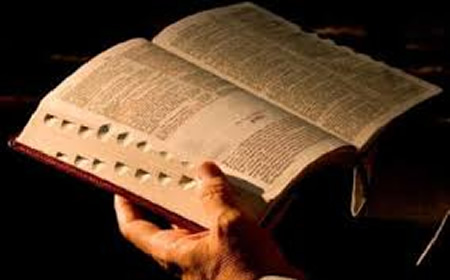
As we examine Scripture we find a very different view of this subject. We may wonder whether there were any suicides in Scripture. We do find the following:
- [Abimelech] called hastily unto the young man his armour-bearer, and said unto him, Draw thy sword, and slay me, that men say not of me, A woman slew him. And his young man thrust him through, and he died (Judges 9:54).
- And Samson said, Let me die with the Philistines. And he bowed with all his might; and the house fell…upon all the people that were therein (Judges 16:30).
- Saul took a sword and fell on it (1 Sam. 31:4).
- When [Saul’s] armour-bearer saw that Saul was dead, he fell likewise upon his sword, and died (1 Sam 31:5).
- When Ahithophel saw that his counsel was not followed, he…got him home to his house, to his city, and put his house in order, and hanged himself, and died (2 Sam. 17:23).
- It came to pass, when Zimri saw that the city was taken, that he went into the palace of the king’s house, and burnt the king’s house over him with fire, and died (1 Kings 16:18).
- [Judas] cast down the pieces of silver in the temple, and departed, and went and hanged himself (Matt. 27:5).
(https://bible.org/illustration/seven-suicides-bible). –J. L. Meredith, Meredith’s Big Book of Bible Lists, (Inspirational Press, NY; 1980), pp. 143-144.
It may be that we are aware of the suicide of Judas, the one who betrayed Jesus, but maybe we were unaware of the others.
Probably for those of us who believe the written Word of God, a passage that should settle any questions we may have would be 1 John 3:15b: “You know that no murderer has eternal life abiding in him.” There is murder of another person (such as homicide, abortion, infanticide, etc.) and there would be self-murder (such as suicide). It may even include dangerous occupations, dangerous activities, not caring for the body through junk food, etc. But let’s mention self-murder again.
Is there anything difficult to understand about John’s inspired words in Scripture here? He points out that “No murderer has eternal life abiding in him” (1 John 3:15b). The murderer doesn’t have eternal life. This would mean that he has spiritual death—eternal death—instead. The professing “Christian” who takes his life does not have eternal life but, instead, has spiritual death.

Someone may raise the question about repentance. He or she may say that if a person repents, that person may be forgiven and gain God’s forgiveness. But we would raise the following questions:
- Can the person even repent and seek God’s forgiveness? Most people who commit suicide are unable to seek God’s forgiveness. Think of the person who shoots himself or does something that results in immediate death—such as jumping from a tall building, etc.
- Does the person even think rationally? One may say that a person who seeks to kill himself through poison (for instance) may have some minutes or hours before he dies. But the person’s mind may be beyond rational thought. Further, the person may be in such pain that he or she cannot think rightly.
- Is the person even regenerated? A child of God would not take his or her life—surely. This would refer to those who are born again (John 3:3-7). And most people are not even children of God or in a saved position. Even if a person does have a few hours before he dies, generally he is in no position to rationally repent of all his sins (including suicide), trust in Christ for His forgiveness, be baptized for the forgiveness of his sins, or commit his life to the Lord (John 3:14-18, 36; Acts 2:38-39; 22:16; 2 Corinthians 5:14-17).
- Does the person actually trust God? Even if he once believed in God and Christ, the person is not trusting God at the point of death. If he did rely on the Lord and entrust his soul to Him, he is not trusting God at the point of death. He would know that God is “our refuge and strength, a very present help in trouble” (Psalm 46:1). He could have known that regardless of the earth circumstances, God is still reliable and able to support the person. Death is not the only “solution” to his trouble.
- Does the person know that suicide is a wicked, wicked sin? It is a sin against God and His divine providence and care. It is a sin against one’s family who remains behind. It is a sin against the world that desperately needs his continued presence and influence. In so many ways, suicide is a serious sin that is committed by the person who takes his or her life. Jay Adams points out that it is a great sin of selfishness for the person is thinking of himself or herself at the time of death. Even if the person does go to a place of torment, the mistaken thinking of the murderer still prevails.
The case could also be made that a saved person would never even think of taking his life. If someone did do so, this shows that he wasn’t saved in the past when he thought he was. But even if this is wrong thinking and that a person like Judas (who must have been saved at one time) would dare to take his life, surely generally a suicide would indicate that the person wasn’t even saved.
There is a better way!
We grant the fact that life does bring many and varied trials, the kind of troubles that urge a person to take his life. As Job reminds us, “Man, who is born of woman, is short-lived and full of turmoil” (Job 14:1). We also read, “Man is born for trouble, as sparks fly upward” (5:7). If this is true of a human being in general, it can also be true of the child of God. But the son or daughter of God knows that in the midst of his trials, God is still trustworthy. He is still there to bless and help and care.

It may be that one of your family members took his life some time ago. It may be that a close friend, neighbor, or relative ended his earthly life through suicide. It may even be true that a husband or wife took their life—as traumatic as this may be! We can do nothing about these tragic events of the past. But we can live life today with a realization that God loves and cares. We read, “God causes all things to work together for good to those who love God, to those who are called according to His purpose” (Romans 8:28).
This promise—that is meant for the faithful child of God—is one we can depend on and live by. All things (whether financial difficulties, marital distress, family struggles, defeats, physical affliction, persecution, and all else) will “work together for good” if, indeed, we “love God” and “are called according to His purpose.”
I urge you to remember that God is not only a God of holiness, justice, and wrath, but He also is a God of mercy, kindness, patience, and love. He wants to rescue you from difficult circumstances and give you the victory! Even when you go through the “valley of the shadow of death,” God will be there to help you through. Let’s trust in Him at all times!
Two friends took their own lives many years ago. They were both sodomites—they were homosexuals. Another child-hood friend took her life and left her family. Another had a husband and children and she also took her life. None of this had to be. God was there and able to save and help and uplift. Let’s trust Him in our deepest moments and realize that through Christ Jesus, God is able and willing to save us and give us the victory!
Please check this out also:
Suicide: Should You Take Your Life?


 You can reach us via e-mail
at the following address:
You can reach us via e-mail
at the following address: